This article discusses the Qur'anic verses that describe our purpose in life, the objective we should be seeking, and how we should attain it. The verses reveal that the purpose for which we were created is a benefit that accrues to us, and that, without a hereafter, our existence would be vain. Therefore, we are in a journey, destined for eternity, and our goal is to reach everlasting bliss. Obtaining such a goal requires training and self-realisation: These can be achieved by constant servitude toward God as we go through tests and trials in this life.
We sometimes ask ourselves, What was God's purpose in creation, and why did He create us and the universe? We ask these questions because of a latent assumption: rational beings seek goals for what they do; their voluntary actions are not without a purpose and objective. This assumption, however, is only applicable to limited beings. We are limited in two ways:
1. We have a limited share of resources, such as health, power, and wealth. 2. We have a shortage many goods, benefits, and pleasures that we desire.
A necessary consequence of scarcity of resources is that anything that we do becomes a sacrifice because it involves using limited resources that could have otherwise been retained or used for some other purpose (a.k.a 'opportunity cost'). Therefore, a wise person will not decide unless it has the greatest benefit for him or her when compared to other alternatives. The second aspect of limitation only reinforces this, because if we were perfect, infinite beings who did not lack anything and were not subject to any loss, then we would not have to worry about the loss or mismanagement of resources even if they were limited. Neither of the two kinds of limitations applies to God, however.
Because God is a perfect being (i.e. infinite, unlimited) it is not inconceivable to talk about Him acquiring any good or perfection since He is absolute good and ultimate perfection; He does not lack in good or perfection for Him to seek it through an action, such as creation. Therefore, His actions are not the causes of His perfections; rather, they are effects of His perfections. This idea is also found in other traditions such as Hinduism: "The Supreme has nothing to do, but because He is omnipotent, everything is performed by Him naturally, as if done automatically." 1
Other beings live to achieve perfection continue to pursue this path as long as they have not reached absolute perfection. God, however, does not seek to reach an objective through His creatures; rather, He is Himself the ultimate objective of all beings. To illustrate, consider the sun that shines, not to gain something, but rather, because it is in its nature to do so, or a spring that naturally gushes water and the ocean waves. (These examples are, of course, imperfect, as is every example for the Absolute.)
Likewise, it is God's perfection that is the cause for His actions: His qualities and attributes necessitate the occurrence of certain events. This, however, does not contradict the fact that His actions have some purpose. God Himself is without purpose because He is the purpose; however, based on His wisdom, His actions follow a purpose according. Thus, if we define purpose to be the acquirement of some perfection that was not there before, then the 'purpose of creation' would not refer to any perfection to God; instead, it refers to a perfection that accrues to His creatures.2
The following are verses in the Qur'an that talk about the purpose of creation:
1. It is Allah who has created seven heavens, and of the earth [a number] similar to them. The command gradually descends through them, that you may know that Allah has power over all things, and that Allah comprehends all things in knowledge (65:12).
2. He, who created death and life that He may test you [to see] which of you is best in conduct. And He is the All mighty, the All-forgiving (67:2).
3. I did not create the jinn and the humans except that they may serve Me (51:56).
4. Had your Lord wished, He would have made mankind one community; but they continue to differ, except those on whom your Lord has mercy - and that is why He created them - and the word of your Lord has been fulfilled: 'I will surely fill hell with jinn and humans, all together!' (11:118-119).
The first verse is about the creation and direction of the universe. The magnificent creation of the heavens and the earth, as well as the orderly direction of their affairs, is intended to raise our level of knowledge, awareness and consciousness about God's absolute power and knowledge. The second verse - specifically concerning mankind - is about the temporary nature of our existence in this world and the vicissitudes that we go through in life, which are intended to test our faith and behaviour. This is an inseparable element of life in this world as repeatedly emphasised in the Qur'an. See 2:155, 9:126, 18:7, 29:2-3, 47:31. The third verse is the most famous and the most commonly-quoted verse regarding the purpose of creation. It says that our role in creation is to serve and worship God. The fourth set of verses shows the result of this worship: qualifying for God's mercy.
One subtlety found in 51:56 is that it does not say, 'I created the jinn and the humans to serve Me' but it says, 'I did not create the jinn and humans except to serve Me.' Had it been the former, it would have sufficed for us to serve God once, once a while, or overall in our life. However, the verse is more precise and can be broken down into two statements: (a) I created the jinn and the humans to serve Me; and (b) I did not create the jinn and the humans for anything else. In other words, we have been created to worship and nothing else. It thus follows that every breath and every step that we take should be in God's service and worship. Otherwise we are not fulfilling the purpose for which we are created, thus failing to reach perfection.
This is why God says in the next verse, verse fifty-eight: "I desire no provision fr om them, nor do I desire that they should feed Me." The first part of this verse is about seeking provision for oneself, and the second part about feeding God. This dichotomy is seen again and confirmed in the following verse:
"Indeed it is Allah who is the All provider, Powerful, All-strong" (51:1)
What God means when He says, "I desire no provision from them" is that I have not charged them with providing for themselves; they have not been created for the objective of hunting for food, seeking sustenance, and earning a livelihood - that is not the purpose of their creation. Rather, "Indeed it is Allah who is the All-provider." Furthermore, I have not created them so that they may benefit me in any way - "feeding" being a clear example for benefit - because “I am the "Powerful, All strong” (51:58).
These two verses show that the desired worship mentioned in verse fifty-six is for our own good and not in any way for the benefit of God. He is independent of our worship, but we are in need of serving Him. As Rumi, the Persian poet, wrote, "My creation was a case Of mercy and grace. It was not to attain Some benefit or gain.3
The service and worship mentioned in these verses is not our ultimate goal but a means to something else. Worshipping God is an intermediate stage toward achieving Godwariness (taqwa):
O mankind! Worship your Lord, who created you and those who were before you, so that you may be Godwary (2:21).
Indeed, God's most universal and fundamental covenant and injunction of God is "so that you may be Godwary"(See 2:63, 6:153, 7:171), a specific case of which is seen in the verse about fasting (2:183) and an equivalent idea is mentioned about prayer (29:45). The Qur'an identifies felicity to be the outcome of Godwariness: "Be wary of Allah, so that you may be felicitous." See 2:189, 3:130, 3:200, 5:35, 5:100). Therefore, the ultimate objective in worshipping God is to achieve felicity and eternal happiness. This is seen more directly in the following verse: "O you who have faith! Bow down and prostrate your-selves, and worship your Lord, and do good, so that you may be felicitous" (22:77).
Worship denotes the movement and advancement of the created toward the Creator.4 In other words, God has created the universe so that it may move toward absolute perfection, and absolute perfection is nothing but God Himself. This idea - that all beings are on a journey toward God - is found repeatedly in the Qur'an: "Toward Us is the destination" (50:43). Among beings are those whose movement is through voluntary action and free will; they have such nature and structure that their growth lies in worship in a context of test and trial, the result of which will be felicity and God's mercy, as seen in the above-mentioned verses.
Many exegetes have interpreted the Qur'anic phrase "Except that they may serve Me" (51:56) to mean 'that they may know Me" (li ya 'rifuni).5 There is a widely narrated sacred tradition (al-hadith alqudsi) in which God says, 'I was a hidden treasure. I liked to be known, so I created the creation so that I may be known.'6 A few notes about this hadith and discussion:
• The Qur'anic equivalent of this idea is in: ''It is Allah who has created seven heavens, and of the earth [a number] similar to them. The command gradually descends through them, that you may know that Allah has power over all things, and that Allah comprehends all things in knowledge." (65:12) Given this verse and our discussion above, God's love for being known is also a benefit, change, and perfection for His creatures, and not for Himself.
• What is reported above as a sacred tradition is not found in any Shi'a or Sunni authority of hadith. It can at best be taken as a result of some spiritual vision, unveiling or realisation by a mystic.
• Even though there is Qur'anic evidence to support the meaning being conveyed in this narration, it does not justify the forging of a narrations and its ascription to God under any circumstances. The Qur'an has repeatedly emphasised: Who is a greater wrongdoer than him who fabricates a lie against Allah? (6:21, 6:93, 6:144, 7:37, 10:17, 11:18, 18:15, 29:68, 39:32, 61:7).
• The word for 'hidden' in this narration is makhfi, which is evidence to the fabrication of this narration. Given the terminology of the Qur'an and Sunnah, the word should have been khafi, not makhfi. The latter is used for 'hidden' in Persian, which can show the origin of the forger.
• Knowledge is both a prerequisite and consequence of worship. It is a prerequisite because of the central role of intention in acts of obedience; one essentially worships his or her own understanding and mental construct of God. However, an overall knowledge and belief in God is enough for one to begin worshipping God. Consequently, worshipping leads to a higher realisation and in-depth knowledge of God. This is particularly seen in hadith of 'Unwan al-Basri where Imam al-Sadiq ('a) advises Unwan: 'If you want knowledge you should first seek out the reality of servitude in yourself, and seek knowledge through practice.7 ' It is also important to clarify what the term knowledge ('ilm) means in religious texts.
We were not created in vain, and our life in this world is one stage in our journey toward eternal life (3:191, 21:16, 23:115, 44:38-39, 75:36).
"We certainly created man in the best of forms (95:4)” but then “We relegated him to the lowest of the low (95:5)”. The reason for these ups and downs is
"We make such vicissitudes rotate among mankind, so that Allah may ascertain those who have faith, and that He may take martyrs {or witnesses} from among you, and Allah does not like the wrongdoers" (3:140).
Sometimes You take me to a garden to rest; Sometimes You burn me with Your trial and test; Either way You are leading me to light, So that my eyes may open and attest.8
Free will and the dilemma that we face between good and evil are what distinguish us from other creatures. Because of this makeup, our perfection lies in building and training ourselves such that we choose that which is good and are not tempted by that which is evil. This world is a realm of constant change, and each of us experience a variety of events and conditions in life. The purpose of all of this is that we develop in ourselves the firmness and determination to continuously revolve around a single axis: our Lord. This is what is meant by the verse:
I did not create the jinn and the humans except that they may serve Me (51:56).
This world is a paddock where we are trained for competition day. We have a long journey ahead of us and the best provision that we can take with us on this journey is Godwariness -taqwa (2:197).
We are heading for the home of love with persistence; We've come from the border of nonbeing to existence. We've left the green garden of Paradise to seek The green line that we saw on Thy Face and Cheek.9
We used to be with the angels in their dome; We shall go back to heaven for that is our home. Rather we are beyond the angels and heaven; His glory is our home which is above the seven. Your essence is pure, divine and mild; But the realm of dust is mixed and defiled; So why did you settle somewhere so low? What is this place? Pack up and go!10
- al-islam.org
1.Bhakti Vedanta Swami Prabhupada, commentary under Srimad Bhagavatam, 1.3.35.
2.Tasnim, 28/244 and 28/318-319, with some elaboration.
I’m very honored to have this opportunity to address you here. And I want to say that this is not a lecture…I don’t think that I’m prepared to lecture. But it’s sort of…advice to myself. Because I see myself sitting in these chairs in front of me. Just a few days ago, few years ago, just a little while ago – I was sitting right there where you are, whatever nationality – it doesn’t matter. A human being that was not aware of Islam. And at that particular time, I was someone who did not really understand… the purpose of life!
So with that note, I would request you to think of what I’m saying to you just as information and as advice – not a lecture. The information which I wish to share with you, it may seem a bit extensive. When you consider the capacity of the human brain and the amount of information it can store and that it can decipher – then with the few pages of information today, I’m sure it will not overburden you.
It is my responsibility to address the topics of our discussion today – what is the purpose of our life? And also ask the question – “What do you know about Islam?” I mean – what do you really know about Islam? Not what you’ve heard about Islam; Not what you’ve seen as actions of some Muslims, but – what do you know about Islam?
I’m honored to have this opportunity, and I would like to begin by saying that all of you have an equal responsibility… And that responsibility is to read or listen – with an open heart and an open mind.
In a world filled with prejudice and cultural conditioning it is very hard to find people that are able to take a moment to think. To think about life objectively, to try to arrive at the truth about this world and the real purpose of our lives. Unfortunately, when you ask most people the question – “What is the purpose of our life?” which is such a fundamental and important question, they will not tell you what they have concluded through observation or analytical reasoning. In most cases, they will certainly tell you what someone else said… Or they will tell you what is commonly presumed by others. What my father said the purpose of life is, what the minister of my church said the purpose of life is, what my teacher in school said, what my friend said.
If I ask anyone about the purpose of eating, “Why do we eat?” Most people will answer, in one word or another, “It’s for nutrition!” Because nutrition sustains life… If I asked anyone why they work? They will say, because it’s necessary in order to support themselves and to provide the needs of their family. If I asked anyone why they sleep, why they wash, why they dress, etc., they will answer – “This is a common necessity for all human beings.” We can follow this line of questioning with a hundred questions, and receive the same or similar answers from anyone, in any language, in any place in the world, simple! “Why is it, that when we ask the question, ‘What is the goal and the purpose of life?’, that we get so many different answers?” That’s because people are confused, they don’t really know. They’re stumbling in the dark. And rather than saying, “I don’t know,” they just offer any answer that they’ve been programmed to answer.
Let’s think about this. Is our purpose in this world simply to eat, sleep, dress, work, acquire some material things and enjoy ourselves? Is this our purpose? Why are we born? What is the object of our existence, and what is the wisdom behind creation of man and this tremendous universe? Think about that question!
Some people argue that there is no proof of any divine origin, there is no proof that there’s a God, there’s no proof that this universe has come about through any divine purpose. There are people who believe this way – and they say that perhaps this world came about by chance. A big bang, and this whole great world with all of its orchestration just came together. And they argue that life doesn’t have any definite purpose and that there’s nothing that can be proven through either logic or science that there is a God, or purpose, or any divine reason behind this world.
Here I would like to mention a few verses from the Quran that address this subject.
“Verily! In the creation of the heavens and the earth, and in the alternation of night and day, there are indeed signs for men of understanding, who remember Allah standing, sitting, and lying down on their sides, and contemplate the creation of the heavens and the earth, (and conclude), “Our Lord! You have not created all this without purpose, glory to You! Grant us salvation from the torment of the Fire.”
Quran 3: 190-191
In the above verses, Allah has mentioned very clearly to us, by first drawing our attention to the creation of our own being. The different postures of the human body, the different attitudes of people. He draws our attention to the heavens. The alternation of the night and the day. The firmament, the stars, the constellations… And then He says to us that He has not created all of this for any foolish purpose! Because when you see the design of it, you know that the design of it is very powerful and very precise. And something very powerful and very precise that is beyond our own calculation and imagination – it cannot be foolish. It cannot be just thrown together.
For instance, if you took ten marbles and numbered them one to ten. And all of them were different colors. And you put them inside of a bag and you shook the bag. And then, closing your eyes, reached inside that bag and I told you, “Pull out marble number one. And then pull out marble number two. And then pull out marble number three, in order.” What’s the chance of you pulling out those marbles in order? Do you know what the chances are? Twenty six million to one! So what are the chances of the Heavens and the Earth being thrown in a big bang, and being orchestrated like they are? What’s the chance of that?
My dear respected guests- we have to ask ourselves one more question… When you see a bridge, a building, or an automobile – you automatically consider the person or the company that constructed it. When you see an airplane, a rocket, a satellite, or a large ship – you also think about how incredible a vehicle that it is. When you see a nuclear plant, an orbiting space station, an international airport equipped with everything, also if you consider other structures that exist here, in this country – you have to be thoroughly impressed with the engineering dynamics that are involved.
Yet, these are just things that are manufactured by human beings. What about the human body with its massive and intricate control system? Think about it! Think about the brain— how it thinks, how it functions, how it analyzes, stores information, retrieves information, distinguishes and categorizes information in the millionth of a second! The brain does all of it constantly. Think about a brain for a moment. This is the brain that made the automobile, the rocket ship, the boats, and the so and so. Think about the brain and who made that. Think about the heart, how it pumps continuously for sixty or seventy years – in taking and discharging blood throughout the body, and maintaining that steady precision throughout the life of that person. Think about it! Think about the kidneys – what kind of function they carry? The purifying instrument of the body, which performs hundreds of chemical analyses simultaneously and also, controls the levels of toxicity in the blood. It does this automatically. Think about your eyes – the human camera that adjusts focus, interprets, evaluates, and applies color automatically. The natural reception and adjustment to light and distance – all automatically. Think about it – who created that? Who has mastered that? Who plans that? And who regulates that? Human beings – themselves? No… of course not.
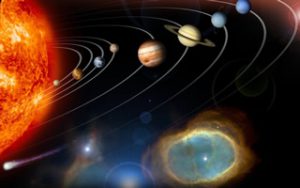
What about this universe? Think about this. The Earth is one planet in our solar system. And our solar system is one of the systems in the Milky Way. And the Milky Way is one of the constellations in that galaxy. And there are millions of galaxies like the Milky Way. Think about that. And they are all in order. They are all precise. They are not colliding with each other; they are not conflicting with each other. They are swimming along in an orbit that has been set for them. Did human beings set that into motion? And are human beings maintaining that precision? No, of course they’re not.
Think about the oceans, the fish, the insects, the birds, the plants, and bacteria, the chemical elements that have not been discovered and cannot be detected even with the most sophisticated instruments. Yet, each one of them has a law which they follow. Did all of this synchronization, balance, harmony, variation, design, maintenance, operation, and infinite numeration – did this happen by chance? And also, do these things function perpetually and perfectly also by chance? And do they keep on reproducing themselves and maintaining themselves also by chance? No, of course not.
To think so would be illogical and foolish. At the very least it would indicate that however it came to be, it is totally outside the realm of human capabilities. We would all agree to that. The being that is deserving of praise and gratitude is the almighty power – God. God created all of this, and is responsible for maintaining all of this. Therefore, God is the only one that deserves of praise and gratitude.
If I gave each one of you a hundred dollars, for no reason, just for coming here, you would at least say, “Thank you.” However, what about your eyes, your kidneys, your brain, your life, your breath, your children? What about that? Who gave you that? Is He not worthy of praise and thanks? Is He not worthy of your worship and your recognition? My brothers and sisters that, in a nutshell, is the purpose and the goal of this life.
Allah says in the Quran:
“I have not created the jinn, the spirits, nor the human beings, for any other purpose except to worship Me.”
Quran 51: 56
This is what God Almighty said. So our purpose in this life is to recognize The Creator and to be grateful to The Creator. To worship The Creator. To surrender ourselves to The Creator, and to obey the laws that He has determined for us. In a nutshell, it means worship. This is our purpose in this life. And whatever we do in the course of that worship– the eating, the drinking, the dressing, the working, the enjoyment between life and death– all of this is just consequential. We have been created for worship – that’s the purpose of our life. I believe that even someone who is scientific or analytical would agree with that purpose. They might have some other ulterior purpose within themselves, but that’s something they have to deal with between themselves and Almighty God.
Now on to the second half of our topic. What do you know about Islam? Not what you’ve heard about Islam. Not what you have seen in the actions of Muslims, because there’s a difference between Islam and Muslims. Just like there’s a difference between a man and a father. A man who has children – he is a father, but being a father is a responsibility. If a man does not fulfill those responsibilities, he is not necessarily a good father. Islam is a rule and an order. If a Muslim does not fulfill these rules and orders, he is not a good Muslim. So you cannot compare Islam by Muslims.
We hear the terms ‘Islam’ and ‘Muslims’ quite often. And we read about Islam and Muslims in the periodicals, textbooks of colleges and universities. We hear and see a lot of inaccurate, misleading, and purposeful misinformation through the media. And I have to admit that some of this misinformation and misrepresentation have been perpetuated by Muslims themselves. Yet one of every five persons in this world of some five billion people is a Muslim! One out of five people in this world is a Muslim! This is a statistic that you can verify in the encyclopedia, or the almanac, or in other sources that you like to look at. How is it that if one out of five people in this world is a Muslim, that we don’t know something about Islam? The facts about Islam. If I told you that one out of five people in this world was Chinese, which is a fact – there are one billion Chinese in the world, one out of five people is Chinese! Then we know the geographical, the social, the economical, the political, the philosophical, the historical factors about China and Chinese! How come we don’t know about Islam?
What is it that joins so many different nations and this universal configuration into a common fraternity? What makes a brother or sister in Yemen my brother or sister, and I’m from America. And makes this brother from Eritrea my brother or sister. And makes another brother from Indonesia my brother. And from Africa my brother. And another one from Thailand my brother. And from Italy, Greece, Poland, Austria, Colombia, Bolivia, Costa Rica, China, from Spain, from Russia, and so forth… What makes them my brother or sister!? We with different cultural and psychological backgrounds! What is it about Islam that automatically embraces us and joins us together as a brotherhood? What are the accurate characteristics of this misunderstood way of life that is followed by a great part of humanity?
I will try to provide you with some facts. But in addition to this, as I’ve mentioned to you before, it is necessary for you to be open-minded and open-hearted – because, if I turned the glass upside-down and poured water on it, I’ll never get a glass of water. It has to be the right side up. Facts alone do not lead to understanding, but rather a combination of tolerance, ambition, and the ability to appreciate and accept the truth when you hear it.
The word ‘Islam’ means surrender, submission, and obedience. Surrender, submission, and obedience to the law of Almighty God. You can say ‘Allah’. You can say ‘The Creator’. You can say ‘The Supreme God’, ‘The Supreme Force’, ‘The All-Wise’ all of these are His names.
Muslims use the Arabic word for God, Allah, because in Arabic there is no other expression. The word Allah cannot be applied to any created thing. Other words that people use for Almighty are also applied to created things. For example, “the almighty dollar”. “Oh I love my wife, she is tops!” Or, “He’s the greatest.” No, no, no, no… But the word ‘Allah’ can only be applied to the One who has created all of this that we have previously described. So from this point, I’m going to use the word ‘Allah’, and you know whom I’m speaking about.
The word ‘Islam’ is derived from the root ‘Salama’ – it means to be at peace. Therefore, a Muslim is a person who surrenders, submits, and obeys the law of Almighty God.
And through this submission obtains peace and serenity for themselves. We can immediately see, that by such a definition, the Arabic word ‘Islam’ describes the same manner and behavior of all the well-known and respected prophets and messengers of Almighty God… All of them including Adam, Noah, Abraham, Moses, David, Solomon, Isaac, Ishmael, Jacob, John the Baptist, Suleiman, Jesus the son of Mary, and Muhammad (May Allah’s peace be upon them all.) All of these men, these prophets and messengers, came from the same Almighty God, with the same message, with the same chain of transmission, and they said one thing – obey God! Worship Almighty God and fulfill the purpose of life and do good actions, and you will be rewarded with another life. That’s all they said! Don’t make it more than that! That’s all they said, regardless of what language and what time, whom they came to – that’s all they said.
If you read the scriptures carefully, without your own interpretation or somebody else’s addition or fabrication – you will find that this was the simple message of all those prophets who confirmed one another. Not one of those prophets ever said, “I am God – worship me.” You will not find it in any of the holy books that you have – not the Bible, not the Torah, not the New Testament, not the Psalms of David – you will not find it in any book. You will not find it in the speech of any prophet. Go home tonight and palm through all the pages of your Bible, and I guarantee you – you will not find it once. Anywhere! So where did this come from? That’s something that you’ll have to investigate.
We can easily see that by such a definition, the Arabic word describes what all the prophets did. They all came and submitted themselves to God; Surrendered themselves to God; Called the people to God; And asked the people and insisted upon the people to do deeds of righteousness. The Ten Commandments of Moses – what was that? The speech of Abraham – what was that? The Psalms of David – what was that? The Proverbs of Solomon – what did he say? The Gospel of Jesus Christ – what did he say? What did John the Baptist say? What did Isaac and Ishmael say? What did Muhammad say? Nothing more than that!
“And they have been commanded no more than this: To worship Allah, offering Him sincere devotion, being true (in faith); to establish regular prayer; and to practice regular charity; and that is the Religion Right and Straight.”
Quran 98:5
This is what Allah said. And they were ordered nothing except to worship Allah, being sincere toward Him. And this was the straightway, this was the original message.
By the same token, it would also be appropriate here to consider both prophets and messengers as Muslims, because a ‘Muslim’ is what? Don’t think about the Arabic terminology, don’t think about how we address them— don’t think about Mecca, or Saudi Arabia, or Egypt. No! Think about what the word ‘Muslim’ means. ‘He who surrenders himself to Almighty God, and obeys the laws of the Almighty God,’ in that case whether naturally or in a dialectical manner – everything that surrenders to the law of Almighty God is a Muslim!
So, when a child comes out of a womb of its mother at the time that God has ordered – what is it? It’s a Muslim. When the sun goes around in its orbit – what is it? It’s a Muslim! When the Moon goes around the Sun – what is it? It’s a Muslim! The law of gravity – what is it? It’s a Muslim law! Everything that submits to the Almighty God is a Muslim! Therefore, when we willfully obey Almighty God we are Muslims! Jesus Christ was a Muslim. His blessed mother was a Muslim. Abraham was a Muslim. Moses was a Muslim. All the prophets were Muslims! But they came to their people and they spoke different languages. The prophet Muhammad (SAW) spoke the Arabic language. And so, in the Arabic language the one who submits and surrenders is Muslim. Every prophet and messenger of Almighty God brought the very same and fundamental message– ‘Worship Almighty God and be sincere towards Him.’ As we examine the message of each of the well-known prophets, we could easily conclude this fact.
Where there is a conflict, it is a result of false assertions, fabrications, exaggerations, personalized interpretations of alleged writers, historians, scholars, and individuals. For instance, let me point something out to you that you may have already looked at. As a Christian I’ve looked at it before I became a Muslim and… I didn’t understand it. How come throughout the Old Testament God is always referred to as One–the Master and Lord and King of the Universe. And that in the first commandment given to Moses, He did not allow anybody to worship any graven images; Or to bow down to anything in the Heavens, or the Earth, or the sea below – He’d never allow that. All the prophets said that there is only One God. Throughout the Old Testament this is repeated over and over again. And then, all of a sudden we get four testimonies – four Gospels called Matthew, Mark, Luke and John. Matthew who? Mark Who? Luke who? John who? Four different Gospels that were written forty- eight years apart. And none of these men, who did not collaborate with each other, none of them, wrote their last name. If I gave you a check for your pay this month and I wrote my first name on the check and told you to take it to the bank – would you accept that check? No, you wouldn’t… If the policeman stopped you and asked for your identification or passport and you only had your first name, would that be acceptable to him? Could you get a passport with your first name? Did your mother and father only give you one name? Where in the history of men is one name accepted as a documentation, where? Nowhere! Except in the New Testament.
And how can you base your faith upon four Gospels that are written by four men that didn’t seem to know their last names? Then, after those four Gospels, there are fifteen more books written by a man who was an apostate who killed Christians, tortured Christians, and then said that he in a vision saw Jesus. And he was commissioned as an Apostle of Jesus. If I told you that Hitler, after he killed all the Jews, then he himself decided that he wanted to be saved. And he met Christ or Moses on the path and he became a Jew. And he wrote fifteen books and added them to the Torah – would this be acceptable to the Jews? No, you wouldn’t accept that. So how can four books written by men without a last name, and fifteen other books written by another man–and this is the first time that God is called a man, and the first time that God is called three, and the first time God was given a son– how is this acceptable to Christians? How? Think about it! We won’t argue that point. I’ll just give you something to think about.
The advent of Prophet Muhammad (SAW) did not bring a new religion or a way of life as some people ominously claim. On the contrary, the prophet (SAW) confirmed the life and message of all the previous prophets and messengers. Both through his personal conduct and through divine revelations he received from the Almighty. The sacred scripture that Muhammad (SAW) brought is called the Quran. It means ‘that which is recited.’ Because Muhammad (SAW) did not write the Quran. He did not author the Quran. Nobody came and helped him write the Quran. And nobody collaborated with him on this. The Angel Gabriel recited the words to him! And Almighty God made his heart a receptacle of that. The Prophet Muhammad’s (SAW) heart was a receptacle of revelation and we have this Quran that has been preserved for years without any change. Is there any other book in the world that you know of that has been preserved as it was revealed without any change? No book… Only the Quran.
Don’t take my word for it! Go to the library and read what the Encyclopedia Britannica, or the World Encyclopedia, or the Americana’s Encyclopedia, or any other universal encyclopedia of the world that was not written by Muslims. Read what it says about Islam, the Quran, and Muhammad (SAW). Read what non-Muslims say about the Quran, Islam, and Muhammad (SAW). Then you will accept that what I’m saying is universally documented and clear! That Muhammad (SAW) is the most profound individual in the history of humanity. Read what they say. That the Quran is the most incredible, the most profound piece of literature in the annals of history! Read what they say. That the Islamic way of life is categorized and so precise and dynamic! …It has never changed.
The sacred scripture that Muhammad (SAW) received is called ‘The Quran.’ And each of the prophets and messengers also received the scripture. In the Quran, these prophets, their scriptures, their stories, and the principle of their mission is mentioned with profound detail. Did Muhammad (SAW) meet them, talk with them, eat with them, and collaborate with them to write their biographies? No, of course he didn’t. In the Quran, Muhammad (SAW) is referred to as the messenger of Almighty God and the seal of the previous prophets– which is the limit of his role as a human being.
“Muhammad is not the father of any of your men, but (he is) the Messenger of Allah, and the Seal of the Prophets: and Allah has full knowledge of all things.”
Quran 33:40
Muslims do not worship Muhammad, we’re not ‘Muhammadans.’ We have not the right to change the name ‘Muhammad’ and say we are ‘Muhammadans.’ No, the people who had followed Moses, they were not ‘Moseans.’ The people who followed Jacob were not ‘Jacobites.’ Or the people who followed Abraham were not ‘Abrahamians.’ Or ‘Davidians.’ …No, no ,no. So how do people call themselves ‘Christians?’ Christ did not call himself a ‘Christian,’ so how do people call themselves ‘Christians?’
Jesus Christ (PBUH) said that whatever he received from Almighty God was the word of God, and what he heard is what he said! That’s what he did! So how do people call themselves ‘Christians?’ We have to be Christ-like! And what was Christ like? He was a servant of the Almighty God; so we should be servants of Almighty God, that’s all!
As the final scripture and divine revelation, the Quran makes the very clear and concise statement,
“This day have I perfected your religion and completed my favor upon you. And chose the Islam as a complete way of life.”
Quran 5:3
So through the Quran, the word ‘Islam’ came. Because, when the building is complete, you call it ‘a house.’ When the car is on the assembly line, it is not ‘an automobile’ – it is in the process of assembly! When it has been completed, it has been certified, it has been test-driven – it is now ‘an automobile.’ When Islam was completed as a revelation, as a book, as an example through the Prophet Muhammad (SAW), it then became ‘Islam.’ It became a complete way of life.
So it is the word that was new… But not the practice…not the prophet…not the order from God…not a new God…not a new revelation…But only the name, Islam. And as I said previously, who were all the prophets? They were all Muslims. Another distinction to keep in mind is that Muhammad (PBUH), unlike his predecessors – he did not come to the Arabs or to his own people exclusively. No… Therefore, Islam is not a religion of the Arabs. Although the Prophet Muhammad, the son of Abdullah, was born in Mecca, a city in the Arabian Peninsula, and was an Arab by birth, he did not bring Islam to only the Arabs. He brought Islam to all people.
Although the Quran was revealed in the Arabic language, it dispels any inclinations or assertions that the message of Muhammad was limited or meant for the Arabs exclusively. In the Holy Quran Allah says,
“And you have not been sent, oh Muhammad, except to the all of humanity.”
Quran 21:107
The Prophet Muhammad (Peace Be Upon Him) said: All mankind is from Adam and Eve, an Arab has no superiority over a non-Arab, nor a non Arab has any superiority over an Arab; also a White has no superiority over a Black nor a Black has any superiority over a White; except by piety and good actions.
As such, Muhammad (PBUH) is the finality and crown of the great prophets and messengers before him. Most human beings–they simply don’t know this information. And since I am making reference to the Quran to support my presentation, I will give some background information on the Quran itself. First of all, the Quran makes the claim that it is the product of divine revelation. That is, it was sent down from the Almighty God to Muhammad for inspiration.
Allah says,
“Nor does he say (aught) of (his own) Desire.”
“It is no less than inspiration sent down to him.”
Quran 53:3-4
Muhammad is not speaking for himself, his ideas, his own ambition, or his own emotion and feelings. But, this is a revelation which is being revealed to him! This is the statement of Allah. Therefore, if I am to convince you of the authenticity of the Quran, I must prove – one, that it was impossible for Muhammad to have manufactured such a book. Secondly, I must prove that it was equally impossible for any human agency to have created it. Let us think about this.
The Quran makes the statement,
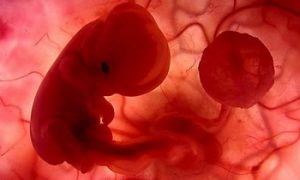
“And we created the human beings from the hanging clot that was clinging to the wall of the womb.”
Quran 23:13
“Created man from a clinging substance.”
Quran 96:2
How did the Prophet Muhammad (pbuh) know that the embryo started out as a clot hanging and clinging to the wall of the uterus of the mother? Did he have a telescope? Did he have a cystoscope? Did he have some kind of x-ray vision? How did he receive this knowledge, when it was just discovered forty seven years ago?
Likewise, how did he know that the oceans have a barrier between them to separate the salt and the fresh water?
“And it is He Who has let free the two seas (kinds of water), one palatable and sweet, and the other salt and bitter, and He has set a barrier and a complete partition between them.”
Quran 25:53
How did he know this?
“It is He Who created the Night and the Day, and the sun and the moon: all (the celestial bodies) swim along, each in its rounded course.”
Quran 21:33
How did he know that the Sun, and the Moon, and the planets are all swimming in an orbit that had been ordered for them? How did he know this? And on, and on, and on – how did he know these things? These things have just been discovered twenty five or thirty years ago. Technology and science, the sophistication of which you and I well know have just been discovered. How did Muhammad (PBUH), who lived more than 1500 years ago– an uneducated shepherd who was raised in the desert, not knowing how to read or write– how could he know something like this? How could he produce something like this? And how could anyone else living with him, before, or after, produce something that has just been discovered recently. That’s impossible!! How could a man who never left the Arabian Peninsula, a man who never sailed on a ship, who lived more than 1500 years ago –make such clear and astounding descriptions that were just recently discovered in this half of the twentieth century?
Also, if this is not enough, let me mention that the Quran has a hundred and fourteen chapters, over six thousand verses. And there were hundreds of people in the time of the Prophet Muhammad (SAW) who memorized this book entirely. How did that happen? Was he some kind of genius? Did anyone memorize the Gospel – any of them? Did anybody memorize the Torah, the Psalms, the Old Testament, the New Testament? Nobody has done that. Not even the Pope.
But there are millions of Muslims today who have memorized this entire book. This is the ambition of every Muslim. Not some – but every! How many Christians have you ever met in your life, that has memorized the Bible? None. You’ve never met any Christian that memorized the whole Bible, because you’ve never met a Christian who even knew what was the whole Bible. Why is that? Because, Christians themselves have over seven hundred different denominations, and there are approximately thirty nine different versions of the Bible–with different books and different versions. Different number of verses and different number of chapters. And they don’t agree to that. So how could they even memorize what they don’t agree about.
It’s just some facts about the Quran. The Quran has been universally preserved without the slightest alteration of any kind in fifteen centuries. And I’m not speaking in a condemning fashion. I’m a person who was a Christian. A person who found out these things by my own investigation. A person who is now sharing this information with you. Overturning some rocks for you to look under. And it’s up to you!
Just think about if all of this were true. Would you agree that this book is quite profound? And unique, to say the least? Would you be honest enough to say that? Of course you would, if you were honest. And you are. Within yourselves, you have to come to that conclusion. Many other non-Muslims came to the same conclusion. People such as Benjamin Franklin, Thomas Jefferson, Napoleon Bonaparte, and Winston Churchill, to name a few. Many more and I could go on, and on, and on. They came to the same conclusion. Whether they accepted Islam openly, or not. They came to that conclusion– that there is no other literature in the world as profound as the Quran, a source of wisdom and healing and direction.
Now that we have settled the issue of authenticity of the Quran, let us turn to another subject matter: the basic themes of the Quran. The supreme oneness of Almighty God, which includes His names, His attributes, the relationship between God Almighty and His creation, and how human beings should maintain that relationship. The continuity of prophets and messengers, their lives, their messages, and their overall mission. The insistence upon following the final and universal example of Muhammad (pbuh), the Seal of the Prophets and Messengers. Reminding human beings of the shortness of this life and calling them towards the eternity of the life hereafter. Life hereafter, meaning after here. Hereafter, you leave this place and you’re going somewhere; I don’t mean tonight. But after you die and you leave this Earth, you are going somewhere, whether you accept it, or don’t know about it; You’re going there, and you are responsible, because you have been told– even if you have rejected it. Because the object of this life is not for you to sit here, and after this do nothing and have no effect. Every cause has an effect! And you came into this life for a cause and a purpose, and it must have an effect! It must warrant some sort of effect! You don’t go to school to just stay there! You don’t go to work not to get paid! You don’t build a house and don’t move into it! You don’t get a suit made and don’t wear it! You don’t grow up as a child and don’t become an adult! You don’t work without expecting a reward! You cannot live without expecting to die! You cannot die without the expectancy of the grave! And you cannot expect that the grave is the end. Because that would mean that God has created you for a foolish purpose. And you have not gone to school, worked, or done anything, or have chosen a wife, or chosen the name of your children for a foolish purpose. How could you assign to God something less than yourselves?
In an attempt to capture and convince the imagination and faculties of reasoning, the Quran goes through great length and beauty to expound upon the oceans and rivers, the trees and plants, the birds and insects, the wild and domestic animals, the mountains, the valleys, the expansion of the heavens, the celestial bodies and the universe, the fish and the aquatic life, the human anatomy and biology, human civilization and history, the description of paradise and hell, the evolution of the human embryo, the missions of all the prophets and messengers, and the purpose of life on Earth. And how could a shepherd boy, born in the desert, who grew up illiterate and could not read– how could he expound upon things that he was never exposed to? The most unique aspect of the Quran, however, is that it serves to confirm all the previous revealed scriptures. And, after examining the religion of Islam, you should decide to become a Muslim, you do not have to consider yourself changing your religion! You are not changing your religion…You see, if you lost some weight, you wouldn’t throw that $500 suit away–of course you wouldn’t! You would take it to a tailor and say, ‘Listen, take this in a little bit for me, please. Make some alterations to this because I like this suit.’ Likewise, with your belief, your honor, your virtue, your love of Jesus Christ, your attachment to God, your worship, your truthfulness, and your dedication to Almighty God – you don’t change that and throw it away! You hold on to that! But, you make alterations where you know that the truth has been revealed to you! That’s all!
Islam is simple: to bear witness that there’s none to be worshiped except Almighty God. If I asked any of you to bear witness that your father is your father–how many of you would say, ‘Yes, my father is my father; My son is my son; My wife is my wife; I am who I am.’ Then how is it that you hesitate to bear witness that the Almighty is One and the Almighty God is the only One, and that the Almighty God is your Lord and your creator? Why are you arrogant to do this? Are you being glorious? Do you possess something that God doesn’t possess? Or, are you confused? That’s the question you have to ask yourself.
If you had the chance to put things straight with your conscience, and to put things straight with God, would you do so? If you had the chance to ask God to accept the best of your deeds, would you do so? If you had the chance to do this before you died, and you thought that you would die tonight, would you not hesitate to bear witness that there’s only one God? If you thought that you would die tonight and that in front of you was paradise and in your back was hellfire, would you not hesitate to bear witness that Muhammad is the final messenger of God and representative of all the prophets? You would not hesitate to bear witness that you are one of those who would like to be written down in the book of God as those who submit!
But, you think you’re gonna live a little while. And of course, you’re not ready to pray every day! That’s because you think you’re gonna live a while. But how much is ‘a little while?’ How long ago was it when you had a full head of hair? How long ago was it when your hair was all black? You got aches and pains in your knees and elbows and in other places! How long ago was it when you were just a child, running and playing without a care? How long ago was it? It was yesterday! Yes. And you’re gonna die tomorrow. So how long you wanna wait?
Islam is to bear witness that Almighty God is God, the only God, the only One without any partners. Islam is to acknowledge the existence of the Angels who were sent with the duty of revealing the revelations to the prophets. Carrying the message to the prophets. Controlling the winds, the mountains, the oceans, and taking the life of those whom God has ordered to die. Islam is to acknowledge that all the prophets and messengers of Almighty God were righteous men. And that they were all sent by Almighty God acknowledging the fact that there will be a final day of judgement for all creatures. Islam is to acknowledge that all good and evil has been proportioned by Almighty God. Finally, Islam is to acknowledge that there will definitely be a resurrection after death.
Islam is like a big house. And every house has to be built with a foundation and pillars to support a house. Pillars and a foundation. And you have to build a house with rules. The pillars are the rules! And when you build your house, you must follow the rules.
The fundamental duties incumbent upon every Muslim are simple, and are summed up in just 5 simple rules, the so-called Five Pillars of Islam: Belief, Worship, Fasting, Almsgiving, and Pilgrimage.
The most important rule of Islam is to uphold the strict code of monotheism. That is, to not accept any partners with God. Not to worship anything along with God. The believer worships God directly without the intercession of priests or clergy or saints. Not to say anything about God that you have no right to say. Not to say, ‘he has a father, a son, a daughter, a mother, an uncle, an aunt, a board of trustees.’ Not to say anything about God that you have no right to say. When you bear witness, you sentence yourself. You take the sentence that you want. You either sentence yourself to peace and paradise, or you sentence yourself to confusion, frustration, hellfire and punishment. You sentence yourself.
So ask yourself, “Do I bear witness that there is only one God?” When you ask yourself that question, you should answer, “Yes, I bear witness.” Then ask yourself the next question. Do I bear witness that Muhammad is a messenger of Almighty God? “Yes, I do bear witness.” If you bear witness to that, then you are a Muslim. And you don’t have to change what you were. You just have to make alterations in what you were–in your thinking and practice.
Finally, I ask you an honest and direct question: Have you have understood what I said to you? If you agree with what I said and are ready to enter Islam, you are ready to become a Muslim. To become a Muslim, you must first declare the Shahada “the testimony”; which is to declare the belief in the Oneness of God and the acceptance of Muhammad as God’s prophet.
Ash-hadu anlaa ilaaha ill-Allah, wa ash-hadu anna Muhammadan rasulu llah.
“Which means that you believe that there isn’t any God except the one and only true God who created everything “Allah” and Muhammad is the messenger of God.
Please see video for correct pronunciation!
Video Player
00:00
03:04
May Allah bless us. May Allah guide us. I would like to say to all of the non-Muslim readers of this publication—Be very honest with yourself. Think about what you have read. Take this information with you and absorb it. Sit down with a Muslim person and let them explain a little further to you the beauty of Islam. Take the next step!
When you are ready to accept Islam and become a Muslim, wash yourself before formally becoming a Muslim. Accept Islam. Know about Islam. Practice Islam. And enjoy the bounties that Allah has bestowed upon you, because faith is The most important rule of Islam is to uphold the strict code of monotheism. That is, to not accept any partners with God. Not to worship anything along with God. The believer worships God directly without the intercession of priests or clergy or saints. Not to say anything about God that you have no right to say. Not to say, ‘he has a father, a son, a daughter, a mother, an uncle, an aunt, a board of trustees.’ Not to say anything about God that you have no right to say. When you bear witness, you sentence yourself. You take the sentence that you want. You either sentence yourself to peace and paradise, or you sentence yourself to confusion, frustration, hellfire and punishment. You sentence yourself.
If you don’t put it into practice, you lose it like a fragrance. May Allah guide us. May Allah help us. And I appreciate the honor of being able to speak to you through this publication.
Assalamu Alaikum wa rahmatullahi wa barakatuh
[Arabic for “Peace be unto you and so may the mercy of Allah and His blessings.”