
Islam

Islam

Monday, 21 September 2026

Where is God?


Where_is_God_001.jpgNow and again human beings are prompted to ask themselves some of life’s truly profound questions.  In the quiet darkness of the night, when far off stars twinkle in the vast, majestic sky, or in the cold, hard, light of day when life rushes past like a speeding train, people of all colours, races and creeds wonder about the meaning of their existence.  Why are we here?  What does this all mean?  Is this all there is?

On magnificent days filled with sunshine and iridescent blue skies, people turn their faces towards the sun and contemplate its beauty.  In the deepest winter or the wildest storm, they ponder the strength inherent in the forces of nature.  Somewhere in the deep recesses of the mind, the concept of God arises.  The wonders of creation are a call to the heart and the soul.  The gentle touch of a snowflake, the smell of freshly cut lawn, the soft patter of raindrops and fierce wind of a hurricane are all reminders that this world is full of wonder.

When pain and sadness threaten to engulf us, human beings are again prompted to contemplate the meaning of life.  In the midst of suffering and grief, the concept of God arises.  Even those who would consider themselves far from religion or spiritual belief find themselves looking skywards and pleading for help.  When the heart constricts and fear swamps us, we turn helplessly towards some sort of higher power.  The concept of a God then becomes real and meaningful.

In the midst of pleading and bargaining, the sheer vastness of the universe is laid bare.  The reality of life is filled with awe and wonder.  It is a rollercoaster ride.  There are moments of great joy, and periods of immense sadness.  Life can be long and monotonous or it can be carefree.  As God arises and His majesty is clear, more questions begin to take shape.  One question that inevitably comes to mind is – where is God?

Around the world and down through the ages people have struggled to come to terms with the question of where God is.  The human inclination is to search for God.  The ancient Babylonians and Egyptians built lofty towers in their search for God.  The Persians looked for Him in fire.  Still other, such as the indigenous people of North America and the Celtic people looked for God in the glorious signs of nature around them.  Buddhists find God in themselves, and in the Hindu religion, God is believed to be in every place and in everything.

The quest for God can be confusing.  When posing the question where is God, the resulting answers can also be confusing.  God is everywhere.  God is in your heart.  God is where goodness and beauty exist.  What happens however, when your heart is empty and your surroundings are dismal, dirty, and ugly?  Does God cease to exist?  No! Of course not!  Amidst this confusion, the Islamic concept of God is a beacon of light for those stumbling in the darkness.

What Muslims believe about God is clear-cut and simple.  They do not believe that God is everywhere; they believe that God is above the heavens.  The human need to turn our faces towards the sky in times of trouble and strife is an inherent answer to the question, where is God?  God tells us in the Quran that He is the Most High (Quran 2:255) and that He is above all His Creation.

“He it is Who created the heavens and the earth in six Days and then rose over the Throne (in a manner that suits His Majesty).  He knows what goes into the earth and what comes forth from it, what descends from the heaven and what ascends thereto.  And He is with you (by His Knowledge) wheresoever you may be.  And God is the All-Seer of what you do.” (Quran 57:4)

Prophet Muhammad was known to point towards the sky when referring to God.  When making supplication to God he raised his hands towards the heavens.  During his Farewell sermon, Prophet Muhammad asked the people, “Have I not conveyed the message?” and they said, “Yes!”  He asked again, “Have I not conveyed the message?” and they said, “Yes!”  He asked a third time, “Have I not conveyed the message?” and they said “Yes!”  Each time, he said, “O God, bear witness!” - at the same time pointing up to the sky and then at the people.[1]

God is above the heavens, above His creation.  This however does not mean that He is contained by any sort of physical dimensions.  God is close, very close, to those who believe in Him and He answers their every call.  God knows all of our secrets, dreams, and wishes, nothing is hidden from Him.  God is with His creation by His knowledge and power.  God is the Creator and the Sustainer.  Nothing comes into existence except by His will.

When Muslims marvel at the wonders of the universe they are secure in the knowledge that God, the Most High, is above the heavens, and comforted by the fact that He is with them in all their affairs.  When a Muslim is struck by loss or grief, he does not question God’s wisdom, or ask the question, ‘where was God when I was sad, or grieving or suffering?’  Humankind was created to worship God, (Quran 51:56) and God said many times that trials and tribulations would be part of our life experience.

“And He it is Who has created the heavens and the earth in six Days ...that He might try you, which of you is the best in deeds.” (Quran 11:7)

In their darkest night, or their darkest hour humankind instinctively looks towards the sky.  When their hearts beat heavily and fear threatens to overwhelm them, people turn to God.  They raise their hands and beg for mercy, forgiveness, or kindness, and God responds;  For He is the Most Merciful, the Most Forgiving and the Most Kind.  God is distinct and separate from His creation, and there is nothing like Him.  He is All Hearing and All seeing.  (Quran 42:11)  Hence when we ask the question where is God, the answer is undoubtedly, He is above the heavens and above all His creation. We also say that He is not in need of any of His creation and all of creation needs Him..

- islamreligion.com

Footnotes:

[1]The text of the Farewell Sermon can be found in Saheeh Bukhari and Saheeh Muslim,  and in the books of At Tirmidhi and Imam Ahmad.

Sunday, 20 September 2026

Intimate Issues : Sex and Marriage in Islam


IntimateIssues1.jpgIslam is a holistic way of life.  It takes into account all of humankind’s needs; spiritual, emotional and physical.  Part of physical wellbeing includes sexual wellbeing and health.  God created sex not only for procreation but to fulfil humankinds need for intimacy.  Islam leaves no part of our lives unexplained and thus sexuality and intimacy are not topics that the Quran and the traditions of Prophet Muhammad, may God praise him, shy away from or neglect. 

Islam encourages marriage and has made it the only means through which one can satisfy their sexual needs.  There are well-known consequences if a person engages in premarital relationships or behaves in a promiscuous manner. These include unwanted pregnancies, the transmission of sexually transmitted diseases, family breakdown in cases of adultery and emotional difficulties arising from relationships without commitment.  Islam is aware of these complications and cautions the person who does not take the matter seriously.  Islamdefines pre-marital and extra-marital sexual relationships as great sins. 

“Nor come closer to illicit sexual intimacy for it is a shameful and immoral, opening the door (to other immorality).” (Quran 17:32)

When a man or woman is able to marry, they should be encouraged and aided in their attempts to get married.  Also when the intention has been made clear, the couple should marry as quickly as possible to discourage any temptation to fall into sin.  Prophet Muhammad encouraged marriage however he encouraged fasting for those who did not have the means to marry.  He said: “Whoever among you possesses the physical and financial resources to marry should do so, because it helps one to guard their modesty, and whoever is unable to marry should fast, as fasting diminishes one’s sexual desire.”[1]

God, in infinite wisdom guides us away from the potentially destructive behaviour of pre-marital or extra-marital relationships and towards behaviour that allows us to live God centred lives while enjoying the closeness of a loving relationship.  In fact God rewards us for intimacy with our lawful partner.  Prophet Muhammad told his companions that “In the sexual act of each of you there is charity.” The Companions asked, “When one of us fulfils his sexual desire, will he be given a reward for that?” And he said, “Do you not think that were he to act upon it unlawfully, he would be sinning? Likewise, if he acts upon it lawfully he will be rewarded.”[2]

Giving pleasure to one’s spouse is a highly rewarding deed. Marriage itself is viewed in Islam as the longest, most continuous act of worship a Muslim will perform in the course of their lives. It is a partnership between two who seek to please God; thus, sexual intimacy between spouses is the ‘spark’ that strengthens this bond. As each person strives to fulfil the rights and needs of the other, an affection and fondness is achieved.  God stresses that a person will find intimacy and comfort in a lawful union. 

“And among His Signs is this, that He created for you wives from among yourselves, that you may find repose in them, and He has put between you affection and mercy.  Verily, in that are indeed signs for a people who reflect.” (Quran 30:21)

Prophet Muhammad, may God praise him, was known as a loving husband and a family man.  He was known to speak frankly to his companions, both men and women, when they asked him about matters of a sexual nature.  For example his responses to questions included such wise advice as, “None of you should fall upon his wife like an animal; let their be a ‘messenger’ between you.” “And what is a messenger?” they asked, and he replied: “Kisses and words.”[3]

Prophet Muhammad said: “If one of you says, when he has intercourse with his wife: ‘I begin with the name of God, O God, keep Satan away from me and keep Satan away from that which You bestow upon us,’ if it is decreed that they should have a child, Satan will never harm him.”[4]  

Prophet Muhammad was never embarrassed and strove to provide clear and understandable answers about all sorts of subjects including menstruation and orgasm.  A woman once asked the Prophet if she needed to take a bath after a wet dream to which he replied, “Yes, if she sees liquid.”[5]

God has ordained that our spouses be like our garments and that the husband and wife protect each other and be close companions.  However marriage has many psychological, emotional and physical aspects to it and all matters relating to physical, emotional and spiritual health must be addressed, because all three areas are vital for the marriage to survive in a healthy way.  God has given permission for married couples to fulfil their desires in many and varied ways and positions.  

“Your wives are a tilth for you, so go to your tilth when and how you will, and put forth [righteousness] for yourselves.   And fear God, and know that you will (one day) meet Him…” (Quran 2:223)

The Quran and the traditions of Prophet Muhammad also educate and advise us of any prohibitions within the confines of marriage.  It is taken and understood from the above verse of the Quran that within a marriage both the man and woman have the right to enjoy each other’s bodies and intimate companionship however they must avoid  having sex when the woman is menstruating or bleeding after childbirth  and  they must never engage in anal sex.

In part 2 we will look at prohibitions in the bedroom and discuss sex education and its ability to teach children healthy Islamic attitudes towards marriage, sex and body image.

- islamreligion.com

Footnotes:

[1]Saheeh Muslim

[2]Saheeh Muslim

[3]Musnad Al Firdaus- imām Daylami

[4]Saheeh Al-Bukhari, Saheeh Muslim

[5]Saheeh Al-Bukhari

Saturday, 19 September 2026

Water and Sanitation


Water_and_Sanitation_001.jpgWater, or H2O, forms the basis of all bodily fluids, including blood, spinal fluid, saliva, and joint lubricant.  It makes up two thirds of body weight, regulates the body temperature and without an adequate supply of water humans would die within a few days.  Water is essential for maintaining health, personal cleanliness, and general hygiene.  Water is also indispensible to agriculture and industry.  Clearly, water is a crucial concern for planet earth and its inhabitants.  Not surprisingly then, Islam takes the issue of water and its conservation very seriously.

Muhammad, the Prophet of Islam, was born in the Arabian Dese rt, a place where water has always been a matter for concern.  Water has constantly been a common theme in Arabic literature and poetry and has had an impact on the development of Islamic architecture and art.  Islamic cities, usually developed around the mosque, made available running water and basins for ablution (washing before prayer), public drinking fountains, and drinking troughs for animals.  Such fountains and basins were often decorated with Quranic inscriptions, usually verses pertaining to the centrality and sacredness of water in Islam.  Quran refers to water as the substance that sustains life, and the key agent for purification. He says:   

“We made from water every living thing.” (Quran 21:30)

Muslims believe that water is a gift from God and that it is a proof of God’s existence, greatness and His Uniqueness.  God calls on us to contemplate the rain, the rivers, and the salty and sweet water; He calls on us to recognise water as a sign of His Bounty.  God provides us with the water we need, but could just as easily withhold it.

“[More precisely], is He [not best] who created the heavens and the earth and sent down for you rain from the sky, causing to grow thereby gardens of joyful beauty which you could not [otherwise] have grown the trees thereof? Is there a deity with Allah?  [No], but they are a people who ascribe equals [to Him].” (Quran 27:60)

Water is indeed a blessing and a mercy from God and we are obligated to use it wisely and make concerted efforts to keep it free from pollutants.  Water in its pure form is clear, colourless, odourless, and has an agreeable taste.  It contains only a minute amount of minerals and is free from bacteria, organic pollutants, and parasites.  Unfortunately, over the centuries water has become contaminated.  Rainwater is infected by air pollution, rivers and streams have become tainted by decaying matter, household garbage, and toxic chemicals and oceans are polluted by refuse and sanitary waste.  All over the globe, rivers and seas are no longer viable sources of food, millions of people have no access to clean fresh drinking water, and contaminated water spreads diseases such as typhoid and schistosomaisis.

Polluting stagnant water supplies contaminated with bodily waste is especially dangerous.  More than 1400 years ago, Prophet Muhammad warned the people of the dangers of drinking from, or bathing in contaminated water.  He prohibited urination and defecation any where near or in a water source,[1]  and pointed out the repugnance of using places where people rest, collect water or clean themselves as a toilet area.  This prohibition may be extended to any water pollutants, such as industrial waste, and household rubbish, that may adversely effect human health or endanger the environment, flora, or fauna.  God commands us in the Quran not to do mischief upon the earth after He has set in order (Quran 7:85),and denounces those who go about the earth spreading corruption and destroying crops and livestock. (Quran 2:205)

Many of the traditions of Prophet Muhammad make it clear that preserving the purity of water is very important.  He said, “no one who wakes from sleep must put his hand into any utensil until he has washed it three times, as he does not know what his hand has touched”,[2]  and he warned against leaving food and water uncovered overnight.  Prophet Muhammad instructed his followers to tie up the mouths of their water skins and to cover their food containers. (Ibn Majah)

Water is a highly valued and precious resource and Islamic law goes into detail to ensure its fair and equitable distribution.  There are two fundamental precepts that guide the right to water.  The right of thirst establishes the universal right for humankind to quench their thirst and that of their animals, and the right of irrigation giving users the right to water their crops.  Various traditions passed down from Prophet Muhammad relate to who has the priority over water and whether or not it can be owned.  Some sayings relate to the quantity of water one is allowed to take for drinking or irrigation and yet others prohibit the overuse of water sources even when there is an abundant amount available.

Water is one of the greatest blessings bestowed on humankind.  When rain falls and replenishes the parched land the mercy of God can be seen in every droplet.  Pure water falling from the sky; but God is all-powerful and can just as easily withhold His blessings.  He reminds us of this when He says,

“And We sent down from the sky water (rain) in (due) measure, and We gave it lodging in the earth, and verily, We are Able to take it away.” (Quran 23:18)

Islam recognises that human beings are the custodians  of the earth and all that is on it, including vegetation, animals, oceans, rivers, deserts, and fertile land.  God provides us with the things we need to survive successfully and flourish, but we are obligated to care for them and preserve them for future generations.  Water is one resource that is becoming difficult to protect.  Verses from the Quran and the traditions of Prophet Muhammad implore us to be mindful of our obligations and to keep the sources of water clean and available to all of humankind.

- islamreligion.com

Footnotes:

[1]Abu Dawood, Ibn Majah, Saheeh Muslim.

[2]Saheeh Muslim.

Friday, 18 September 2026

Human Rights and Justice in Islam


Human_Rights_and_Justice_in_Islam_001.jpgIslam provides many human rights for the individual.  The following are some of these human rights that Islam protects.

The life and property of all citizens in an Islamic state are considered sacred, whether a person is Muslim or not.  Islam also protects honor.  So, in Islam, insulting others or making fun of them is not allowed.  The Prophet Muhammad, may the mercy and blessings of God be upon him, said: "Truly your blood, your property, and your honor are inviolable."[1]

Racism is not allowed in Islam, for the Quran speaks of human equality in the following terms:

"O mankind, We have created you from a male and a female and have made you into nations and tribes for you to know one another.  Truly, the noblest of you with God is the most pious.[2]  Truly, God is All-Knowing, All-Aware." (Quran 49:13)

Islam rejects certain individuals or nations being favored because of their wealth, power, or race.  God created human beings as equals who are to be distinguished from each other only on the basis of their faith and piety.  The Prophet Muhammad said: "O people!  Your God is one and your forefather (Adam) is one.  An Arab is not better than a non-Arab and a non-Arab is not better than an Arab, and a red (i.e. white tinged with red) person is not better than a black person and a black person is not better than a red person,[3]  except in piety."[4]

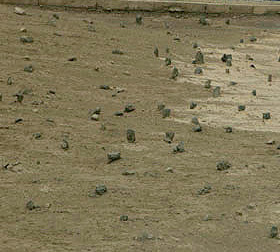
One of the major problems facing mankind today is racism.Human_Rights_and_Justice_in_Islam_002.jpg  The developed world can send a man to the moon but cannot stop man from hating and fighting his fellow man.  Ever since the days of the Prophet Muhammad, Islam has provided a vivid example of how racism can be ended.  The annual pilgrimage (Hajj) to Makkah shows the real Islamic brotherhood of all races and nations, when about two million Muslims from all over the world come to Makkah to perform the pilgrimage.
Islam is a religion of justice.  God has said:

"Truly God commands you to give back trusts to those to whom they are due, and when you judge between people, to judge with justice...." (Quran 4:58)

And He has said:

"...And act justly.  Truly, God loves those who are just." (Quran 49:9)

We should even be just with those who we hate, as God has said:

"...And let not the hatred of others make you avoid justice.  Be just: that is nearer to piety...." (Quran 5:8)

The Prophet Muhammad said: "People, beware of injustice,[5]  for injustice shall be darkness on the Day of Judgment."[6]

And those who have not gotten their rights (i.e. what they have a just claim to) in this life will receive them on the Day of Judgment, as the Prophet said: "On the Day of Judgment, rights will be given to those to whom they are due (and wrongs will be redressed)..."[7]

-islamreligion.com

Footnotes:

[1]Narrated in Saheeh Al-Bukhari, #1739, and Mosnad Ahmad, #2037.

[2]A pious person is a believer who abstains from all kinds of sins, performs all good deeds that God commands us to do, and fears and loves God.

[3]The colors mentioned in this Prophetic saying are examples. The meaning is that in Islam no one is better than another because of his color, whether it is white, black, red, or any other color.

[4]Narrated in Mosnad Ahmad, #22978.

[5]i.e. oppressing others, acting unjustly, or doing wrong to others.

[6]Narrated in Mosnad Ahmad, #5798, and Saheeh Al-Bukhari, #2447.

[7]Narrated in Saheeh Muslim, #2582, and Mosnad Ahmad, #7163.

Thursday, 17 September 2026

The Pleasures of Paradise in Brief


God has said in the Quran:

“And give good news (O Muhammad) to those who believe and do good deeds, that they will have gardens (Paradise) in which rivers flow....” (Quran 2:25)

God has also said:

“Race one with another for forgiveness from your Lord and for Paradise, whose width is as the width of the heavens and the earth, which has been prepared for those who believe in God and His messengers....” (Quran 57:21)

The Prophet Muhammad, may the mercy and blessings of God be upon him, told us that the lowest in rank among the dwellers of Paradise will have ten times the like of this world,[1]  and he or she will have whatever he or she desires and ten times like it.[2]  Also, the Prophet Muhammad said: “A space in Paradise equivalent to the size of a foot would be better than the world and what is in it.”[3]  He also said: “In Paradise there are things which no eye has seen, no ear has heard, and no human mind has thought of.”[4]  He also said: “The most miserable man in the world of those meant for Paradise will be dipped once in Paradise.  Then he will be asked, ‘Son of Adam, did you ever face any misery?  Did you ever experience any hardship?’  So he will say, ‘No, by God, O Lord!  I never faced any misery, and I never experienced any hardship.’”[5]

If you enter Paradise, you will live a very happy life without sickness, pain, sadness, or death; God will be pleased with you; and you will live there forever.  God has said in the Quran:

“But those who believe and do good deeds, We will admit them to gardens (Paradise) in which rivers flow, lasting in them forever....” (Quran 4:57)

-islamreligion.com

Footnotes:

[1]Narrated in Saheeh Muslim, #186, and Saheeh Al-Bukhari, #6571.

[2]Narrated in Saheeh Muslim, #188, and Mosnad Ahmad, #10832.

[3]Narrated in Saheeh Al-Bukhari, #6568, and Mosnad Ahmad, #13368.

[4]Narrated in Saheeh Muslim, #2825, and Mosnad Ahmad, #8609.

[5]Narrated in Saheeh Muslim, #2807, and Mosnad Ahmad, #12699.

Wednesday, 16 September 2026

The Style of the Quran


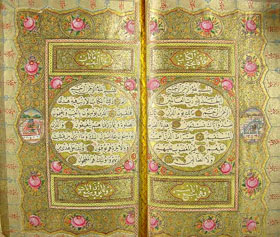
The_Style_of_the_Quran_001.jpgWhat topics does the Quran discuss?  It covers various subjects.  Most importantly, it talks about the unity of God and how to live a life which accords to His Will.  Other topics include religious doctrine, creation, criminal and civil law, Judaism, Christianity, polytheism, social values, morality, history, stories of past prophets, and science.
The Quran calls the great human exemplars of the past prophets and mentions their great sacrifice in spreading the message of God, the most important of them being Noah, Abraham, Moses, and Jesus.  The Quran elaborates on the ways in which the followers of the prophets, specifically the Jews and the Christians, have or have not lived up to the prophetic messages.  It also discusses the fate of past nations who rejected their Prophets, such as Noah and Lot.  It issues instructions on how to live a life pleasing to God.  It commands people that they should pray, fast, and take care of the needy.  It discusses matters of human interrelationships, sometimes in great detail - such as laws of inheritance and marriage - in a manner reminiscent of parts of the Hebrew Bible but foreign to the New Testament.  The Quran tells people that they should observe God’s instructions purely for God’s sake, not for any worldly aims.  It warns those who deny God’s messages that they will be thrown into the fire of Hell, and it promises those who accept the messages that they will be given the bliss of Paradise.

The Quran retells in their original form many of the stories from the Biblical heritage, especially that of Moses (mentioned by name more than any other person, followed by Pharaoh, his great enemy, who is the Quranic archetype of human evil).  However, it does not offer a sustained narrative of the kind found in the Book of Exodus.  It has much to say about the moral and legal duties of believers, but contains nothing like the law-code which is the centerpiece of the Book of Deuteronomy.  Many Quranic passages could aptly be described as preaching; but where the voice of the preacher in the Gospels is that of Jesus during his ministry on earth, in the Quran it is that of the ever-living God.

Also, the Quran repeats certain verses and themes at times, shifts topics, and often relates narratives in summarized form.  We can see two reasons for this characteristic.  First, it serves a linguistic purpose and is one of the powerful rhetorical techniques of classical Arabic.  Second, all themes of the Quran, no matter how varied, are wrapped around one common thread running through the entire book: that all types of worship rendered to others besides or alongside God is false, and that obedience to Him and His prophets, Muhammad being one of them, is a must.  The Quran, unlike the Bible, does not mention genealogies, chronological events, or minute historical details, but rather uses events from both past and present to illustrate its central message.  So, when the Quran is discussing the healing properties of honey or the life of Jesus, neither topic is an end in itself, but each is related in one way or another to the central message – unity of God and unity of the prophetic message.  No matter what the topic may be, it finds occasion to refer the discussion back to this central theme.

Another important point to keep in mind is that the Quran was not revealed in one sitting, but was revealed in parts over a span of 23 years.  Like the previous scriptures, many passages were revealed in response to specific events.  Often, Quranic revelation would come from the angel Gabriel to Prophet Muhammad as a response to questions raised by those around him, whether believers or unbelievers.  The Quran addresses the People of the Scripture (a term used by the Quran for Jews and Christians), humanity at large, believers, and, finally, it addresses the Prophet himself, commanding him what to do in certain situations or supporting him and giving him solace in the face of ridicule and rejection.  Knowing the historical and social context clarifies the text.

Some other notable features of Quran’s style are the following:

(1)  The use of parables to stir curiosity of the reader and explain deep truths.

(2)  More than two hundred passages begin with the Arabic word Qul - ‘Say’ - addressing Prophet Muhammad to say what follows in reply to a question, to explain a matter of faith, or to announce a legal ruling.  For example,

“Say: ‘O People of the Scripture!  Do you disapprove of us for no other reason than that we believe in God, and the revelation that has come to us and that which came before (us), and because most of you are rebellious and disobedient?’” (Quran 5:59)

(3)  In some passages of the Quran, God takes oaths by His marvelous creation to strengthen an argument or to dispel doubts in the mind of the listener,

“By the sun and its brightness,

by the moon when it follows it,

by the day when it displays it,

by the night when it covers it,

by the sky and He who constructed it,

by the earth and He who spread it,

by the soul and He who proportioned it…” (Quran 91:1-7)

Sometimes God takes an oath by Himself:

“But no, by your Lord, they will not (truly) believe until they make you, (O Muhammad), judge concerning that over which they dispute among themselves and then find within themselves no discomfort from what you have judged and submit in (full, willing) submission.” (Quran 4:65)

(4)  Lastly, the Quran has what is called ‘the disjointed letters,’ composed of letters of the Arabic alphabet which taken together do not have a known meaning in the Arabic lexicon.  Their meaning is only known to God.  They appear at the beginning of twenty nine surahs, and upon recital, each letter is pronounced and not the words they form.  For example, the first aayah of Surat-ul-Baqara appears as Alif-Lam-Mim, three letters of the Arabic alphabet pronounced individually.

A person unfamiliar with the Quran may find it a little difficult to read, especially at the start, but if they keep these points in mind, they will become more accustomed to it, and they will indeed find that even though it is a translation, it is truly profound book incomparable to any other. - islamreligion.com

Tuesday, 15 September 2026

Death in the Context of Faith


Death-in-the-Context-of-Faith.jpgIn the old days, when a woman saw in a dream a man extinguish the lantern in the house, or when she saw that a great house has collapsed on its foundations, she would be told by a dream interpreter that the man of the house was going to die!

One person said: "I saw in a dream that I was walking with crutches in the morning, and an hour later I was informed that my father had passed away."

The Arabs of old thought the crow was an evil omen.  This was all superstition stemming from the days of ignorance before Islam. 

Prophet Muhammad said in a sermon: "God gave a servant of his a choice between being given the flower of the Earth and between what He had in store for him, and he chose what He had in store for him." The people were bewildered, but Abu Bakr began to weep, understanding that the Prophet was telling the people his life was coming to an end."[1]

A little girl was asked: How many children are in your family?"

She replied: "We are seven."

He asked: "Where are they?"

She said: "Five of us are here, and two of us are beneath the tree over there."

He looked in the direction she was pointing and saw two small gravestones under the tree. 

"You are five, then." "No," she said, "We are seven."

Death is neither obliteration nor is it the end.  It is a transition from one state of being to another.  It is being born anew into another world.  Though it looks like the plug has been pulled on an electrical appliance, it is a fleeting, transitory state.  We say to children that the deceased "has gone to their Lord".  It is a good way to describe it.  It is a positive way of looking at it and it accords well with our faith. 

The Meaning of Life

Albert Camus, the French existential philosopher, said that since we all must die, nothing has any meaning. 

Much earlier, al-Khayyam said: "This glass was made in this exquisite form, so why must it succumb to destruction?"

These are destructive, nihilistic thoughts.  In contrast, Prophet Muhammad said: "be in this world as a stranger or a wayfarer."

Ibn Umar used to say: "When you go to sleep at night, do not await the dawn, and when you wake up, do not wait for night to come.  Take advantage your health for your times of sickness and take advantage of your life before your death."[2]

Life is like an airport; it is merely a preparation for the long journey to come. 

God says: "He it is who created death and life to test you as to which of you are best in deeds." (Quran 67:2)

This is a positive way of looking at it.  Instead of being seen as a cessation of activity, this inevitable event is seen as a catalyst for activity.  We need to get things done and make our mark while we still can. 

When we appreciate that life is short, it will help us to be more forgiving people.  We will be willing to set personal grudges aside, knowing that our time with others is limited. 

We are forced to ask ourselves three crucial questions:

1.    How can we live happy, productive lives?

2.    What will people say after we are gone?  What inspiration will they find in our life stories?

3.    What will our good deeds be like when we move on to the Hereafter?  

One of the Pious Predecessors said: "There are people who are doing so many good deeds, that if they knew they were going to die tomorrow, they would not be able to increase what they are doing."

Ali ibn Abi Talib said: "With every breath, a person’s comes that much closer to death." He also said: "Work in this world as if you are going to live forever, but work for the Hereafter as if you are going to die tomorrow."

Steve Jobs gave a commencement address where he described how he used to have to sleep on the floor in friend’s rooms, how he had to walk for miles to get a free meal, how his young mother had to struggle to find people to adopt him when he was born, how he was so easily pushed out of the company he established, and how he felt when he was diagnosed with pancreatic cancer.  He then said: "if you live each day as if it was your last, someday you’ll most certainly be right."

How to Look at Death Positively

1.    It is enough to think of it as a journey to a place without oppression or injustice.  On the Day of Judgment, it will be said: "Today, each soul will be recompensed according to what it has earned.  There is no injustice today." (Quran 40:17)

2.    It is a reunion with our loved ones who have passed away.  Right before he died, Muadh ibn Jabal said: "Tomorrow, I will meet with those I love, Muhammad and his Companions."

3.    It is liberation from the prison of material existence.  The Prophet said: "The world is the believer’s prison."[3]

4.    It is a mercy for those whose lives are strained by debilitating illness, deprivation or incapacity or when a person’s mind deteriorates so much that they can no longer interact with their loved ones.

5.    Death is akin to sleep.  Both are a change in our state of existence.  One is a permanent move to another life, and the other foreshadows it.

6.    Knowing that we are going to die one day helps us to hold on to our values when facing the tribulations of life, and makes it easy for us to make the right decisions when we are confronted with unethical but appealing choices.

- islamreligion.com

Footnotes:

[1]Saheeh Al-Bukhari, Saheeh Muslim

[2]Saheeh Al-Bukhari

[3]Saheeh Muslim