Islam

Islam

Saturday, 13 August 2022

Integrity of the individual in Islam

There are two concepts in Islam that, among others, define our understanding of integrity; its meaning and method of attainment. These are purity and wholeness. We find that the Islamic definition of integrity resembles the scientific and natural interpretations of the word more than the philosophical or theoretical understanding; insofar that it refers less to the consistency with which human behavior is aligned to a given moral or ethical dogma, and more to the extent to which human behavior is brought into agreement with intrinsic human nature.

Purity: 

The Islamic understanding of purity, unarguably, bases itself on the concept of the fitrah (natural disposition of the human being). Prophet Muhammad sallallaahu  `alayhi  wa  sallam ( may  Allah exalt his mention ) (may Allah exalt his mention) referring to this natural state of the human being, said: "Every new-born child is born in a state of fitrah. Then his parents make him a Jew, a Christian or a Magian, just as an animal is born intact. Do you observe any among them that are maimed (at birth)?" [Ahmad].

All creatures, then, including human beings, are born in a state of innate purity; any subsequent defilement of that natural condition results from a variety of social influences and manipulations. It is significant that in the above hadeeth, the impurity that develops, or that is to a degree inflicted, is likened to an actual injury or deformity -- it is a disfiguration of the natural state of the human being.
   
Integrity in Islam refers to the restoration and maintenance of that natural and primal state of purity. Allah says (what means): "Set your face to the deen (religion of Islam) in sincerity which is Allah's fitrah upon which He created mankind. There is no changing in the creation of Allah. That is the right deen but most people know not." [Quran 30:30]. When we talk of integrity, we generally refer (at least in part) to the realization of that nature which is literally integral to our being; of being true to our intrinsic qualities and character. 

Wholeness:

It is fair to say that completeness is a theme of Islam. Prophet Muhammad sallallaahu  `alayhi  wa  sallam ( may  Allah exalt his mention ) frequently employed metaphors to explain the message with which he was sent, that invoked imagery of incomplete or unfinished things being brought to completion. For instance, he sallallaahu  `alayhi  wa  sallam ( may  Allah exalt his mention ) said: "My likeness and the likeness of the Prophets before me is the likeness of a person who built a house and made it complete and beautiful, except the place of a brick in a corner. So people began to go around it and wonder at it and say, "Why has not this brick been placed?" He said, "I am that brick and I am the last of the Prophets". [Muslim]. The imagery of cohesion here reinforces the words of Allah Almighty, in the Noble Quran announcing the final perfection of His Revelation to mankind, (what means): "This day I have perfected My favor upon you and have chosen for you Islam as your religion." [Quran 5:3]

Similarly, this aspect of wholeness is emphasized in varying contexts; regarding, for example the singularity of the entire Muslim Ummah (Nation) as one body, and so on. This emphasis on holistic consistency enlightens the second component of integrity in Islam.

Maintaining the purity of the fitrah becomes a complex and challenging process as we age, and our duties, relationships, psychological and emotional development become more sophisticated and varied. We must take care to ensure that the intricate self of adulthood does not become partially or wholly alienated from the natural, simpler purity present in childhood. This requires a comprehensive alignment of all areas of life; private and public behavior, social relationships, habits, disciplines etc, with a system based upon the fitrah . That is, the quintessential purity of the fitrah must be realized in the totality of one's being through adherence to the detailed guidance of Islam. 

Rather than a simple adherence to a particular ethical and moral code, as mentioned, integrity in Islam indicates the fullest manifestation of human essence. The wholeness is achieved by bringing human attributes and faculties in agreement with human function and purpose. In the same way that we would refer to a perfectly shaped, smooth, circular wheel as having integrity, so Muslim integrity has to do with the extent to which the individual is actualizing in totality his or her attributes and capabilities, in accordance with the purpose for which he or she has been endowed with them: the worship of Allah. 

Integrity in Islam has to do with the consistency of the individual with his or her innate purpose; the totality of the individual's life being kept in alignment with their intrinsic function. It is not merely the dogmatism of adherence to a relatively arbitrary code of conduct and behavior, but the preservation of the individual's purity and authenticity. Whereas the philosophical definition of integrity would take violation of a given code of ethics as what invalidates one's integrity; in Islam, the violation of integrity constitutes an alienation from one's nature with drastic and profound consequences that ultimately invalidate one's very life.  - islamweb.net

Friday, 12 August 2022

Status of Brain during Prayers: Scientific Analysis


Since the beginning of time, philosophers, psychologists, scientists, and many others have always questioned the presence of God.

According to research done since the past few years, belief in God isn’t merely a play of the mind or belief in the unseen, it is the reality.

Researchers have found a strong connection between brain activity and religious practice.

Dr. Andrew Newberg, MD, from Thomson Jefferson University Hospital and Medical College, found differences in brain activity of religiously devout individuals before praying, after praying and of atheist individuals before meditating and after meditating.

The differences were found in the most important part of the brain, the frontal lobe.  He studied the effects of prayer on the human brain and what happens inside their heads while praying by injecting harmless radioactive dye into subjects and observing them through scanning machines. He observed brain scans of Muslim Imams, Tibetan monks, and meditating atheists.

Understanding Frontal Lobe

There are six components inside the brain; the frontal lobe, parietal lobe, occipital lobe, temporal lobe, cerebellum, and the brain stem.

This frontal lobe represents nearly a third of the entire brain. It is the last region of the brain to develop and the first to decrease in activity with growing age. It is the CEO of the brain, the boss of the brain, and is located right behind the forehead.

The frontal lobe is primarily involved in decision making, planning, organizing, working memory, self-management, and managing emotion.

The frontal lobe is what gives individuals their personality and is responsible for their cognitive skills. In addition, the frontal lobe is active during the conversation, and it allows speech and active listening.

The parietal lobe is located at the back of the brain and is divided into two hemispheres. The parietal lobe is also greatly impacted during prayer and meditation per research done by Dr. Newberg.

In general, its main function is to process sensory information about the processing location of parts of the body. It also interprets visual information and process language and mathematics.

Nonetheless, all components of the brain work cohesively for the proper functioning of the human body.

Brain Activity Scans

The images above show the brain activity of Franciscan Nurse, who has prayed to God daily for 34 years, before and after prayer.

They are derived from a SPECT scan, a nuclear imaging test, which uses radioactive substances and a special camera to observe how the organs work by creating 3D images.

SPECT, single-photon emission computed tomography (SPECT), allows the measurement of blood flow. The more blood flow a brain area has, the more active it is (red > yellow > green > blue > black).

After the prayer scan, the frontal lobe of the nurse, along with the language center, shows an elevated activity level. The increased activity of the frontal lobe, which is responsible for attention and conversation, indicates that when an individual prays, they are engaging in a conversation with God which resembles a physical conversation.

In other words, just by observing the scans, one can easily confuse that speaking to God is the same as speaking to an individual in the physical world. The two conversations, per the SPECT scans, are indistinguishable.

Likewise, the image on the right also shows a decreased activity of the part of the brain responsible for orientation, located in the parietal lobes.

According to Dr. Newberg’s, this is because the complete concentration in the brain during prayer and meditation blocks sensory and cognitive input from the outside. Hence, it leads to a decreased activity of the orientation area.

Atheists & Prayers

The above images, taken before and after an atheist meditates and contemplates on the existence of God, do not show the same level of activity of the frontal cortex of the brain. There is no relative difference between the brain scan taken prior to meditation and afterward.

Therefore, this study wants to prove that, for individuals who do not believe in God, meditation does not provide the same differences and increase in activity level as does for the believer. This is because to the atheist, God is unimaginable.

When believers describe their feelings with God, their descriptions are not a mere figment of their imagination. They are physical realities. Therefore, to those who claim that God only exists in the brain, it is the brain which crystallizes reality.

As science and technology progress, they seem to be solidifying the words of God. Allah says in the Qur’an that holy book was sent down as mercy to the worlds. (21:107)

In conclusion, Dr. Andrew Newberg said, “Our brains are set up in such a way that God and religion become among the most powerful tools for helping the brain do its thing—self-maintenance and self-transcendence. Unless there is a fundamental change in how our brain works, God will be around for a very long time.”

Indeed as Allah mentions to us in the Holy Qur’an, “We will show them Our signs in the horizons and within themselves until it becomes clear to them that it is the truth. But is it not sufficient concerning your Lord that He is, over all things, a Witness?” (Surat Fussilat 41:53).

-aboutislam.net

This article is from the archive of aboutislam.net, originally published on an earlier date, and now republished for its importance.


About Madiha Sadaf
Madiha Sadaf in an undergraduate student at the University of Ottawa, enrolled in BSc. with Major in Biology and Psychology with Minor in Health Social Sciences.

Thursday, 11 August 2022

JESUS’ GREATEST COMMANDMENT


The man was a teacher.  He taught the Law of Moses.  He was impressed to see Jesus answering the questions of hypocrites and heretics with wisdom:

"One of the teachers of the law came and heard them debating.  Noticing that Jesus had given them a good answer, he asked him, ‘Of all the commandments, which is the most important?’"

He felt it was his opportunity to ask Jesus, the Great Teacher, what was the most important commandment, how he can be saved, enter life and the Kingdom of God.

Now, we need to shed all our biases, everything we have been taught in Sunday schools, and all the teachings of mortal men.  All who love Jesus should let him talk:

"The most important one," answered Jesus, "is this: ‘Hear, O Israel, the Lord our God, the Lord is one.  Love the Lord your God with all your heart and with all your soul and with all your mind and with all your strength.’"

A great answer to a great question: accept the Lord our God is One, love Him, and worship Him to the best of your ability.

Jesus was not finished.  He had more to teach.  Obviously Jesus was teaching the man everything he needed to get into the Kingdom of God.  Jesus added:

"…The second is this: ‘Love your neighbor as yourself.’"

The Great Teacher further clarified:

"There is no commandment greater than these."

The man who questioned Jesus repeated the commandments to make sure he got them right:

Mark 12:32 "‘Well said, teacher,’ the man replied.  ‘You are right in saying that God is one and there is no other but him…’"

Jesus seeing the man had learned the greatest commandment correctly gave him the good news:

Mark 12:34 "When Jesus saw that he had answered wisely, he said to him, ‘You are not far from the kingdom of God.’"

There are some significant lessons in this story:

First, Jesus taught the man more than he asked, yet he did not say he is the son of God, or the Savior sent to redeem mankind of its sins.  He did not say anything remotely similar to what people are instructed to repeat to be ‘born again’ in Christ, "You should individually receive me, accept me as the Son of God, your personal Lord and Savior who will die on the cross for your sins and will rise from the dead.  Let the Holy Spirit fill you…"

Take what Jesus said and leave what people have added.

Second, salvation depends on this commandment.  Jesus made it clear when another man approached Jesus to learn from him (Mark 10:17-29).  The man fell on his knees and said to Jesus:

Mark 10:17-18 "Good teacher, what must I do to inherit eternal life?"  Jesus replied: "Why do you call me good?  No one is good — except God alone."

Third, Jesus confirmed there is no commandment greater than these.  In case, someone might think the greatest commandment changed afterwards, Jesus told us:

Matthew 5:17-19 "For assuredly, I say to you, till the heaven and earth pass away, one jot or one title will by no mean pass from the law till all is fulfilled.  Whoever therefore breaks one of the least of these commandments, and teaches men so, shall be called least in the kingdom of heaven; but whoever does and teaches them, he shall be called great in the kingdom of heaven."

Fourth, anyone who loves Jesus and wants to enter life must keep the greatest commandment of Jesus as he said:

John 14:15 "If you love me, keep my commandments."

Matthew 19:17 "If you want to enter life, obey the commandments."

Fifth, a sincere Christian should accept what Jesus said without twisting his words or finding hidden meaning in them.  Jesus taught exactly what Moses taught some 2,000 years before him:

Deuteronomy 6:4-5 "Hear, O Israel: The Lord our God, the Lord is one.  Love the Lord your God with all your heart and with all your soul and with all your strength."

Jesus, may the mercy and blessings of God be upon him, taught the same eternal truth ALL the prophets of God taught to their people: God is One, worship Him alone.

Deuteronomy 6:13 "Fear the Lord your God, serve Him only and take your oaths in His name."

Deuteronomy 5:7 "You shall have no other God besides Me."

Isaiah 43:11 "I even, I am your Lord and besides Me, there is no Savior."

Hosea 13:4 "I am the Lord your God who brought you out of the Egypt.  You shall acknowledge no God but me, no savior except me."

Psalms 95:6-7 "O come, let us bow down and worship, let us kneel before the Lord, our Maker.  For we are the people of His pasture and the sheep of His voice and He is our God."

Jesus emphasized this teaching to Satan as well:

Matthew 4:10 "Away from me, Satan! For it is written: Worship the Lord your God, and serve Him only."

Sixth, the Quran confirms the greatest commandment of Jesus.  The Quran teaches us exactly that God sent all the prophets with the same teaching: to worship the One true God alone.

"…And your God is One God: there is no god but He…" (Quran 2:163)

"And your Lord has decreed that you worship none but Him..." (Quran 17:23)

"And We did not send any Messenger before you (O Muhammad) but We revealed to him (saying): ‘none has the right to be worshipped but I, so worship Me.’" (Quran 21:25)

Seventh, on the Day of Resurrection, the Quran tells us that God will ask Jesus:

"And [beware the Day] when God will say, ‘O Jesus, Son of Mary, did you say to the people, ‘Take me and my mother as gods besides God?...’" (Quran 5:116)

Jesus will respond:

"He will say, ‘Limitless are You in Your glory! It was not for me to say that to which I have no right.  If I had said it, You would have known it.  You know what is within myself, and I do not know what is within Yourself.  Verily, it is You alone who fully knows all the things that are beyond the reach of a created being’s perception.  I said not to them except what you commanded me – to worship God, my Lord and your Lord.  And I was a witness over them as long as I was among them; but when You took me up, You alone had been their keeper:’ for You are witness unto everything.  If You should punish them – indeed they are Your servants; but if You forgive them – indeed it is You who is the Exalted in Might, the Wise." (Quran 5:116-118)

- islamreligion.com

Wednesday, 10 August 2022

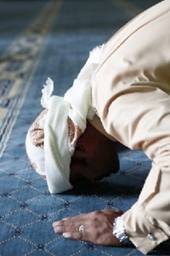
MUSLIM PRAYER POSTURES FOUND IN THE BIBLE


Muslim Prayer Postures.jpgPrayer holds a very important place in the religion of Islam.  It is the second pillar of Islam and the act of ritual prayer is performed five times every day.  There is great power entrenched in the postures of prayer not the least of which is that it establishes and reinforces our connection to God.  This is a connection that God Himself established when he created human beings.  Our ancestor Adam was responsible for teaching his family how to worship God in the correct way which included praying.

All the prophets and messengers God sent to the nations on earth spread the same message, "O my people, worship God, you have no other God but Him" (Quran 11:50).  They all spoke words of wisdom, guiding the people and reminding them that God is One, without partners, sons or daughters.  Most of the prophets mentioned in the Quran are recognisable to people of the Christian and Jewish faiths and they all prayed in much the same way that Muslims pray today. 

Muslims believe that Prophet Muhammad, may the mercy and blessings of God be upon him, is the final Prophet and that his mission and message was slightly different to the message of all the prophets before him.  While each prophet was sent specifically to guide his own nation, Prophet Muhammad was sent to guide all of humankind.   He said, "Every prophet was sent to his nation exclusively, but I was sent to all mankind".[1]  Once we understand the connection between all the prophets of God it is not surprising to learn that they all prayed in basically the same way.  What is surprising however is that even though there are descriptions of prayer in the Bible, Christians and Jews no longer pray the way their own prophets prayed.

The remainder of this article will examine passages from various books of the Bible and compare them to the way Muslims pray.

The most recognisable posture in the Muslim prayer is touching the forehead to the ground.  It is the apex of a person’s prayer and it is mentioned in the authentic traditions of Prophet Muhammad as the position in which a believer is as close to God as it is possible to be.   "The nearest one comes to his Lord is when he is kowtowing."[2]  Consider the following verses from the Bible.[3]

"And he (Jesus) went a little further, and fell on his face, and prayed..." (Matthew 26:39)

"And Joshua fell on his face to the earth, and did worship..." (Joshua 5:14)

"And Moses and Aaron went from the presence of the assembly unto the door of the tabernacle of the congregation, and they fell upon their faces…" (Numbers 20:6)

"And Abraham fell on his face..." (Genesis 17:3)

"…and they fell on their faces before the throne and worshiped God." (Revelation 7:11)

"…then they bowed their heads and worshiped the Lord with their faces to the ground." (Nehemiah 8:6)

"…Then David and the elders of Israel, who were clothed in sackcloth, fell upon their faces." (1 Chronicles 21:16)

In many others places in the Bible where we find the method of prayer mentioned, it calls to mind the way Muslims pray.  In the Bible book entitled Daniel we are able to read a description of Daniel praying to God in a time of great crisis.   

"Now when Daniel knew that the writing was signed, he went into his house; and his windows being open in his chamber toward Jerusalem, he kneeled upon his knees three times a day, and prayed, and gave thanks before his God, as he did a foretime." (Daniel 6:10)

It is interesting to note that Prophet Daniel prayed towards Jerusalem.  In the early days of Prophet Mohammad’s mission the faithful also prayed towards Jerusalem.   However the Muslim direction of prayer changed.  About sixteen months after Prophet Muhammad and his followers migrated from Mecca to the city of Medina the direction was changed to facing the sacred House of God in Mecca.

Descriptions of the positions Muslims adopt in the five ritual prayers per day can be found throughout the Bible.   Many are mentioned in the book of Psalms. 

"Stand in awe, and sin not."(Psalms 4:4)

"O come, let us worship and bow down: let us kneel before the Lord our maker." (Psalms 95:6)

"…all that go down to the dust shall bow before him…" (Psalms 22:29)

And in the book of Kings we find Prophet Elijah casting himself upon the earth in the position of kneeling before touching the forehead to the ground. 

"…and he cast himself down upon the earth, and put his face between his knees." (1 Kings 18:42)

This is a position very familiar to Muslims.  So too is the position Jesus adopts during prayer in a moment of fear and uncertainty.

"And he (Jesus) was withdrawn from them about a stone’s cast, and kneeled down, and prayed." (Luke 22:41)

Even though the Jews and Christians today do not pray as we read in the Bible, Muslims continue to pray in a similar way to the prophets, as intended by the Creator of the heavens and the earth. - islamreligion.com

FOOTNOTES:

[1]Saheeh Al-Bukhari

[2]Ibid

[3]All Bible verses come from King James Bible "Authorized Version", Cambridge Edition available online at

Tuesday, 9 August 2022

WHAT IS BUDDHISM? : THE PATH TO ENLIGHTENMENT

 Definition: A widespread Asian religion or philosophy, founded by Siddartha Gautama in NE India in the 5th century BCE, which teaches that enlightenment may be reached by elimination of earthly desires and of the idea of the self.[1]

Buddhism1.jpgBuddhism is the religion of more than 500 million people around the globe.  The majority of those people live in Asia but there are substantial Buddhist communities in other continents.  There are two main Buddhist traditions, Theravada (The School of the Elders) and Mahayana (The Great Vehicle).  Buddhism is not strictly a religion and is often described a philosophy of life.   

Who was the Buddha?

According to Theravada scripture the Buddha (Siddartha Gautama) was born in the 5th century BCE.  He was the son of King Śuddhodana, the ruler of a small kingdom in what is modern day Nepal.  Shortly after his birth, eight Brahmins were called upon to predict the child’s future.  Seven Brahmins prophesised that the young prince would either be a great ruler, or renounce worldly pleasures and live the life of a holy man.  One however, was sure the child would be a holy man.  The King had great worldly ambitions for his son therefore kept the Prince within the confines of the royal palace.  At age 29 the prince escaped confinement and had several encounters with the outside world.  These encounters became known in scripture as the four sights.

When Siddartha saw an old man, a sick person, a corpse and an aesthetic who had renounced all worldly goods he resolved to embark on a spiritual quest.  This quest was to find a permanent end to the suffering he observed.  He studied with the best religious teachers but found they could not put a permanent end to suffering.  He next practised extreme aestheticism, believing that he could free the human spirit by denying the flesh.  Siddartha underwent prolonged fasting, breath-holding, exposure to pain and almost starved himself to death before he realised that this was not the way to put an end to human suffering.

Siddartha did not abandon his quest but decided to trust his own inner feelings and practice meditation.  He sat under a fig tree, known as the Bodhi tree, in the town of Bodh Gaya, India, and vowed not to rise before achieving enlightenment.  After a number of days he destroyed the restraints of his mind, liberating himself from the cycle of suffering and rebirth, thus becoming  a fully enlightened being.  It was through this meditation that Siddartha discovered what Buddhists call the Middle Way, a path of moderation between the extremes of self-indulgence and self-mortification.[2]  Shortly after enlightenment Buddha (the awakened one) previously known as Siddartha formed a monastic order and spent the rest of his life travelling and teaching the path to enlightenment.  The Buddha died at around 80 years of age in Kushinagar, India.[3]

This account is according to the Theravada school of thought and differs somewhat from other accounts.  The historical accuracy has also been called into question but according to author Michael Carrithers, “the outline of the life must be true: birth, maturity, renunciation, search, awakening and liberation, teaching, death”.[4]

Basic Buddhist Teachings

Buddhism is divided into two main divisions and several sub divisions based on country and culture, however most traditions share a fundamental set of beliefs.  One fundamental belief of Buddhism is often referred to as reincarnation however this is not strictly correct.  The Buddhist belief is rebirth rather than reincarnation.  The internet site Religious Tolerance explains it in the following way. 

“In reincarnation, the individual may recur repeatedly.  In rebirth, a person does not necessarily return to Earth as the same entity ever again.  He compares it to a leaf growing on a tree.  When the withering leaf falls off, a new leaf will eventually replace it.  It is similar to the old leaf, but it is not identical to the original leaf.”[5]

Other fundamental beliefs include the three jewels, the four noble truths, the eightfold path and the five precepts.  The three jewels are the Buddha, the Dharma (the teachings), and the Sangha (the community) and taking refuge in them is the basis of Buddhist practice.  The four noble truths are the universality of suffering, the origin of suffering, the overcoming of suffering and the way leading to the suppression of suffering.

The way or path is known as the eightfold path  and consists of dṛṣṭi (ditthi): viewing reality as it is, not just as it appears to be, saṃkalpa (sankappa): intention of renunciation, freedom and harmlessness, vāc (vāca): speaking in a truthful and non-hurtful way, karman (kammanta): acting in a non-harmful way, ājīvana (ājīva): a non-harmful livelihood, vyāyāma (vāyāma): making an effort to improve, smṛti (sati): awareness to see things for what they are with clear consciousness, being aware of the present reality within oneself, without any craving or aversion, samādhi (samādhi): correct meditation or concentration.

The five precepts outline Buddhist ethics.  Do not kill, be kind to all creatures.  Do not steal, give rather than take.  Do not lie, be honest and open.  Do not misuse sex and do not consume alcohol or use recreational drugs. 

Just as the Hindu and Buddhist explanations of reincarnation and rebirth differ so too does the use us the term nirvana.  In Hinduism it is union with the Supreme Being, to aesthetic holy men in various Indian religions including Jainism, Hinduism and Buddhism it is the state of being free from suffering and in Buddhism it takes on its literal meaning of “blowing out” or extinguishing the fires of hatred, greed and delusion.  Nirvana is also characterized by transcendental knowledge or bodhi a concept translated into English as ‘enlightenment’.  The Buddha himself never gave an exact definition of Nirvana.  However there is no God in Buddhism, rather, by breaking the cycle of rebirth and achieving enlightenment Buddhists believe that they will reach the state of Nirvana – eternal being, the end of suffering, a state where there are no desires and individual consciousness has come to an end.

In the next article we will delve a little deeper by discussing further the concept of God in Buddhism and comparing some of the basic Buddhist beliefs with Islamic teachings.

Buddhism2.jpgIn Buddhism,[6]  the ultimate goal is to break the cycle of rebirth and achieve enlightenment or nirvana.  Nirvana is a transcendental state in which there is no suffering, desire, or sense of self.   The Buddha however, did not give a complete definition of nirvana.  It is worth noting that the term Buddha most commonly refers to the founder of Buddhism, Siddartha Gautama, however any person who has achieved full enlightenment, or nirvana, may be referred to as a Buddha. 

In most religious groups and traditions the key belief is the acceptance of a Supreme Being, in other words, a Creator God.   In all Buddhist traditions however, the key belief is the importance of meditation.  It is considered the path to liberation – the end of human suffering.  Buddhists do not believe in either a creator or personal God, in fact Buddhism rejects such a notion and considers God a response to human fright and frustration. According to Buddhist ideology humans create the idea of God to console themselves in a fear filled and hostile world.

Primitive man lived in fear of wild animals and natural phenomena such as thunder and lightning.  Buddhists believe that the concept of God arose out of this fear; they also consider that there is no evidence or research to prove that God exists thus God is not necessary for human beings to have a happy or meaningful life.  After all, Buddhists say, millions of people are, and have been happy without any belief in gods or God.  On the other hand, Muslims know with certainty that true happiness is not achievable without submission to the will of God.  Fear and frustration, says Islam, can only be conquered by complete and total trust in God.

Although Buddhism has no one all powerful Creator God, Mahayana Buddhists worship bodhisattvas.   They are god-like people who have gained enlightenment and could enter Nirvana but chose to stay in the world to help others.  Some Mahayana schools that flourished outside India do ascribe some degree of divinity to a transcendent Buddha (anyone who has attained enlightenment), however this is not comparable to the God of monotheistic religions such as Islam.  In some Buddhist sacred texts Buddha (Siddartha) refutes the claims of one of these gods and shows him to be subject to Karmic law.

The concept of Karma existed before the advent of the Buddha (Siddartha) but he defined and explained it.  Put into plain words, the law of karma explains the inequalities that exist between people.  According to Buddhism, inequality is the result of our own past actions and our own present doings.  We ourselves are responsible for our own happiness and misery.  We create our own Heaven or Hell; we are in fact the architects of our own fate.   Buddhism tells us that nothing is fixed or permanent, change is possible, and actions have consequences.   A concept that could be compared to the Christian theory of reaping what you sow or the verse from Quran that states,   

“If you do good, you do good for your ownselves, and if you do evil (you do it) against yourselves.” (Quran 17:7) 

In direct contrast to Buddhist belief Islam teaches that there is One, All Powerful Creator God, Sustainer of the universe, all merciful and oft forgiving.   He is alone, without partners or associates.

According to many Buddhist web sites and books Buddhism is not about believing or not believing in God, it is about recognizing that such a belief is not useful when trying to attain enlightenment.   Buddhism is not atheism it is essentially nontheism.  Why then, you may wonder, is it common to see people throughout Asia praying to, or making devotional offerings to representations or iconography of the Buddha?  

When a Buddhist makes offerings of flowers or food he is showing respect to Buddha, he gives flowers and incense for the shrine and food for the monks.  When a Buddhist prostrates before an image, he acknowledges that the Buddha attained perfect enlightenment.  In contrast, when a Muslim prostrates there are no images or iconography; the Muslim touches his forehead to the ground declaring his complete submission to God, who is alone without partners, offspring or intermediaries. 

In the 5th century BCE, after Siddartha supposedly achieved enlightenment, the Buddha and his followers travelled widely throughout India spreading the message.  Buddhism, in its various forms, was soon found across India and in Sri Lanka, South East Asia, China, Korea, Japan, Tibet, Nepal and Mongolia.  Even now, so many years later, Buddhism continues to spread into the western world. - islamreligion.com

FOOTNOTES:

[1]Google online dictionary.

[2](http://www.buddhanet.net/cbp2_f4.htm)

[3]Nidanakatha - biography of the Theravada sect in Sri Lanka.  Buddhaghoṣa.  5th century CE.

[4]Carrithers,M.  (1986) The Buddha, in the Oxford University paperback Founders of Faith, p.  10.

[5](http://www.religioustolerance.org/buddhism1.htm)


[6]Please refer to the footnotes of Article 1 and (http://www.buddhist-tourism.com/buddhism/)


Monday, 8 August 2022

OUT OF EGYPT: THE STORY OF PASSOVER IN THE QURAN


Many Jews may be surprised to learn that Islam as preached by Muhammad, may the mercy and blessings of God be upon him, was the same religion preached by Abraham, as well as of all other prophets mentioned in the Torah and the Bible.  Muslims honor all the prophets of the Jews – Abraham, Jacob, Joseph, Moses, David and Solomon among others – as their own prophets and believe that they all preached on message, that is the belief in the Oneness of God. 

Here is how God ordered Muhammad to uphold the belief in the Oneness of God, which was upheld by Prophet Abraham:

“Then We revealed to you, [O Muhammad], to follow the religion of Abraham, inclining toward truth; and he was not of those who associate with Allah. .” (Quran 16:123)

It is particularly noteworthy that in the Quran, there is no story that is recounted as many times and with as much emphasis, as the story of the bondage of the Children of Israel and their subsequent deliverance from Egypt’s Pharaoh.  The Quran quotes Moses as saying to his people:

“O my people!  Remember the blessings which God bestowed upon you when he raised up prophets among you, and made you your own masters, and granted unto you favors such as He had not granted to anyone else in the world.” (Quran 5:20)

It was Moses, with the help and guidance of God Almighty, who led them out of Egypt towards a land of promise.  God in the Quran says what means: 

“O children of Israel! Remember those blessings of Mine with which I graced you, and how I favored you above all other people.  And guard yourselves against a day when no soul will in aught avail another, nor will intercession be accepted from it, nor will compensation be received from it, nor will they be helped.  And remember the time when We saved you from Pharaoh’s people, who afflicted you with cruel suffering, slaughtering your sons and sparing only your women — which was an awesome trial from your Sustainer; and when We cleft the sea before you, and thus saved you and caused Pharaoh’s people to drown before your very eyes.” (Quran 2:47-50)

The story is narrated elsewhere in the Quran, where we may read these verses:

“And We took the Children of Israel across the sea, and Pharaoh and his soldiers pursued them in tyranny and enmity until, when drowning overtook him, he said, "I believe that there is no deity except that in whom the Children of Israel believe, and I am of the Muslims." Now? And you had disobeyed [Him] before and were of the corrupters? So today We will save you in body that you may be to those who succeed you a sign. And indeed, many among the people, of Our signs, are heedless. And We had certainty settled the Children of Israel in an agreeable settlement and provided them with good things. And they did not differ until [after] knowledge had come to them. Indeed, your Lord will judge between them on the Day of Resurrection concerning that over which they used to differ” (Quran 10:90-93)

The torments inflicted on the Children of Israel by the Pharaoh were continuous and harsh; and so God sent His prophets Moses and Aaron (peace be upon them) to warn the tyrant that he should stop the oppression of the Children of Israel and free them.

But he was arrogant and refused to free the Jews, until the last of the plagues God sent as punishment.    

Under guidance from God, the Israelites fled Egypt; while the Pharaoh and his men pursued them.  It seemed like their journey would end at the Red Sea which prevented their escape.

But a miracle happened when Moses struck the water with his staff: The waves of the Red Sea parted and the Israelites hurried along the passage between the parted waves.  Pharaoh and his soldiers followed; but by the time the Israelites reached the other shore, the sea closed in engulfing their pursuers.  Thus the Israelites were delivered from bondage, and the Pharaoh and his people perished.   

When the Prophet Muhammad came to Madinah on the tenth of the lunar month of Muharram, he found that the Jews there were fasting.

“The Prophet asked them why they were fasting on this day, and they explained that it was the day that God saved the Children of Israel from the Pharaoh, and that Moses fasted in thanks on this day.  The Prophet said, “We have more claim to Moses than you.” He fasted on that day and commanded Muslims to fast on the day.” (Saheeh Al-Bukhari)

-islamweb.net