Islam

Islam

Sunday, 7 August 2022

Significance of Fasting Muharram 9 and 10


Fasting the 9th and the 10th of Muharram is a Prophetic Sunnah. The Prophet said, “Fasting the day of Ashura, I hope that Allah will accept it as expiation for the previous year.” (Muslim) The Prophet also said: “If I live next year, I shall also fast on the 9th day.” (Ahmad)

Abdullah ibn Abbas (may Allah be pleased with him) said: When the Messenger of Allah (peace be upon him) fasted on the day of Ashura and told the people to fast, they said, “O Messenger of Allah, this is a day that is venerated by the Jews and Christians.”

The Messenger of Allah (PBUH) said, “Next year, if Allah wills, we will fast on the ninth day.” But by the time the following year came, the Messenger of Allah had passed away. (Muslim)

Ash-Shafi`i and his companions, Ahmad, Ishaq, and others said: It is recommended to fast both the 9th and the 10th because the Prophet (PBUH) fasted the 10th and intended to fast the 9th.

Based on this, there are different ways of fasting Ashura, the least of which is to fast the 10th only, but it is better to fast the 9th as well. The more one fasts in Muharram, the better.

Allah Almighty knows best.

Source: www.islamqa.info

Saturday, 6 August 2022

THE JUDICIAL SYSTEM IN ISLAM


1 : INTRODUCTION

Man is a social being by nature.  He cannot live perpetually on his own, completely independent of others.  People are interdependent.  Consequently, friction arise between them when their personal interests come into conflict with each other, or when what they perceive as their individual rights infringe upon those of others.  Conflicts between them inevitably break out.  In some cases, one party to the conflict might be strong and aggressive while the other is weak and condescending, incapable of defending his rights.

Because of this, it becomes necessary for there to be a way to prevent people from oppressing one another, to ensure that the weaker members of society receive justice, and to determine right from wrong when issues get complicated or uncertain.  This can only be realized through a judge that has the power to give legal verdicts in cases of dispute.

For this reason, we find that the existence of a judge is considered by Islamic law and the laws of all the other revealed religions to be both a religious obligation and a necessity of human life.  God says:

“We have sent Messengers with clear proofs, and sent down with them the Scripture and the Balance that mankind can establish justice…” (Quran 57:25)

Islam – the religion that God wants for mankind from the time that He sent Muhammad, may the mercy and blessings of God be upon him until the Day of Judgment – shows great concern for the judicial system and those appointed to carry out its responsibilities.  Islam prescribes for it many legal injunctions.  How else could it be, when Islam is the religion of mercy, equality, and justice?  It is the religion that comes to free people from worshipping Creation and bring them to the worship of God.  It is the religion that comes to remove people from oppression and iniquity and bring them to the highest degree of justice and freedom.

God’s Messenger was the greatest of judges.  He used to act in the capacity of judge in the city of Medina, which was the first Islamic state.  He used to appoint people to be judges in other cities.  Among these were `Utâb b. Asyad who was sent to Mecca, Ali b. Abu Talib and Muadh b. Jabal, both of whom were sent to Yemen.

In the era of the Rightly Guided Caliphs, the head of state continued to be the one to appoint judges, govern their affairs, protect their independence, and keep the governors and political appointees – and even the Caliphs – subject to the judges’ verdicts.  Umar b. al-Khattaab, the second Caliph, was the first person to make the judge an independent entity, distinct from the Caliph and the governors.

In this way, the judicial system continued to evolve throughout the early Islamic era, during the Umayyad era, and well into the Abbasid era.  The office of Chief Justice came into being at this time.  The Chief Justice became responsible for appointing and removing judges.  He was responsible for supervising their behavior and monitoring their performance.  The first person to be appointed to this post was the justice Abu Yusuf, the student of the great jurist Abu Haneefah (may God have mercy on them both).  Thereafter, this office became widespread throughout the Muslim lands.  It continued to exist up to the fall of the Ottoman Empire.

The names of many just judges have been preserved in Islamic History.  Their names have become like synonyms for justice and integrity.  Many pages in the history books are devoted to the lives and careers of eminent judges like Iyâs b. Muawiyah, Shurayh b. Abdallah, al-`Izz b. `Abd al-Salam and others who applied the teachings of Islam in the best possible manner.  They give us a living example of how a Muslim judge is supposed to conduct himself.

We should mention, since we are discussing the Islamic judicial system, that Islam sets down broad guidelines and basic principles concerning the affairs of life and rarely concerns itself with the particular details of life.  This is so these guidelines can stay relevant for every time and place.  One of these guidelines is that establishing justice among people is an obligation that has to be carried out.  As for the manner of achieving this objective, this has not been detailed by the sacred texts.  This has been left for the people of each generation to deal with in a way most suited to their unique set of circumstances.  The only condition is that whatever methods are chosen must not run contrary to Islamic Law.

2 : ITS LEGAL BASIS AND ISLAM RULING

Defining the Judicial System and its Legal basis

The judicial system in Islam is a system for deciding between people in litigation with the aim of settling their disputes in accordance with the injunctions of the Divine Law, injunctions that are taken from the Quran and Sunnah.

All of the Messengers of God (peace be upon them) acted as judges.  God says:

“And remember David and Solomon, when they gave judgment concerning the field when people’s sheep had browsed therein at night, and We were witness to their judgment.  And We made Solomon to understand the case.  And to each of them We gave good judgment and knowledge.” (Quran 21:78-79)

God also says:

“O David, verily we have placed you as a successor on Earth, so judge between people in truth, and do not follow your desires for it will mislead you from the path of God.  Verily, those who stray from the path of God have a severe punishment because they forgot the day of reckoning.” (Quran 38:26)

Prophet Muhammad, who came with the final and eternal Message, was ordered by God to pass judgment in disputes just as he was ordered to spread the word of God and call people to Islam.  This is mentioned in the Quran in a number of places.  God says, for instance:

“So judge (O Muhammad) between them by what God has revealed and do not follow their vain desires, but beware of them lest they turn you away from some of what God has sent down to you.” (Quran 5:49)

God also says:

“…And if you judge (O Muhammad), judge between them with justice.  Verily, God loves those who act justly.” (Quran 5:42)

And He says:

“But no, by your Lord, they shall have no faith until they make you (O Muhammad) judge in all their disputes and find in themselves no resistance against your decisions and accept them with full submission.” (Quran 4:65)

The Sunnah also provides for the legal basis of the Islamic judicial system.  It is related by Amr b. al-Aas that the Prophet said:

“If a judge gives a judgment using his best judgment and is correct, then he receives a double reward (from God).  If he uses his best judgment but makes a mistake, then he receives a single reward.” (Ahmed)

God’s Messenger  said:

“You should not wish to be like other people, except in two cases: a man who God has given wealth and he spends it on Truth and another who God has granted wisdom and he gives verdicts on its basis and teaches others.” (Saheeh Al-Bukhari, Saheeh Muslim)

Many scholars have related to us that there is consensus among Muslims on the legal status of the judicial system in Islam.  Ibn Qudamah says:

“The Muslims are unanimously agreed that a judicial system must be established for the people.”

The Islamic Ruling Concerning the Judiciary

The jurists agree that the duties of the judge are an obligation that must be carried out by society.  If some members of society carry out this duty, it is sufficient for everyone.  If, on the other hand, everyone neglects it, then everyone in society is sinful.

The proof that these duties are obligatory comes from the Quran:

“O you who believe!  Stand out firmly for justice...” (Quran 4:135)

It is only necessary for a small number of individuals to perform judicial duties since judicial concerns come under the broad duty of enjoining what is right and forbidding what is wrong.  It is not obligatory for every individual to carry out this duty as long as some people are doing so.

The affairs of the people will not be correct and upright without a judicial system.  It is, consequently, obligatory for one to exist, just like it is necessary to have a military.  Imam Ahmad, one of the greatest and most well-known scholars of Islam said:

“People have to have a judicial authority or their rights will disappear.”

The duties of the judiciary include enjoining what is right, helping the oppressed, securing people’s rights, and keeping oppressive behavior in check.  None of these duties can be performed without the appointment of a judiciary.

A judicial system is a necessity for the prosperity and development of nations.  It is needed to secure human happiness, protect the rights of the oppressed, and restrain the oppressor.  It is the way to resolve disputes and ensure human rights.  It facilitates enjoining what is right, forbidding what is wrong, and curbing immoral behavior.  In this way, a just social order can be enjoyed by all sectors of society, and every individual can feel secure in his life, property, honor, and liberty.  In this environment, nations can progress, civilization can be achieved, and people are free to pursue what will better them both spiritually and materially. -islamreligion.com

Friday, 5 August 2022

Between the Prophet’s Hijrah and Today’s Migration


Within few days, Muslims will be celebrating Hijrah while facing many challenges in many parts of the Muslim world. One cannot help but ask:

What have Muslims learnt from the concept of Hijrah?

How did the migration of the Prophet (peace be upon him) and Muslims from Makkah to Madinah inspire them?

Have they gone beyond the notion of “just do as the Prophet did and migrate”?

Do they resign themselves to the status quo characterized by lethargy and passivity? 

Have Muslims failed to live the true meanings of Hijrah?

Sticking to the Concept of Truth: An Important Lesson from Hijrah


The Prophet’s migration is full of important lessons for Muslims in many aspects. One important lesson is sticking to the concept of “truth”.

Since truth is enlightening, as they say, finding the path to upholding truth is in itself empowerment. This is part of what the early Muslims earned through their migrations, first to Abyssinia, and later to Madinah.

As we know, their ordeals in Makkah were due to an adamant adherence to what they perceived as “truth”. This strong belief emboldened their spirits. It gave them an effective immunity against the waves of persecution.

Muslims would not have left Makkah if evil schemes had not reached such dangerous level of total annihilation. Makkah’s polytheists even attempted to get rid of the Prophet (peace and blessings be upon him).

Life in Makkah was becoming so unbearable for Muslims who were unable to protect their identity and belief. At such critical time, Madinah beckoned to them with blissful breeze cooling their hearts, though it was blowing from afar.  Through this encouraging sign, Muslims found a channel that would help them continue upholding the truth.  This gave them empowerment.

Factors of Migration for Early Muslims


In the language of migration today, the main and only “push” factor for the Muslims to migrate from Makkah was persecution and their inability to preserve their identity as believers. The pagans of Makkah had vehemently announced a total war against the new faith and its people.

With regard to Madinah, one can point to several “pull” factors that facilitated the migration. Madinah had a hospitable and friendly atmosphere, with few exceptions of  the Jews who felt uneasy towards the “new arrivals”.

But the main pull factor was peace and safety in addition to a chance of upholding the truth. So, one cannot point to wealth or material gain as one of the pull factors here. In fact, many Companions left behind their life fortunes, like Suhaib Ar-Rumi and others.

From the above, it’s clear that migration today is quite different from the Islamic notion of migration. Migration has become a tool for making fortunes for migrants, and an opportunity for host countries to drain the developing world of its vital resources.

Islam, on the other hand, has a balanced approach to regulating the relationships between the migrants and the states that host them.

It takes both of them away from the abysmal purpose of creating a society of “the most takers and most givers”, where migrants are not willing to integrate or the host country adopts a policy of subjugation and segregation against the migrants.  Islam aims at creating a society of inter-correlating rights and duties which should ultimately lead to guaranteeing benefits for all.

Forming an Integrated Society


As we can see in his practice upon arrival in Madinah, the Prophet (PBUH) did not seek to have the Muslims become a parasite on the society, trying to consume and exhaust the benefits that the host state provided, despite the fact that the generosity and hospitality shown were extremely abundant.

On the contrary, the Prophet sought, first and foremost, to demonstrate to the host people that the newcomers were not there to overtake the land or expropriate its resources, nor did they have any purpose of granting themselves any kind of preferential treatment at the expense of the original inhabitants.

By crafting a document that many experts describe as the first Bill of Rights and a perfect standard for the modern constitutions, the early Muslims, led by the Prophet transformed the migration into a proper vehicle for the creation of a well-integrated society where migrants and host people live side by side in peace and prosperity.  And this later became a guiding principle for the early Muslims in their other migrations as they sought to spread the light of dawah elsewhere in the Arabian Peninsula and other regions.

So while we celebrate Hijrah today, it’s not enough to merely recount the history of Hijrah. It is not sufficient to recall its events and point to its routes and heroes.

Rather, we need to review our pattern of living today, wherever we are, through the periscope of the principles that the Prophet laid down for this important phase in the history of Islam.

Muslims in diaspora need to keep reminding themselves that their  objectives of migration should not be confined to material gains. Otherwise, they automatically rid them of an important factor that makes their Hijrah very unique.

Topping the list of migration’s objectives should be the preservation of their Muslim identity, but in a positive sense.  It should be a tool for being a proactive citizen and a productive member of the society rather than twisting the meaning of identity to form a dormant pattern of living or a ghettoization that will further add to the problems facing them as minorities. - aboutislam.net

Thursday, 4 August 2022

THE ABILITY TO SEE THE SIGNS OF GOD


“Say: ‘Praise be to God.  He will show you His Signs and you will recognize them.  Your Lord is not heedless of anything you do.’” (Quran 27:93)

“This is a communication to be transmitted to mankind so that they can be warned by it and so that they will know that He is One God and so that people of intelligence will pay heed.” (Quran 14:52)

In many other verses, God emphasizes that one of the most crucial purposes of the Quran’s revelation is to invite people to ponder.

In the Quran, God invites people to reject blindly accepting the beliefs and values society imposes on them and to ponder by pushing aside all the prejudices, taboos and constraints on their minds.

Man must think on how he came into being, what the purpose of his life is, why he will die and what awaits him after death.  He must question how he, himself, and the whole universe came into existence and how they continue to exist.  While doing this, he must relieve himself of all constraints and prejudices.

By thinking while isolating his conscience from all social, ideological and psychological obligations, the person should eventually perceive that the entire universe, including himself, is created by a superior power.  Even when he examines his own body or any other thing in nature, he will see an impressive harmony, plan and wisdom at work within its design.

Concerning this point again, the Quran guides man.  In the Quran, God guides us as to what we should reflect on and investigate.  With the methods of reflection given in the Quran, he who has faith in God will better perceive God’s perfection, eternal wisdom, knowledge and power in His creation.  When a believing person starts to think in the way shown in the Quran, he soon realizes that the whole universe is a sign of God’s power and art, and that, “nature is a work of art, not the artist itself”.  Every work of art exhibits the exceptional skills of the one who has made it and conveys his messages.

In the Quran, people are summoned to contemplate numerous events and objects that clearly testify to the existence and uniqueness of God and His attributes.  In the Quran, all these beings that bear witness are designated as “signs”, meaning “tested evidence, absolute knowledge and expression of truth”.  Therefore, the signs of God comprise all the beings in the universe in that they disclose and communicate the being and attributes of God.  Those who can observe and remember will see that the entire universe is entirely composed of the signs of God.

This, indeed, is the responsibility of mankind: to be able to see the signs of God.  Thus, such a person will come to know the Creator who created him and all other things, draw closer to Him, discover the meaning of his existence and his life and so prosper.

Each thing, the breath a human takes; political and social developments; the cosmic harmony in the universe; the atom, which is one of the smallest pieces of matter, is each a sign of God, and they all operate under His control and knowledge, abiding by His laws.  Recognizing and knowing the signs of God calls for personal effort.  One will recognize and know the signs of God in accordance with his own wisdom and conscience.

Undoubtedly, some guidelines may also help.  As the first step, one can investigate certain points stressed in the Quran in order to acquire the mentality that perceives the whole universe as an articulation of the things created by God.

God’s signs in nature are emphasized in a chapter called “The Bee”:

“It is He who sends down water from the sky.  From it you drink and from it come the shrubs among which you graze your herds.  And by it He makes crops grow for you and olives and dates and grapes and fruit of every kind. Therein is certainly a sign in that for people who reflect.  He has made the night and the day subservient to you, and the sun, the moon and the stars, all subject to His command.  Therein are certainly signs in that for people who use their intellect.  And also, the things of varying colors He has created for you in the earth.  There is certainly a sign in that for people who pay heed.  It is He who made the sea subservient to you so that you can eat fresh flesh from it and bring out from it ornaments to wear.  And you see the ships cleaving through it so that you can seek His bounty, and so that perhaps you may show thanks.  He cast firmly embedded mountains on the earth so it would not move under you, and rivers, pathways, and landmarks so that perhaps you might be guided.  And they are guided by the stars.  Is He Who creates like him who does not create?  O will you not pay heed?”(Quran 16:10-17)

In the Quran, God invites men of understanding to think about the issues which other people overlook or just dismiss using such barren terms as “evolution”, “coincidence”, or “a miracle of nature”.

In the creation of the heavens and the earth, and the alternation of night and day, there are Signs for people of intelligence: those who remember God standing, sitting and lying on their sides, and reflect on the creation of the heavens and the earth:

“Our Lord, You did not create this for nothing.  Glory be to You!  So guard us from the punishment of the Fire.” (Quran 3:191)

As we see in these verses, people of understanding see the signs of God and try to comprehend His eternal knowledge, power and art by remembering and reflecting on them, for God’s knowledge is limitless, and His act of creating flawless.

For men of understanding, everything around them is a sign of this creation. - islamreligion.com

Wednesday, 3 August 2022

3 REASONS FOR GOD


Order in the Universe

3ReasonsforGod.jpgWhen we reflect upon the nature of our world, we see order everywhere from the water cycle to the movement of the earth around the sun.  Commenting on the order found in the universe, the physicist Stephen Hawking explains that the overwhelming impression ‘‘is one of order, the more we discover about the universe, the more we find that it is governed by rational laws.’’[1]  This observation is shared by the vast majority of scientists.
Since the universe has order and is governed by the ‘laws of science’, we should question how this order came about.  The most effective way to answer this question is to reason to the best conclusion.  Take your mobile phone for example, your phone is made of glass, plastic and metal.  Glass comes from sand, plastic comes from oil and metal is extracted from the ground.  Imagine you were walking in a desert (where there is lots of oil, sand and metals in the ground), and you found a mobile phone lying around.  Would you believe that it came together by itself? That the Sun shone, the wind blew, lightning struck, the oil bubbled to the surface and mixed with the sand and metal, and over millions of years the mobile came together by chance?

No one would believe such an explanation.  A mobile phone is clearly something that was put together in an organized way, so it would be rational to believe that it must have an organizer.  In the same way, when we see the order in the universe, isn’t it rational to say that the universe also has been organized in an amazing way by some being?

This organization is best explained by the existence of God.  God is the one who brought about the order in the universe.

Beginning of the Universe

If something has always existed it doesn’t need a creator.  In the first part of the 20th century some physicists held the view that the universe had always existed.  If the universe had always existed it wouldn’t need a creator.

However, according to Cosmology the universe had a beginning some 14 billion years ago with a cosmic event commonly known as the ‘Big Bang’[2].

Imagine you heard a loud bang, and you asked ‘where did that sound come from?’ Would you be satisfied with the answer that it came from ‘nothing’ and it ‘just happened?’ Of course not!  You would say ‘what was the cause of that loud bang?’ In the same way, rationally the ‘Big Bang’ must also have a cause that bought it about.  Now we can ask since the ‘Big Bang’ has a cause, what was the cause of that cause? Then we can ask, what was the cause of that cause? And so on and so on.  But this can’t go on forever and must end with a first cause, because of the following example:

Imagine a sniper who has just found his target and calls back to base to get permission to shoot.  The person at the base tells the sniper to hold on while they seek permission from someone else higher up.  So the guy higher up seeks permission from the guy even higher up and so on and so on.  If this goes on forever, will the sniper ever get to shoot the target?

The obvious answer is that he wouldn’t be able to shoot.  The only way the sniper can shoot is if someone gives permission without asking for anyone else’s permission.  That person would be the first cause of the sniper shooting.  In the same way, the Big Bang must have a first cause.

We can conclude that this first cause must be powerful as it brought the whole universe into existence, and it must be intelligent as it caused the ‘laws of science’ which govern the universe.  Also, this first cause must be timeless, spaceless and immaterial, because time, space and matter began at the ‘Big Bang’.  Finally, since it is uncaused it must have always existed.

All of these attributes of the first cause make up the basic concept of God.  God is the uncreated first cause of the universe.

Human Nature

Throughout the history of the world, the majority of people have believed in God.  There seems to be something built in the human mind that makes us want to believe.

Over the last decade some really startling facts have been found that show that children have an innate belief in God.  Dr Justin Barrett, a senior researcher at the University of Oxford Centre for Anthropology and Mind, states “The preponderance of scientific evidence for the past 10 years or so has shown that a lot more seems to be built into the natural development of children’s minds than we once thought, including a predisposition to see the natural world as designed and purposeful and that some kind of intelligent being is behind that purpose…” He adds that “If we threw a handful [of children] on an island and they raised themselves…they would believe in God”[3].  To put it simply, his answer as to why anyone would believe in God is that, our minds are designed to do so.  Disbelief in God is something which is unnatural to the human being.  Oxford University development psychologist Dr Olivera Petrovich, who is an expert in the Psychology of Religion states that, belief in God develops naturally and that “atheism is definitely an acquired position”[4].

So where did this natural belief in a creator come from?  We can’t say it is taught by society as this belief is innate, and studies show that it is independent of societal pressures and is cross-cultural[5].

The best explanation for this belief is that God has instilled it into humanity.You have just read three independent reasons why it makes sense to believe in God.  Belief in God is not only rational but it’s also part of human nature.  There are many questions raised by the existence of God, such as why is there evil and suffering in the world? Doesn’t evolution disprove God? Do we have a purpose in life? All these issues and more will be answered in future articles. - islamreligion.com

FOOTNOTES:

[1]Antony Flew, There Is a God: How the World’s Most Notorious Atheist Changed His Mind

[2]Derek Raine, An Introduction to Science of Cosmology (Astronomy & Astrophysics)

[3]Justin L.  Barrett, Why Would Anyone Believe in God?

[4]Dr Olivera Petrovich, Childs Theory of World

[5]Justin L.  Barrett, Jonathan A.  Lanman, The Science of Religious Beliefs

Tuesday, 2 August 2022

Summer: Keep It Halal and Fun


How does a Muslim keep spirituality high during summer holidays?

How do we spend fun times and keep them halal, when most non-Muslim people around us don’t?

Many Muslims face these challenges when going abroad on holiday. And some prefer not to go on vacations to protect their deen.

Can a Muslim spend good holidays without doing what angers Allah?

Join us in this live session with Ustadha Ameena Blake who will give some useful tips and advice on these topics and related topics. - aboutislam.net

Monday, 1 August 2022

THE AUTHORITY OF THE TALMUD IN JUDAISM


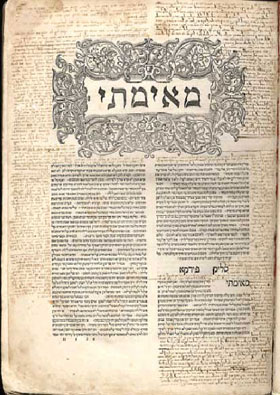
There is a misconception about Judaism common among Christians and Muslims.  This is the misleading idea that Judaism is a ‘biblical religion’; that the Old Testament has in Judaism the same central place and legal authority which the Bible has for Protestant or even Catholic Christianity.  The legal interpretation of sacred texts is rigidly fixed in Judaism - but by the Talmud, rather than by the Bible itself (Shahak 1994).  The supremacy of the Talmud over the Bible may be seen in the case of the black Ethiopian Jews.  Ethiopians are very knowledgeable of the Old Testament.  However, their religion is so ancient that it pre-dates the Talmud, of which the Ethiopians have no knowledge.  The New York Times wrote, “The problem is that Ethiopian Jewish tradition goes no further than the Bible or Torah; the later Talmud and other commentaries that form the basis of modern traditions never came their way.”[1]  Because they are not versed in Talmudic tradition, the black Ethiopian Jews are discriminated against and have been forbidden to perform marriages, funerals and other services in the Israeli state.  It is the natural consequence of Jewish belief of considering the Talmud superior to the Torah.  The Talmud states,

Erubin 21b (Soncino edition): “My son, be more careful in the observance of the words of the Scribes than in the words of the Torah.”

Rabbi Adin Even Israel Steinsaltz is the founder of the Israel Institute for Talmudic Publications, and has enjoyed the backing of Israeli presidents and prime ministers; he is a recipient of Israel’s highest civilian honor, the Israel Prize.  He is currently translating the Talmud into English, French, and Russian.  He writes,

“If the Bible is the cornerstone of Judaism, then the Talmud is the central pillar, soaring up from the foundations and supporting the entire spiritual and intellectual edifice.  In many ways the Talmud is the most important book in Jewish culture, the backbone of creativity and of national life.  No other work has had a comparable influence on the theory and practice of Jewish life, shaping spiritual content and serving as a guide to conduct.”[2]

“Historically speaking, the Talmud is the central pillar of Jewish culture.  This culture is many faceted, but each of its numerous aspects is connected in some way with the Talmud.  This is true not only of the literature that deals directly with the interpretation or continuation of the Talmud, but also of all other types of Jewish creativity.”[3]

The importance of the Talmud and its authority can be understood by what the Universal Jewish Encyclopedia states,

“The Talmud is undoubtedly one of the most remarkable literary productions of all times.  It is an encyclopedia covering the whole scene of human life.  It is almost impossible to convey to one who has not spent years in the study of this complex work an idea of its true nature, as even the most exact translations cannot catch the inner spirit of the Talmud … As a repository of the Oral Law, the Talmud’s authority is regarded as divine by Orthodox Jews, and hence it is held to be binding and immutable.  Conservative and Reform Jews, however, do not recognize the absolute binding power of the Talmud, although they acknowledge the great part it has played in determining Jewish religious ideas and observances.”[4]

Herman Wouk is a Pulitzer Prize-winning author of eleven novels, three plays, and two works of nonfiction.  In his book, This is My God; the Jewish Way of Life, serialized in the New York Herald-Tribune in 1959, he wrote:

“The Talmud is to this day the circulating heart’s blood of the Jewish religion.  Whatever laws, customs or ceremonies we observe — whether we are Orthodox, Conservative, Reform or merely spasmodic sentimentalists — we follow the Talmud.  It is our common law.”[5]

Role of Talmud in Contemporary Judaism

The Talmud is not an ancient document with no relevance to modern Judaism.  On the contrary, Encyclopedia Britannica tells us that with the rebirth of a Jewish national state since 1948 and the revival of Jewish culture, the Talmud has achieved renewed importance.  Orthodox Judaism has always focused upon its study and has believed it to be the absolute religious authority.  It has become one of the aims of religious (Orthodox) Jews there to establish the law of Talmud as the general law of the state.  Aside from Israel, the legal system described above has continued to function down to the present day in Jewish communities all over the world.  The jurisdiction of rabbinic courts is voluntarily accepted by Orthodox Jews.  These courts continue to exert authority, especially in the areas of family and dietary law, the synagogue, and the organization of charity and social activity.  Furthermore, Conservative Judaism, too, has always been committed to the Talmud.  Thus, a network of day schools and higher institutions of learning in which the Talmud occupies a major role in the curriculum has been established.  Scores of young Conservative Jews now search in the Talmud for answers to their crucial problems.[6] - islamreligion.com

FOOTNOTES:

[1]N.Y. Times: Sept. 29, 1992, p.4

[2]Rabbi Adin Even Israel Steinsaltz, The Essential Talmud, page 3

[3]Adin Steinsaltz, The Essential Talmud, trans.  Chaya Galai (New York: Basic Books, 1976) 266

[4]Herschel Revel, Librarian of the Isaac Elchanan Theological Seminary, New York, The Universal Jewish Encyclopedia, s.v. “Talmud,” Volume 10, page 165.

[5]Herman Wouk, This is My God; the Jewish Way of Life quoted by Elizabeth Dilling in The Jewish Religion: Its Influence Today, page 2.

[6]“Talmud and Midrash.” Encyclopædia Britannica. 2006.