Islam

Islam

Monday, 4 July 2016

Best Times to make Dua (Supplication)!


بِسْمِ اللهِ الرَّحْمنِ الرَّحِيمِ
In the Name of Allah, The Most Merciful, The Most Kind
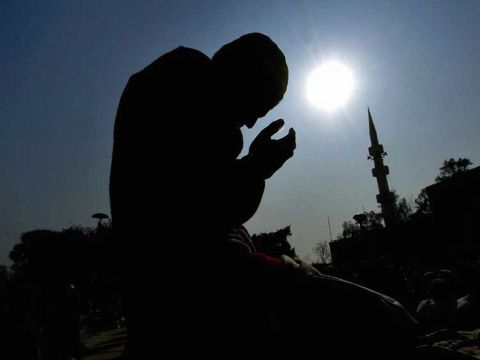
PAKISTAN-ASIA-QUAKE-MUSLIMS-PRAYERThere are certain times dua (supplication) is more likely to be accepted by Allah (SWT) as mentioned by Prophet (SAW). These times are as follows:
1. The Last Third Of The Night
Abu Hurairah (RA) narrated that Allah’s Messenger (SAW) said:
‘In the last third of every night our Rabb (Cherisher and Sustainer) (Allah (SWT)) descends to the lowermost heaven and says; “Who is calling Me, so that I may answer him? Who is asking Me so that may I grant him? Who is seeking forgiveness from Me so that I may forgive him?.”‘ [Sahih al-Bukhari, Hadith Qudsi]
Amr ibn Absah narrated that the Prophet said:
‘The closest any worshipper can be to His Lord is during the last part of the night, so if you can be amongst those who remember Allah at that time, then do so.’[at-Tirmidhi, an-Nasa’i, al-Hakim – Sahih]
2. Late at night
When people are sleeping and busy with worldly pleasures Allah (SWT) gives the believers an opportunity, or an answer hour if they can fight sleep and invoke Allah (SWT) for whatever they need. The Prophet (SAW) said:
‘There is at night an hour, no Muslim happens to be asking Allah any matter of this world or the Hereafter, except that he will be given it, and this (occurs) every night.’
[Muslim #757]
3. Between Adhan and Iqamah
Anas (RA) narrated that Allah’s Messenger (SAW) said:
‘A supplication made between the Adhan and Iqama is not rejected.’
[Ahmad, abu Dawud #521, at-Tirmidhi #212, Sahih al-Jami #3408, an-Nasai and Ibn Hibban graded it sahih (sound)]
4. An Hour On Friday
Narrated Abu Hurairah (RA): Allah’s Messenger (SAW) talked about Friday and said:
‘There is an hour on Friday and if a Muslim gets it while offering Salat (prayer) and asks something from Allah (SWT), then Allah (SWT) will definitely meet his demand.’ And he (the Prophet (SAW) pointed out the shortness of that particular time with his hands.[Sahih al-Bukhari]

Some have said that this hour is from the time the Imam (prayer’s leader) enters the mosque on Friday’s prayer until the prayer is over (ie between the two khutbahs), whereas others have said that it is the last hour of the day (ie after the Asr prayer until the Maghrib prayer).
5. While Drinking Zamzam Water
Jaber (RA) narrated that Allah’s Messenger (SAW) said:
‘Zamzam water is for what it is drunk for.’ [Ahmad 3: 357 and Ibn Majah #3062].
This means that when you drink Zamzam water you may ask Allah (SWT) for anything you like to gain or benefit from this water such as healing from illness…. etc.
6. While Prostrating
Abu Hurairah (RA) narrated that Allah’s Messenger (SAW), said:
‘The nearest a slave can be to his Lord is when he is prostrating, so invoke (supplicate) Allah (SWT) much in it. [Muslim, abu Dawud, an-Nasa’i and others, Sahih al-Jami #1175]
When a Muslim is in his Salat (prayer) he is facing Allah (SWT) and when he prostrates he is the nearest he can be to Allah (SWT) so it is best to invoke Allah (SWT) at this time. It is said that while in prostration, one should not ask for worldy needs (ie a nice car, a new job, etc), but for the Hereafter.
7. When Waking Up at Night
Narrated Ubada Bin As-Samit that Allah’s Messenger (SAW) said:
‘Whomever wakes up at night and says La ilaha illallahu wahdahu la shrika lahu lahulmulku, wa lahul hamdu, wa huwa ala kulli shai’in qadir. Alhamdu lillahi, wa subhanallahi wa la ilaha illallahu, wallah akbir, wa la hawla wala quwata illa billah (none has the right to be worshipped but Allah (SWT) He is the only one who has no partners. His is the kingdom and all the praises are for Allah (SWT) All the glories are for Allah (SWT) And none has the right to be worshipped but Allah (SWT) and Allah (SWT) is the most Great and there is neither might nor power except with Allah (SWT) and then says, Allahumma ighfir li (O Allah! Forgive me) or invokes Allah (SWT), he will be responded to and if he makes ablution and performs Salat (prayer), his Salat (prayer) will be accepted. [Sahih al-Bukhari]
8. At The End Of The Obligatory Salat:
Narrated Abu Omamah (RA): that Allah’s Messenger (SAW) was asked, O Messenger of Allah, which supplication is heard (by Allah (SWT), he said the end of the night and at the end of the obligatory Salat (prayer) [at-Tirmidhi]. This time is after saying ‘At-tahyat’ , and before making Tasleem (finishing prayer)
9. The Night Of ‘Qadr’ (Decree)
This night is the greatest night of the year. This is the night which the almighty Allah (SWT) said about it, “The night of Al-Qadar (Decree) is better than a thousand months.” [Surah al-Qadr, 97: 3]
The Night of Decree is one of the odd nights of the last ten nights of the blessed month of Ramadan. The angels descend down to the earth, and the earth is overwhelmed with peace and serenity until the break of dawn and when he doors of Paradise are opened, the worshipper is encouraged to turn to Allah to ask for his needs for this world and the Hereafter.
10. During The Rain
Narrated Sahel Ibn Sa’ad (RA): that the Messenger of Allah (SAW) said: ‘Two will not be rejected, Supplication when the Adhan (call of prayer) is being called, and at the time of the rain’. [Al-Hakim 2: 114, and Abu Dawud #2540, ibn Majah]
‘Seek the response to your du’as when the armies meet, and the prayer is called, and when rain falls’ [reported by Imam al-Shafi’ in al-Umm, al-Sahihah #1469]. The time of the rain is a time of mercy from Allah (SWT) so, one should take advantage of this time when Allah (SWT) is having mercy on His slaves.
11. At the Adhan
‘Seek the response to your du’as when the armies meet, and the prayer is called, and when rain falls’ [reported by Imam al-Shafi’ in al-Umm, al-Sahihah #1469]
In another hadith; ‘When the prayer is called, the doors of the skies are opened, and the du’a is answered’ [al-Tayalisi in his Musnad #2106, al-Sahihah #1413]
12. The One Who Is Suffering Injustice and Opression
The Messenger of Allah (SAW) said to Mua’ad Ibn Jabal (RA), ‘Beware of the supplication of the unjustly treated, because there is no shelter or veil between it (the supplication of the one who is suffering injustice) and Allah (SWT)’ [Sahih Al-Bukhari and Muslim]
The prophet (SAW) declared, ‘Three men whose dua is never rejected (by Allah) are: the fasting person until he breaks his fast (in another narration, when he breaks fast), the just ruler and the one who is oppressed.’[Ahmad, at-Tirmidhi – Hasan]
In another hadith; The Prophet (SAW) declared: ‘Three du’as are surely answered: The du’a of the oppressed, the du’a of the traveler, and the du’a of the father/mother (upon their child)’. The One who is suffering injustice is heard by Allah (SWT) when he invokes Allah (SWT) to retain his rights from the unjust one or oppressor. Allah (SWT) has sworn to help the one who is suffering from injustice sooner or later as the Messenger of Allah (SAW) said.
13. The Traveler
The Messenger of Allah (SAW) said; Three supplications will not be rejected (by Allah (SWT)), the supplication of the parent for his child, the supplication of the one who is fasting, and the supplication of the traveler. [al-Bayhaqi, at-Tirmidhi – Sahih]
During travel supplication is heard by Allah (SWT) if the trip is for a good reason, but if the trip is for a bad intention or to perform illegal things (making sins) this will not apply to it.
14. The Parent’s Supplication for their Child
The Messenger of Allah (SAW) said; Three supplications will not be rejected (by Allah (SWT)), the supplication of the parent for his child, the supplication of the one who is fasting, and the supplication of the traveler. [al-Bayhaqi, at-Tirmidhi – Sahih]
15. Dua after praising Allah and giving salat on the Prophet (SAW) in the tashahhud at the end of salat.
Narrated Faddalah ibn Ubayd (RA): that the Messenger of Allah (SAW) said: ‘When anyone of you makes du’a, let him start by glorifying his Lord and praising Him, then let him send blessings upon the Prophet (SAW), then let him pray for whatever he wants’
[abu Dawud #1481, at-Tirmidhi #3477]
In another hadith; Baqiy ibn Mukhallid (RA) narrated that that the Messenger of Allah (SAW) said: ‘Every du’a is not responded to until one sends blessings upon the Prophet (SAW)’ [al-Bayhaqi]
In another hadith; Umar (RA) narrated that the Prophet (SAW) said: ‘Du’a is detained between the heavens and the earth and no part of it is taken up until you send blessings upon your Prophet (SAW)’ [at-Tirmidhi #486]
After a person has finished his tashahhud and before saying the ’salam’, supplication at this time is one likely to be responded to.
Ibn Mas’ud narrates: I was once praying, and the Prophet (SAW), Abu Bakr and Umar (were all present). When I sat down (in the final tashahhud), I praised Allah, then sent salams on the Prophet, then started praying for myself. At this, the Prophet (SAW) said:
‘Ask, and you shall be given it! Ask, and you shall be given it!’ [at-Tirmidhi #593 – hasan, Mishkat al-Misbah #931]
16. The dua of a Muslim for his absent brother or sister Muslim stemming from the heart.
The prophet (SAW) said:
‘There is no believing servant who supplicates for his brother in his absence where the angels do not say, ‘the same be for you” [Muslim]
17. Dua on the Day of Arafat
The Messenger of Allah (SAW) said: ‘The best supplication is the supplication on the day of Arafat’. [at-Tirmidhi and Malik]
The day of Arafat is the essence and pinnacle of Hajj. On this great and momentous day, millions of worshippers gather together on one plain, from every corner of the world, with only one purpose in mind – to respone to the call of their Creator. During this auspicious day, Allah does not refuse the requests of His worshippers.
18. Dua during the month of Ramadan
Ramadan is month full of many blessings, thus the du’a of Ramadan is a blessed one. This can be inferred from the Prophet (SAW) saying: ‘When Ramadan comes, the Doors of Mercy (another narration says Paradise) are opened, and the doors of Hell are closed, and the Shaitans are locked up’ Thus, it is clear that du’a during Ramadan has a greater chance of being accepted, as the Gates of Paradise and Mercy are opened. [Sahih al-Bukhari #1899, Muslim #1079 and others]
19. Dua when the Armies meet
When the Muslim is facing the enemy in battle, at this critical period, the du’a of a worshipper is accepted.
Sahl ibn Sa’d (RA) narrtaed the the Prophet (SAW) said: ‘Two duas are never rejected, or rarely rejected: the du’a during the call for prayer, and the du’a during the clamity when the two armies attack each other’ [Abu Dawud #2540, ibn Majah, al-Hakim]
20. When Muslims gather for the purpose of invoking and remembering Allah (Dhikrullah).
The Prophet (SAW) said: If a group of people sit together remembering Allah, the angels will circle them, mercy will shroud them, peace will descend onto them and Allah will remember them among those with Him. [Muslim]
21. First Ten days of Dhul-Hijjah
The Prophet (SAW) said: ‘There are no days during which good deeds are more beloved to Allah than during these ten days’
[Sahih al-Bukhai #969 and others]
22. Dua when the heart reaches out to Allah and is ready to be totally sincere
23. At Midnight
Abu Umamah (RA) said, the Prophet (SAW) was questioned; ‘Which du’a is heard (by Allah)?’ He answered, ‘At midnight and at the end of every obligatory prayer.’ [at-Tirmidhi – Hasan]
25. Dua of people after the death of a person
In a long hadith, Umm Salamah (RA) narrated that the Prophet (SAW) said, when Abu Salamah had just passed away, and had closed his eyes, ‘Do not ask for yourselves anything but good, for the angels will say ‘Ameen’ to all that you ask for. O Allah, forgive Abu Salamah, and raise his ranks among those who are guided.’ [Muslim, abu Dawud, Ahmad]
26. Dua of the one fasting until he breaks his fast.
The Messenger of Allah (SAW) said; Three supplications will not be rejected (by Allah (SWT)), the supplication of the parent for his child, the supplication of the one who is fasting, and the supplication of the traveler. [al-Bayhaqi, at-Tirmidhi – Sahih]
27. Dua of the one fasting at the time of breaking fast
The prophet (SAW) declared, ‘Three men whose dua is never rejected (by Allah) are: when a fasting person breaks fast (in another narration, the fasting person until he breaks his fast), the just ruler and the one who is oppressed.’[Ahmad, at-Tirmidhi – Hasan]
29. Dua of a just Ruler
The prophet (SAW) declared, ‘Three men whose dua is never rejected (by Allah) are: the fasting person until he breaks his fast (in another narration, when he breaks fast), the just ruler and the one who is oppressed.’[Ahmad, at-Tirmidhi – Hasan]
30. Dua of a son or daughter obedient to his or her parents
It is well known in the story narrated in hadith os three men who were trapped by a huge stone in a cave. One of them who was kind to kis parents asked Allah to remove the stone, and his du’a was answered. [Sahih al-Bukhari 3:36 #472]

31. Dua immediately after wudu
Umar ibn Al-Khattab reported that the Prophet (SAW) said:
‘There is not one of you that makes wudu, and does it perfectly, then says: I testify that there is no diety worthy of worship except Allah. he is Alone, having no partners. And I bear witness that Muhammad is His slave and messenger’, except that the eight gates of Paradise are opened for him, and he can enter into it through whichever one he pleases’ [Muslim #234, abu Dawud #162, Ahmad, an-Nasa’i]
Saying what has been mentioned in the hadith that is directly related to it (ablution)

32. Dua after stoning the Jamarat at Hajj
The stoning of the small Shaitan (jamrat sugra), or the middle Shaitan (jamrat wusta) pillars during Hajj. It is narrated that the Prophet (SAW) would stone the small Jamarah (one of the three pillars that is stoned in the last days of Hajj), then face the qiblah, raise his hands, and make du’a for a long time. He would then stone the middle Jamarah and do the same. When he stoned the large Jamarah, he would depart without making any du’a. [Sahih al-Bukhari #1753 and others]
33. At the Crowing of a Rooster
Abu Hurairah (RA) narrated that the Prophet (SAW) said:
‘When you hear a rooster crowing, then ask Allah for His bounties, for it has seen an angel, and when you hear a donkey braying, then seek refuge in Allah from Shaitan, for it has seen a Shaitan’ [Sahih al-Bukhari, Muslim, Ahmad, Sahih al-Jami #611]

34. Du’a made inside the Ka’bah
The Ka’bah is a sanctuary that has no comparison in the entire world. The du’a of one who prays inside the hijr is considered as being made inside the ka’bah, as it is part of the house (Baitullah). [This is the semicircle to the right of the Ka’bah if you face the door, opposite to the Yemeni corner and the Black stone wall.]
Usamah ibn Zayd narrated,
‘When the Prophet (SAW) entered the House (Ka’bah), he made du’a in all of its corners [Muslim 2: 968 and others]

35. Du’a on the mount of Safa or Marwah during Umrah or Hajj
It is narrated that the Prophet (SAW) would make long du’as at Safa and Marwah. [Muslim #1218 and others]
36. Dua at any of the holy sites.
37. While reciting Surah al-Fatihah
The Prophet (SAW) said that Allah the Exalted had said:
‘ I have divided the prayer into two halves between Me and My servant, and My servant will receive what he asks for. When the servant says: Praise be to Allah, the Lord of the universe, Allah the Most High says: My servant has praised Me. And when he (the servant) says: The Most Compassionate, the Merciful, Allah the Most High says: My servant has lauded Me. When he (the servant) says: Master of the Day of Judgment, He remarks: My servant has glorified Me, and sometimes He will say: My servant entrusted (his affairs) to Me. When he (the worshipper) says: Thee do we worship and of Thee do we ask help, He (Allah) says: This is between Me and My servant, and My servant will receive what he asks for. Then, when he (the worshipper) says: Guide us to the straight path, the path of those to whom Thou hast been Gracious — not of those who have incurred Thy displeasure, nor of those who have gone astray, He (Allah) says: This is for My servant, and My servant will receive what he asks for. [Muslim 4: 395]

38. Saying ‘Ameen’ during prayer
After finishing the recitation of al-Fatihah, the saying of’Ameen’ in congregation. The Prophet (SAW) said:
‘When the Imam says ‘Ameen’, then recite it behind him (as well), because whoever’s Ameen coincides with the Ameen of the angels will have all of his sins forgiven.’ [Sahih al-Bukhari #780, Muslim #410 and others]
39. While visiting the sick, and dua made by the sick
Umm Salamah narrated that the Prophet (SAW) said:
‘When you visit the sick, or the dead then say good, because the angels say ‘Ameen’ to whatever you say [Muslim #2126]
Ali (RA) reported that the Prophet (SAW) said:
‘When a Muslim visits his sick Muslim brother in the morning, seventy thousand angels make dua for his forgiveness till the evening. And when he visits him in the evening, seventy thousand angels make dua for his forgiveness till the morning, and he will be granted a garden for it in Jannah.’
[at-Tirmidhi, abu Dawud]

Sunday, 3 July 2016

Is despairing of the mercy of Allah regarded as disbelief?

Image result for despairs of the mercy of Allah

QUESTION :

If someone despairs of the mercy of Allah, will he be a disbeliever, as it says in verse 87 of Soorat Yoosuf?
ANSWER :
Praise be to Allah
Allah, may He be exalted, says (interpretation of the meaning):
“Certainly no one despairs of Allah’s Mercy, except the people who disbelieve”
[Yoosuf 12:87]. 
This verse indicates that despairing of the mercy of Allah, may He be exalted, is one of the characteristics of the people who disbelieve, but this does not necessarily mean that someone who has one of their characteristics is a disbeliever like them. 
Despair of the mercy of Allah, may He be exalted, may constitute disbelief that puts one beyond the pale of Islam, or it may be a major sin. 
The guideline concerning that is that if despair leads to loss of hope of the mercy of Allah, may He be exalted, and His relief and pardon – for oneself or for other people – and it leads to denial or thinking it unlikely that Allah’s mercy, forgiveness and pardon can be all-encompassing, then this is disbelief, because it is an implicit rejection of the Qur’an and the definitive texts, and it is thinking ill of one’s Lord, may He be exalted, for He says – and His word is true – (interpretation of the meaning): “My mercy encompasses all things” [al-A‘raaf 7:156], but this person is saying that He will not forgive him! So he has regarded as limited that which is all-encompassing. This is applicable if he believes that, as Imam al-Qurtubi (may Allah have mercy on him) said in his Tafseer (5/160). 
But if he thinks that his sins are too great and that it is unlikely that he will be forgiven or pardoned for them, or with regard to the divine decree and control of the universe he despairs with regard to provision, children and the like – without losing all hope – then this is a major sin, but it does not constitute disbelief. It is regarded as being a major sin – according to scholarly consensus – because of the stern warning that has been narrated concerning it, such as the verses in which Allah, may He be exalted, says (interpretation of the meaning): “Certainly no one despairs of Allah’s Mercy, except the people who disbelieve” [Yoosuf 12:87] and “And who despairs of the Mercy of his Lord except those who are astray?” [al-Hijr 15:56]. And Allah knows best. 
For more information, please see: Tafseer al-Qurtubi (5/160); az-Zawaajir ‘an Iqtiraaf al-Kabaa’ir by Ibn Hajar al-Haytami (no. 40); Sharh al-‘Aqeedah at-Tahhaawiyyah by Shaykh Saalih Aal ash-Shaykh (1/552); al-Mawsoo‘ah al-Fiqhiyyah al-Kuwaitiyyah (7/200) 
And Allah knows best.
-islamqa.info

Fasting is a shield


The Prophet (peace be upon him) said: “Fasting is a shield – one who fasts does not use obscenities or act in an ignorant manner. If someone argues with you or insults you, say: ‘I am fasting, I am fasting’.” [Sahîh al-Bukhârî (1795)]

When we fast this Ramadan, we should make the effects of our worship show up in our good conduct. As Muslims, we should always be well-mannered, respectful, modest, kind, and gentle. We should always show compassion to others. However, when we are fasting, we should be all the more conscious of our conduct and all the more ready to exercise self-restraint. 

One of the most exemplary character traits that a person can have – in Ramadan and at other times – is that of clemency. We are sorely in need of this today. With all the problems in the world and in our daily lives, we often lose sight of the value of simply being nice to each other. 

Clemency is our ability to retain our composure when we get upset or angry. It means that we hold back from avenging the wrongs and abuses that we suffer from others. If anger means our “blood boils”, the clemency means that we keep things under control in the heat of the moment and use good sense. 

Clemency is a beautiful and balanced mode of conduct, one that is neither anger nor self-effacement. A person who cannot inculcate clemency into his character will be in either one or another bad state. He will either be angry and temperamental, or sniveling and debased. 

It is important to distinguish between true clemency – which shows strength of character – and the forbearance that comes from weakness, disgrace, and inability. 

Balance and poise are among the hallmarks of the Islamic faith. Clemency is a trait that exemplifies balance and the triumph of reason over our passions. As human beings, we have a natural propensity to get angry. It is abnormal to never get angry. However, one whose anger is accompanied by clemency can come though his anger blameless and unscathed. 

Indeed, some people have observed that without anger there is no meaning to clemency, since a person is only described as clement when people see how he conducts himself when he is angry. 

A Muslim should endeavor to show this trait with everyone. The most noble of people are those who stand above tit-for-tat knavery. The person who responds to ignorance with kindness elevates himself above the other. This is not even the case when responding to kindness in kind, since that merely puts both parties on an equal footing. 

This is why it is so important that a Muslim exhibits clemency with all people. If his heart is not strong enough to feel it, he should at least make an outward show of forbearance. This will, in time, grow into true, heartfelt magnanimity. Clemency is like any other character trait. A person is either naturally endowed with it, or he can learn it and make it part of his character with effort. 

Ramadan is the ideal time for us to develop this quality. We need to translate the restraint we show regarding our desire to eat and drink in this month into the ability to restrain our tongues and our hands when we are abused. We must, indeed, use our fast a shield, protecting us from bad behavior. 

We need to say to one who looks to fall into a dispute with us – “I am fasting.” We need to remind ourselves as well as the other party. Maybe this is why the Prophet (peace be upon him) specifically instructs us to say it twice. -islamtoday.net

Saturday, 2 July 2016

Reading the Qur’an in Ramadan


In the Name of Allah, the Most Merciful, Bestower of Mercy
“(It is) the month of Ramadan in which the Qur'an was revealed as a guidance for mankind, clear proofs giving guidance, and the Criterion (for distinguishing right and wrong). So whoever of you witnesses this month, let him fast it.” [2:185]3
The month of Ramadan, the blessed month in which the Qur'an was revealed, is now upon us. To mark the significance of this momentous occasion – the revelation of the Qur'an – we fast during the day and pray at nights, particularly Laylat al-Qadr, the night the Qur'an was revealed, as Allah tells us:

“We sent it down on a Blessed Night: We have ever been sending warnings.” [44:3]
The reward for fasting and praying in this month is so great, that the Prophet صلى الله عليه وسلم states, “Whoever fasted the month of Ramadan out of sincere faith and hoping for reward, then all his past sins will be forgiven, and whoever stood for the prayer on Laylat al-Qadr out of sincere faith and hoping for reward, then all his previous sins will be forgiven.” [Agreed Upon]
And he states, “Whoever prayed at night during it (Ramadan) out of sincere faith and hoping for reward, then all his previous sins will be forgiven.” [Agreed Upon]
These are three opportunities that we have been given to attain forgiveness for all our sins. The spiritual doctors of the heart are in agreement that fasting softens the heart, making it more receptive and humble to the recitation of the Qur'an. Perhaps this is the wisdom that links together fasting and night prayer, the two most distinctive acts of worship in this month.
It is important to note that our relationship with the Qur'an in this month should not be limited to just the nightly Tarawih prayers, we must devote ourselves to studying the Qur'an outside of prayer as well.
Ibn 'Abbas narrates, saying, “The Messenger of Allah (صلى الله عليه وسلم) was the most generous person, and he would be at his most generous in Ramadan because Jibril would come to him every night and he would study the Qur'an with him. Truly, when Allah's Messenger (صلى الله عليه وسلم) would meet Gabriel, he would be more generous than a fleeting wind.” [Agreed Upon]
Additionally, Bukhari reports from Fatima that the Prophet (صلى الله عليه وسلم) told her in the last year of his life, “Jibril used to revise the Qur'an with me once every year, but this year he has revised it with me twice. I do not suspect but that my time has come. And you shall be the first of my household to join me.”
Our Relationship with the Qur'an
Unfortunately, the majority of us do not have any relationship with the Qur'an. Since we are in Ramadan, the blessed month of the Qur'an, and the devils have been chained up, now is the opportunity to change this sad state of affairs.
Given the state of most Muslims today, any discussion about the maximum recommended amount to read daily, in Ramadan or outside Ramadan, would be purely academic. I doubt any of us will attempt to read the Qur'an 60 times every Ramadan as imam al-Shafi'i used to do or to spend the night reciting the entire Qur'an in a single rak'ah as Uthman b. Affan did (yes, it's really authentic; in fact, SaEid b. Jubayr and imam Ahmad have done it as well). I won't regale you with all the narrations about how much the Salaf used to recite the Qur'an during Ramadan, both inside prayer and outside it (for those interested, you can probably find them all over the internet already anyways).
To do as they did is something far beyond any of us given that most of us hardly read the Qur'an at all. However, as a side note, I would like to share this one account for all of us to ponder:
The Khalifah, Walid b. Abd al-Malik, used to complete the Qur'an every three days and he used to read it a full seventeen times during Ramadan. [See his biography in Siyar A'lam al-Nubala']
Now, to the real issue, what should do to rectify our situation? For those who are already in the habit of reading the Qur'an every Ramadan, try and make sure to complete the entire Qur'an, if you have not been doing so in the past. Also, take this as an opportunity to get into the habit of reading the Qur'an daily even when Ramadan is over. If you have not been reading the Qur'an during Ramadan in the past, then decide how much time you can reasonably take out of your schedule to read Qur'an on a daily basis. Don't push yourself to do too much, otherwise you'll end up right back where you started: not reading the Qur'an at all. Also remember, “The most beloved deeds to Allah are those done regularly, even if they are small.” [Agreed Upon] Therefore, it's very important that you make a Ramadan schedule that you can stick to.
Is There A Minimum One Should Read? What Do the Scholars Have to Say?
Well, some scholars – such as imam Ahmad and Ishaq b. Rahuyah – have disliked for a person to not complete the Qur'an at least every 40 days, based on a hadith of `Abdullah b. `Amr in which the Prophet (صلى الله عليه وسلم) instructed him to recite the Qur'an in forty days. Another narration gives the minimum as once a month. However, this should not be taken as something obligatory, particularly for those who are not in the habit of reading Qur'an at all, or are not proficient in reciting the Qur'an, such as new Muslims. For them to attempt, all at once, to start reading the entire Qur'an once a month would probably become a barrier to them reading the Qur'an at all.
I asked Sh. Ghassan al-Barqawi about this issue, and he reccomended that, as a bare minimum, one should study ten verses a day. He based this on the narration of ibn Mas'ud that the Companions used to learn the Qur'an ten verses at a time.
How Should One Proceed?
Since the hunger and thirst brought on by fasting softens the heart and makes it more receptive, this is an excellent time to try and read and contemplate the Qur'an. For that reason, I would highly reccomend not merely reading the Qur'an, but studying it. It was the Sunnah of the Prophet (صلى الله عليه وسلم) to study the Qur'an nightly with Jibril. It was this sort of thoughtful study of the Qur'an that had an impact on the quality of the Prophet's (صلى الله عليه وسلم) deeds. He was already the most generous of all human beings, yet study of the Qur'an in this month increased him in generosity.
Study Tools
For those who know Arabic, I would highly reccomend that as they read the Qur'an, they refer to a short Tafsir. In particular, I would reccomend one of the following:
– Zubdat al-Tafsir, Sh. Muhammad Sulayman al-Ashqar
– Taysir al-Karim al-Rahman, by Sh. al-Sa'di
– Al-Tafsir al-Muyassar, a committee of scholars
You should make it an eventual goal to finish the Tafsir entirely, preferably highlighting or marking all the important points you come across for quick reference in the future. The idea is to be able to be able to read the Qur'an such that the explanations offered in the Tafsir become ingrained in your mind. This will make your Qur'an reading easier, more enjoyable, and more thought provoking. It is also an excellent foundation for any future Qur'an study.
For the English only crowd, it is important to read the Qur'an along with a translation, as Allah tells us:

“It is a Book that We have sent down to you blessed, so that they may contemplate its verses and so that people of understanding may take heed.”
 [38:29]
It is good to recite the Qur'an, even if you do not understand it, but the ultimate purpose of its revelation was for us to imbibe its teachings and incorporate them in our lives.
It is important to pick a good translation that suits you. Personally, I like Pickthall. Sahih International and Muhsin Khan's translation are also good. I should note, that while I am a big fan of Pickthall's translation, his style of language may seem a bit archaic and therefore be unsuitable for some readers. In any case, it is probably a good idea to have two translations to refer to in case the meaning is not clear in one translation.
There is another translation out which is relatively new and quite distinctive written by M A S Abdel Haleem and published by Oxford University Press. This translation has been written in very clear and extremely simple English that makes it easy and pleasurable to read. The downside is that he has given “creative” interpretations of some verses to make it more “suitable” to the Western mindset. For that reason, I am hesitant to recommend it. If one uses this translation, he should definitely cross check it with a more reliable translation such as Pickthall, etc.
Maulana Mawdudi's introductions to the surahs are also a useful tool and can be found here:
They give you a good overview and background information for each surah before you begin.
Another useful resource, at least for research purposes, is the Summarized Tafsir ibn Kathir, available from Dar-us-Salam in ten volumes or accessible from here:
Unfortunately, there is no good, clear, short commentary on the Qur'an in the English language that I can reccomened.
Finally, as a closing advice, do not lose heart. Keep the following hadith in the back of your mind:
“Recite the Qur'an, for on the Day of Resurrection, it shall come as an intercessor for its companion.” [Muslim] 
-muslimmatters.org

Friday, 1 July 2016

The Holy Qur`an and the month of Ramadan

Image result for The Holy Qur`an and the month of Ramadan - Malaysia

The Holy Qur`an loves Ramadan and Ramadan loves the Holy Qur`an; they are beloved friends. Allah Almighty said: {The month of Ramadan in which was revealed the Qur’ân, a guidance for mankind and clear proofs for the guidance and the criterion (between right and wrong)} [Al-Baqarah: 185]

In the name of Allah the Most Gracious the Most Merciful

All Praise is due to Allah. And prayers and peace of Allah be upon the Messenger of Allah and his family and companions.

The Holy Qur`an loves Ramadan and Ramadan loves the Holy Qur`an; they are beloved friends. Allah Almighty said: {The month of Ramadan in which was revealed the Qur’ân, a guidance for mankind and clear proofs for the guidance and the criterion (between right and wrong)} [Al-Baqarah: 185]
{شَهْرُ رَمَضَانَ الَّذِي أُنْـزِلَ فِيهِ الْقُرْآنُ هُدًى لِلنَّاسِ وَبَيِّنَاتٍ مِنَ الْهُدَى وَالْفُرْقَانِ} البقرة: 185 
Transliteration: Shahru Ramađāna Al-Ladhī 'Unzila Fīhi Al-Qur'ānu Hudáan Lilnnāsi Wa Bayyinātin Mina Al-Hudá Wa Al-Furqāni

The Holy Qur`an descended completely to the lower sky, from the Preserved Tablet (Al-Lauh Al-Mahfûz), in Ramadan. This month took the honor of having this Book revealed in it. That is the reason why the Prophet (prayers and peace of Allah be upon him) used to review the Holy Qur`an with Jibreel (peace be upon him) in Ramadan. He used to listen to it, ponders on it, recites it, contemplates its lessons, feels its atmosphere, touches its smoothness by his heart, and releases his love in its treasures.

The person who observes fasting and recites the Holy Qur`an gathers, by his fasting, between Ramadan and the Holy Qur`an. Therefore; he lives this month with this Great Book that Allah said in it: {(This is) a Book (the Qur’ân) which We have sent down to you, full of blessings, that they may ponder over its Verses, and that men of understanding may remember} [Sad: 29]
 {كِتَابٌ أَنْزَلْنَاهُ إِلَيْكَ مُبَارَكٌ لِيَدَّبَّرُوا آيَاتِهِ وَلِيَتَذَكَّرَ أُولُو الأَلْبَابِ} ص: 29
Transliteration: Kitābun 'Anzalnāhu 'Ilayka Mubārakun Liyaddabbarū 'Āyātihi Wa Liyatadhakkara 'Ūlū Al-'Albābi

{Do they not then think deeply in the Qur’ân, or are their hearts locked up (from understanding it)?} [Muhammad: 24]
{أَفَلا يَتَدَبَّرُونَ الْقُرْآنَ أَمْ عَلَى قُلُوبٍ أَقْفَالُهَا} محمَّد: 24
Transliteration: 'Afalā Yatadabbarūna Al-Qur'āna 'Am `Alá Qulūibn 'Aqfāluhā

{Do they not then consider the Qur’ân carefully? Had it been from other than Allâh, they would surely have found therein many a contradiction.} [An-Nisâ`: 82]
{أَفَلا يَتَدَبَّرُونَ الْقُرْآنَ وَلَوْ كَانَ مِنْ عِنْدِ غَيْرِ اللَّهِ لَوَجَدُوا فِيهِ اخْتِلافًا كَثِيرًا} النِّساء: 82
Transliteration: 'Afalā Yatadabbarūna Al-Qur'āna ۚ Wa Law Kāna Min `Indi Ghayri Al-Lahi Lawajadū Fīhi Akhtilāfāan Kathīrāan

In Ramadan, there is special taste for the Holy Qur`an; it has special inspirations and senses.

In Ramadan, the Holy Qur`an has extra sweetness and prettiness.

In Ramadan, the Holy Qur`an returns the remembrance of its revelation, the days of reviewing it, and the times in which the righteous forefathers cared for it.

It is Reported through an authentic chain of transmission that the Prophet (prayers and peace of Allah be upon him) said: “Recite the Qur`an, for on the Day of Resurrection it will come as an intercessor for those who recite it.” [Reported by Muslim 804]
«اقرؤوا القرآن؛ فإنَّه يأتي يوم القيامة شفيعًا لأصحابه» رواه مسلم 804
And he (prayers and peace of Allah be upon him) said: “The best (people) among you are those who learn the Qur`an and teach it (to others).” [Reported by Al-Bukhari 5027]
«خيركم من تعلَّم القرآن وعلَّمه» رواه البخاري 5027
He (prayers and peace of Allah be upon him), also, said: “Recite the two bright ones, Al-Baqarah and Surat Al-‘Imran, for on the Day of Resurrection they will come as two clouds or two shades, or two flocks of birds in ranks, pleading for those who recite them.” [Reported by Muslim 804]
«اقرؤوا الزَّهراوين: البقرة وسورة آل عمران؛ فإنَّهما تأتيان يوم القيامة كأنَّهما غمامتان أو كأنهما غيايتان أو كأنَّهما فرقان من طيرٍ صوافٍّ تحاجَّان عن أصحابهما» رواه مسلم 804
Moreover; he (prayers and peace of Allah be upon him) said: “Such a person who recites the Qur`an and masters it by heart, will be with the noble righteous scribes (in Heaven). And such a person exerts himself to learn the Qur`an by heart, and recites it with great difficulty, will have a double reward.” [Agreed upon and the wording by Al-Bukhari 4937]
«مثل الّذي يقرأ القرآن، وهو حافظ له، مع السَّفرة الكرام البررة، ومثل الّذي يقرأ القرآن، وهو يتعاهده، وهو عليه شديدٌ، فله أجران» متفق عليه واللفظ للبخاري 4937
Whenever the month of Ramadan came, our forefathers used to open the Book of Allah and come and go with the Holy Qur`an.

It is narrated that Imam Malik (may Allah Almighty mercy him) used to be busy with nothing but the Holy Qur`an, in Ramadan. Moreover; he used to stop teaching, presenting fatwa and meeting people; and he used to say, ‘it is the month of the Holy Qur`an’.

In Ramadan, the houses of our forefathers was characterized by peal like the peal of pees; they used to radiate light and spread happiness; they used to recite the Qur`an (aloud) in a slow, (pleasant tone and) style; they used to contemplate on its wonders and shed tears at its lessons; they used to rejoice at its glad tidings, accomplish its orders, and refrain from its prohibitions.

It is Reported through an authentic chain of transmission that I”bn Masûd (may Allah be pleased with him) recited the beginning of Surat An-Nisâ` for our Messenger (prayers and peace of Allah be upon him). Then when he reached the saying of Allah Almighty: {How (will it be) then, when We bring from each nation a witness and We bring you (O Muhammad, prayers and peace of Allah be upon him) as a witness against these people?} [Surat An-Nisâ`: 41], the Prophet (prayers and peace of Allah be upon him) said: “Now, stop!” And when ibn Mas’ûd turned his face toward him, he found his eyes were overflowing with tears” [Reported by Al-Bukhari 5050]
«صحَّ أنَ ابن مسعود -رضي الله عنه- قرأ على رسولنا -صلَّى الله عليه وسلّم- أول سورة النِّساء فلما بلغ قوله -تعالى- {فَكَيْفَ إِذَا جِئْنَا مِنْ كُلِّ أُمَّةٍ بِشَهِيدٍ وَجِئْنَا بِكَ عَلَى هَؤُلاءِ شَهِيدًا} النِّساء:41، قال له -عليه الصَّلاة والسَّلام: «حسبُك الآن»، فالتفت إليه فإذا عيناه تذرفان» رواه البخاري 5050 
 
And it is Reported through an authentic chain of transmission that he (prayers and peace of Allah be upon him) listened to the recitation of Abu Musa (may Allah be pleased with him) and then said to him: “If you were to see me, as I was listening to your recitation (of the Qur'an) last night (you would have felt delighted). You are in fact endowed with a sweet voice like that of the family of David.” [Agreed upon and the wording is by Muslim: 793]
«لو رأيتني وأنا أستمع لقراءتك البارحة! لقد أوتيت مزمارًا من مزامير آل داود» متفقٌ عليه واللفظ لمسلم 793 

Whereupon Abu Musa said: “O Messenger of Allah, if I had known that, I would have made it as sweeter as I can” [Reported by ibn Hajar Al-Asqalani 3/212 in Nata`ij Al-Afkar with good chain of transmission].

Also, whenever the companions of the Messenger of Allah have been gathered together,Omar (may Allah be pleased with him) used to say, “O Abu Musa, remind us with our Lord.” Whereupon, Abu Musa starts reciting the Holy Qur`an with his pleasant voice and they shed tears.

Actually, when the minds of the late people got spoiled because of not listening to the speech of the Lord of the worlds; the wrongful bringing up, the reverted nature, and the ill-minds appeared.

When the Holy Qur`an has been substituted by something else; the corruption got spread, the affliction got circulated, the conceptions got mixed, and the determination failed.

The mission of the Holy Qur`an is to guide people to the straight path of Allah.

The Holy Qur`an is light, remedy for the hearts, knowledge, culture and evidence.

The Holy Qur`an is life, spirit, safety, happiness, and reward.

The Holy Qur`an is Divine instructions, Divine constitution, and eternal wisdom.

Hence, would we live with the Holy Qur`an in Ramadan and any other month?

Would we recognize the greatness of the Holy Qur`an and fill our life happiness, light and shining by the Holy Qur`an? Would we do that?

-islamway.net

Staying in the mosque brings reward and virtue even if it is not i‘tikaaf


QUESTION :

Is it valid for someone who believes that i‘tikaaf can only be done in the three mosques (Makkah, Madinah and Jerusalem), but wants to seek Laylat al-Qadr, and has wishes and thinks that staying in the mosque at night during the last ten nights of Ramadan is an opportunity to attain what he wants from the Most High, the Almighty, the Eternal, may He be glorified and exalted, to do that? Please note that he is a scoundrel, a rascal and a wrongdoer who has no purpose in life, but he hopes that if he manages to be in a noble place at a noble time, with a sincere prayer, he will be able to change his life completely.


ANSWER :
Praise be to Allah
Firstly: 
If a person is a wrongdoer who has no purpose in life, he should strive first of all to repent sincerely to Allah , and change his ways from wrongdoing and sin to justice and obedience to Allah. 
Secondly:
It is valid to observe i‘tikaaf in all mosques, and it is not limited only to the three mosques. 
Thirdly: 
With regard to the answer to what you asked about, if he follows a scholar who says that i‘tikaaf is only valid in the three mosques, there is nothing wrong with him staying in the mosque during the last ten nights of Ramadan. This applies even if it is not i‘tikaaf, according to his belief; staying in the mosque for the purpose of prayer, dhikr, reading Qur’an and waiting for the prayer is a virtuous deed in and of itself. The Prophet (blessings and peace of Allah be upon him) said: “If he prays (i.e., in the mosque), the angels will continue to send blessings upon him so long as he remains in the place where he prayed, (saying): ‘O Allah send blessings upon him, O Allah have mercy upon him.’ And one of you remains in a state of prayer so long as he is waiting for the prayer.”
Narrated by al-Bukhaari (648) and Muslim (649). 
Al-Bayhaqi narrated in Shu‘ab al-Eemaan (2943) that ‘Amr ibn Maymoon al-Awdi said: The companions of the Messenger of Allah (blessings and peace of Allah be upon him) told us that the mosques are the houses of Allah on earth, and it is incumbent upon Allah to honour those who visit Him in them. Classed as saheeh by al-Albaani in Silsilat al-Ahaadeeth as-Saheehah (1169). 
In addition to that, it also has the benefit of allowing one to focus on worshipping Allah, may He be exalted, and to leave behind worldly matters that may distract one. 
And Allah knows best.
-islamqa.info