Islam

Islam

Tuesday, 24 May 2022

Islam and essential needs


Islam came to complete the previous Divine religions and faith on earth. In fact, the Prophet  sallallaahu  `alayhi  wa  sallam ( may  Allah exalt his mention ) (may Allah exalt his mention) completed the missions of the previous Prophets, may Allah exalt their mention. Allah’s Messenger  sallallaahu  `alayhi  wa  sallam ( may  Allah exalt his mention ) said: “My example, and the example of the prophets, who preceded me, is like that of a person who built a beautiful house. The house was perfect, magnificent and great except for a place of a single brick (in one corner). People, who visited (or saw) that house admired it but always wondered, why did not the owner complete that missing single brick?’ I am that (missing) brick. I am the final Prophet (for mankind on the earth).” [Al-Bukhari, Hadeeth No.3341 and at-Tirmithi, Hadeeth No.2862]

Islam diligently acts to provide the basic needs of man on earth, like the previous Divine religions and works hard to secure his rights.
Let us read together the following verse of the Glorious Quran (which means): “Fight in the cause of Allah those who fight you, but do not transgress limits; for Allah loves not transgressors.” [Quran 2:190]
Allah, the Exalted and Sublime, has made Jihaad (fighting and struggling for His cause), a rewardable act that Muslims believe in and practice. In fact, Jihaad is looked upon as the “hump” of the camel, the highest most important point on the body of the camel, and a Muslim should regard it similarly. Struggle for the sole cause of Allah Almighty must be cherished by the sincere believing Muslims in this life. It should be treated with reverence and taken seriously, with a mature understanding of its objectives. Jihaad is not an innovation in Islam. In fact, Jihaad is an accepted, well-established, and known practice in the previous faiths and nations as well.
Jihaad was established earlier, Allah knows best, because of the fact that there have been conflicts and differences among people all over the earth. Moreover, good and evil have always co-existed in societies all over the world throughout history. Therefore, Jihaad was founded and defined in order to stop tyranny and remove tyrant rulers, who deviate from Allah’s Path and the code of life that He laid down for man to follow. Jihaad is also laid down, Allah knows best, in order to stop people from worshipping other people and false deities, and introduces them to the reality of the worship of Allah alone, Who has no son, partners or associates.
Jihaad is also laid down for man on earth to remove all injustices committed by man and introduce the world to the mercy, justice, peace and tranquility of Islam as a way of life. Moreover, Jihaad is laid down, in principle, to protect the call to Islam and help spreading it all over the world. It is for the interest of humankind on earth and not for the interest of Arabs or Muslims, as Islam has no geographic borders.
The final word underlying Jihaad is for the people to either accept or reject Islam as a way of life. Islam has a message for the entire humanity. Islam has the most comprehensive code of morals and ethics for people in every walk of life. Islam laid down the principles of justice, fairness, equality, freedom, prosperity, success and truthfulness for man on earth. Jihaad has not been laid down to force people against their will to join Islam; rather it is a tool and mechanism to help spread the religion of monotheism, justice and equality to the entire world. After the various peoples receive the message, it is up to them to accept Islam as a way of life or choose otherwise.
In any event, the essential purpose of Jihaad is to carry the Message of Islam to people and introduce it to them. Almighty Allah states in the Glorious Quran (what means): “Let there be no compulsion in religion: Truth stands out clear from Error: whoever rejects Evil and believes in Allah has grasped the most trustworthy hand-hold, that never breaks. And, Allah hears and knows all things.” [Quran 2: 256]
The directive principle cementing relationships between government and people is based on peace. Yet, Allah Almighty laid down the foundations of Jihaad in Islam for a special reason and purpose. There is a major difference between the terms “Jihaad” and “War”. Jihaad, as interpreted and understood in Islam, is not a “Holy War” as described in the Western media; rather, it is an honorable ‘struggle’ against the enemies of Allah Almighty who reject His Word and faith in Him and His religion of Islam. “War” on the other hand, is a drive for personal interests and ownership of lands, natural resources for political or economic reasons. Islam ordered for Jihaad in the three situations as follows:
 
1- Defense of life, property and national boundaries
This concept is based on the verse of the Glorious Quran (which means): “Fight in the cause of Allah those who fight you, but do not transgress limits; for Allah loves not transgressors.” [Quran 2: 190]
2- Removing oppression and preserving the just rights of the oppressed people. This concept is based on the verse of the Glorious Quran, (which means): “And why should you not fight in the cause of Allah and of those who, being weak, are ill-treated people (and oppressed)? Men, women, and children, whose cry is: ‘Our Lord! Rescue us from this town whose people are oppressors; and raise for us from You one who will protect; and raise for us from You one who will help!’”[Quran 4:75]
3-Defence of Faith and Religion
A fighter must purify his intention to please Allah Almighty alone and he must have a sound understanding that he is not participating in this Jihaad for any unfair reasons. The fighters must realize that they are taking part in such a Jihaad in order to spread the Word of Allah Almighty. This concept is based on the verse of the Glorious Quran, (which means): “And fight them on until there is no more tumult or oppression, and there prevails justice and faith in Allah altogether and everywhere; but if they cease, verily Allah does see all that they do.” [Quran 8:39]
Moreover, if the enemies of Islam cease their fire and resort to stop the war, accepting to make peace with the Islamic Jihaad government, the Muslim fighters must, as well, cease their fires and stop all Jihaad activities. In fact, it becomes unlawful for Muslims to continue to fight in Jihaad against the troops of the other side, if the confronted party cease their fire and ask for peace. This concept is based on the verse of the Glorious Quran, (which means): “Therefore if they withdraw from you but fight you not, and (instead) send you (guarantees of) peace, then Allah has left no way for you (to war against them).” [Quran 4:90]
Furthermore, all other types of wars that aim at land expansion, colonial interests and revenge that result in wide-scale destruction, are totally prohibited according to Islam. Although Islam permitted fighting against enemies for necessary reasons, it has laid articulate rules of conduct while waging wars against the enemies of Islam. Islam does not allow fighters to kill anybody: it is permissible to attack only combatants and supporting forces on the other side. Islam does not permit, accept or condone the killing of elderly people, children, women, sick people under medical treatment, medical staff workers and monks who have secluded themselves for worship of Allah Almighty.
Islam prohibits killing a wounded man in a battle and forbids mutilating the bodies and organs of the deceased enemy fighters. Islam also forbids the killing of cattle or any type of animals of the enemies, destroying the houses of innocent people, polluting the potable waters, rivers, lakes, springs and wells of water of the fighting enemies. Moreover, Islam prohibits chasing people who flee the battlefield. This concept is based on a verse of the Glorious Quran (which means): “But seek, with the (wealth) which Allah has bestowed on you, the Home of the Hereafter, nor forget your portion in this World: but do you good, as Allah has been good to you, and seek not (occasions for) mischief in the land: for Allah loves not those who do mischief.” [Quran 28:77] - islamweb.net

Monday, 23 May 2022

Muslims: Pioneers of pharmacology


Muslim pharmacy (Saydalah) as a profession and a separate entity from medicine was recognised by the beginning of the ninth century. This century not only saw the founding and increase in the number of privately owned pharmacy shops in Baghdad and its vicinity, but in other Muslim cities as well. Many of the pharmacists who managed them were skilled in the apothecary's art and quite knowledgeable in the compounding, storing, and preserving of drugs.

State-sponsored hospitals also had their own dispensaries attached to manufacturing laboratories where syrups, electuaries, ointments, and other pharmaceutical preparations were prepared on a relatively large scale. The pharmacists and their shops were periodically inspected by a government appointed official, 'Al-Muhtasib', and his aides. These officials were to check the accuracy in weights and measures as well as the purity of the drugs used. Such supervision was intended to prevent the use of deteriorating compounded drugs and syrups, and to safeguard the public.
    
This early rise and development of professional pharmacy in Islam - over four centuries before such development took place in Europe - was the result of three major occurrences: the great increase in the demand for drugs and their availability on the market, professional maturity, and the outgrowth of intellectual responsibility by qualified pharmacists.
    
The ninth century in Muslim lands witnessed the richest period thus far in literary productivity insofar as pharmacy and the healing arts were concerned. This prolific intellectual activity paved the way for still a greater harvest in the succeeding four centuries of both high and mediocre calibre authorship. For pharmacy, manuals on materia medica and for instructing the pharmacist concerning the work and management of his shop were circulating in increasing numbers. A few authors and their important works will be briefly discussed and evaluated.

Abu Hasan At-Tabari:    
One of the contributors to Muslim Pharmacy was Abu Hasan 'Ali At-Tabari. He was born in 808. At about thirty years of age, he was summoned to Samarra by Caliph al-Mu'tasim (833-842), where he served as a statesman and a physician. At-Tabari wrote several medical books, the most famous of which is his Paradise of Wisdom, completed in 850. It contains discussions on the nature of man, cosmology, embryology, temperaments, psychotherapy, hygiene, diet, and diseases - acute and chronic - and their treatment, medical anecdotes, and abstracts and quotations from Indian source material. In addition, the book contains several chapters on materia medica, cereals, diets, utilities and therapeutic uses of animal and bird organs, and of drugs and methods of their preparation.
    
At-Tabari urged that the therapeutic value of each drug be utilised in accordance with the particular case, and the practitioner should always choose the best of samples. He explained that the finest types of samples come from various places: black myrobalan comes from Kabul; clover dodder from Crete; aloes from Socotra; and aromatic spices from India.

He was also precise in describing his therapeutics. He said, 'I have tried a very useful remedy for the swelling of the stomach; the juices of the liverwort (water hemp) and the absinthium after being boiled on fire and strained to be taken for several days. Also, powdered seeds of celery (marsh parsley) mixed with giant fennel made into troches and taken with a suitable liquid, release the wind in the stomach, joints and back (arthritis).' 

To strengthen the stomach and to insure good health he prescribed 'black myrobalan powdered in butter, mixed with dissolved plant sugar extracted from liquorice and this remedy should be taken daily.' For storage purposes he recommended glass or ceramic vessels for liquid (wet) drugs; special small jars for eye liquid salves; lead containers for fatty substances. For the treatment of ulcerated wounds, he prescribed an ointment made of juniper-gum, fat, butter, and pitch. In addition, he warned that one Mithqaal (about 4 grams) of opium or henbane causes sleep and also death.
    
The first medical formulary to be written in Arabic is Al-Aqrabadhin by Saboor bin Sahl, who died in 869 AH. In it, he gave medical recipes stating the methods and techniques of compounding these remedies, their pharmacological actions, the dosages given of each, and the means of administration. The formulas are organised in accordance with their types of preparations into which they fit, whether tablets, powders, ointments, electuaries or syrups. Each class of pharmaceutical preparation is represented along with a variety of recipes made in a specific form; they vary, however, in the ingredients used and their recommended uses and therapeutic effects. Many of these recipes and their pharmaceutical forms are remindful of similar formulas given in ancient documents from the Middle East and the Greco-Roman civilisations. What is unique is the organization of Saboor's formulary-type compendium purposely written as a guidebook for pharmacists, whether in their own private drugstores or in hospital pharmacies.

Hunayn bin Is'haaq:
He was an Arab scholar who died in 873 AH. His translations of Plato, Aristotle, Galen, Hippocrates, and the Neoplatonists made accessible to Arab philosophers and scientists the significant sources of Greek thought and culture.

Hunayn was a Nestorian Christian who studied medicine in Baghdad and became well versed in ancient Greek. He was appointed by Caliph Al-Mutawakkil to the post of chief physician to the court, a position that he held for the rest of his life. He travelled to Syria, Palestine, and Egypt to gather ancient Greek manuscripts. From his translators' school in Baghdad, he and his students transmitted Arabic and (more frequently) Syriac versions of the classical Greek texts throughout the Islamic world. Especially important are his translations of Galen, most of the original Greek manuscripts of which are lost.

Hunayn's book of the Ten Treatises on the Eye was completed in 860 AH. After finishing the ninth treatise, the author felt the need for a closing treatise to be devoted to compounded drugs for eye medication. He extracted some recipes from earlier treatises and added more prescriptions recommended by Greek authors.

As one obvious example of the uses and therapeutic values of using compounded drugs, Hunayn gave that of the theriac - the universal antidote against poisoning. Hunayn, who knew Greek, defined the Greek word theriac as an animal that bites or snaps. Since these antidotes were used against animal bites, the word eventually was applied to all antidotes, especially when snake flesh was incorporated.

Hunayn corrected the translation in Arabic of the major part of Dioscorides', Materia Medica, undertaken by his associate Istifaan bin Basil (about mid ninth century) in Baghdad. Due to the influence of this work, several books of materia medica were written in Arabic. Dioscorides definitely influenced the writing and direction of Sabur's formulary, which has been mentioned earlier.

Hunayn’s Herbal Treatise established the basis for Arabic pharmacology, therapy, and medical botany. It also provided a description of the physical properties of drugs, types, and means of testing their purity, and usefulness. As a result, Muslim pharmacology advanced beyond the Greco-Roman contribution. In turn, this helped and influenced a similar development in Europe through the Renaissance.
-islamweb.net

Sunday, 22 May 2022

Islam Is Not A New Message


Since the creation of man, there have been many Divine messages and Prophets, may Allah exalt their mention, sent by God to humankind. Numerous messages were revealed to many Prophets, may Allah exalt their mention, who were sent to different nations at different times. However, all these messages, from the first to the last, contained the same in essence. They all called people to worship only The One True God and to do righteous deeds. Allah, Most Exalted, Says (what means): “Truly, the religion in the sight of Allah is Islam…” [Quran 3:19]

According to the verse above and other verses in the Quran, the message that all Prophets called people to was Islam. Since there is only One True God, the message of God must also be One.

However, this message varies in general laws, codes of life and worship (but not in the essential beliefs) according to the diversity of  nations, times, conditions, customs and cultures. Every form of this message was sent to a particular nation for a particular time, except the last message revealed to Prophet Muhammad  sallallaahu  `alayhi  wa  sallam ( may  Allah exalt his mention ) which was sent to all people and all nations till the Day of Judgment.

Allah Almighty, informs us in the Holy Quran that many Prophets uttered the word 'Islam' or 'Muslim' such as Nooh (Noah), Ibraaheem (Abraham), Ismaa’eel (Ishmael), Yoosuf (Joseph), Moosaa (Moses), may Allah exalt their mention.

Allah, The Most High, tells us about Nooh  may  Allah  exalt  his  mention   when he warned his people of disbelief saying (what means): “But if you turn away (from accepting my doctrine of Islamic Monotheism, i.e. to worship none but Allah), then no reward have I asked of you, my reward is only from Allah, and I have been commanded to be of the Muslims.” [Quran 10:72]

Ibraaheem and Yaaqoob (Jacob), may Allah exalt their mention, enjoined Islam upon their sons. Allah Almighty Says (what means): “And this (submission to Allah, Islam) was enjoined by Abraham upon his sons and by Jacob (saying) 'O my sons! Allah has chosen for you the (true) religion, then die not except while you are Muslims.” [Quran 2:132]

Ibraaheem and Ismaa’eel, may Allah exalt their mention, invoked their Lord when they were raising the foundations of the house, the Ka'bah at Makkah, (what means) : “Our Lord! And make us Muslims (in submission) to You and from our descendants a Muslim nation (in submission) to You…” [Quran 2:128]. Allah Says in the Quran (what means): “(Solomon said): ‘Be not haughty with me but come to me in submission (as Muslims).” [Quran 27:31]

When ‘Eesaa (Jesus)  may  Allah  exalt  his  mention came to know of his people's disbelief, he said to them (what means): “…Who will be my helpers in Allah's Cause?' The disciples said: ‘We are the helpers of Allah; we believe in Allah, and bear witness that we are Muslims (i.e. we submit to Allah).’” [Quran 3:52]

The last of Allah's prophets, Muhammad  sallallaahu  `alayhi  wa  sallam ( may  Allah exalt his mention ) was sent to present Allah's revelation in its final form and for the last time. This was necessary because the message delivered by the previous Prophets and Messengers, may Allah exalt their mention, had been corrupted or distorted by their followers.

Allah took it upon Himself to guard the last message (i.e. the Quran and hence Islam) from corruption. He says in the Quran (what means): “Verily, it is We Who have sent down the message (i. e., the Quran) and surely, We will be its guardian.” [Quran 15:9]

This message is called Islam, which means submission to the will of the only True God, Allah. In this way, all nations are invited to Islam and Allah will not accept any religion from them except Islam.

Allah Says (what means): “And whoever seeks a religion other than Islam, it will never be accepted from him, and he, in the Hereafter, will be among the losers.” [Quran 3:85]

The verse mentioned above makes it clear that when we say there is only one religion, it is meant that there is only one true religion. Allah Almighty, mentions the belief and religions of the polytheists in the Holy Quran (which means): “Say: ‘O disbelievers, I worship not that which you worship. Nor will you worship that which I worship. And I shall not worship that you which are worshipping. Nor will you worship that which I worship. For you is your religion, and for me is my religion (Islamic Monotheism).’” [Quran 109:1-4]

To conclude, Islam is the religion, which was given to Aadam  may  Allah  exalt  his  mention the first man and the first prophet of Allah, and it was the religion of all the prophets, may Allah exalt their mention, sent by Allah to humankind. The name of God's religion -- Islam --  was not decided upon by later generations of man. It was chosen by Allah Himself and clearly mentioned in His final revelation to man. In Islam it is obligatory to have belief in all Messengers, may Allah exalt their mention and their messages in the original forms revealed by Allah. Surely, it is the only way, which can lead people to success in this life and to Paradise in the Hereafter.

Allah's Messenger  sallallaahu  `alayhi  wa  sallam ( may  Allah exalt his mention ) said: “By Him (Allah) in Whose Hand Muhammad's soul is, there is none from among the Jews and Christians who hears about me and then dies without believing in the Message (i.e. Islam) with which I have been sent, but he will be from the dwellers of the (Hell) fire.” [Muslim]

Since the creation of man, there have been many Divine messages and Prophets, may Allah exalt their mention, sent by God to humankind. Numerous messages were revealed to many Prophets, may Allah exalt their mention, who were sent to different nations at different times. However, all these messages, from the first to the last, contained the same in essence. They all called people to worship only The One True God and to do righteous deeds. Allah, Most Exalted, Says (what means): “Truly, the religion in the sight of Allah is Islam…” [Quran 3:19]

According to the verse above and other verses in the Quran, the message that all Prophets called people to was Islam. Since there is only One True God, the message of God must also be One.

However, this message varies in general laws, codes of life and worship (but not in the essential beliefs) according to the diversity of  nations, times, conditions, customs and cultures. Every form of this message was sent to a particular nation for a particular time, except the last message revealed to Prophet Muhammad  sallallaahu  `alayhi  wa  sallam ( may  Allah exalt his mention ) which was sent to all people and all nations till the Day of Judgment.

Allah Almighty, informs us in the Holy Quran that many Prophets uttered the word 'Islam' or 'Muslim' such as Nooh (Noah), Ibraaheem (Abraham), Ismaa’eel (Ishmael), Yoosuf (Joseph), Moosaa (Moses), may Allah exalt their mention.

Allah, The Most High, tells us about Nooh  may  Allah  exalt  his  mention   when he warned his people of disbelief saying (what means): “But if you turn away (from accepting my doctrine of Islamic Monotheism, i.e. to worship none but Allah), then no reward have I asked of you, my reward is only from Allah, and I have been commanded to be of the Muslims.” [Quran 10:72]

Ibraaheem and Yaaqoob (Jacob), may Allah exalt their mention, enjoined Islam upon their sons. Allah Almighty Says (what means): “And this (submission to Allah, Islam) was enjoined by Abraham upon his sons and by Jacob (saying) 'O my sons! Allah has chosen for you the (true) religion, then die not except while you are Muslims.” [Quran 2:132]

Ibraaheem and Ismaa’eel, may Allah exalt their mention, invoked their Lord when they were raising the foundations of the house, the Ka'bah at Makkah, (what means) : “Our Lord! And make us Muslims (in submission) to You and from our descendants a Muslim nation (in submission) to You…” [Quran 2:128]. Allah Says in the Quran (what means): “(Solomon said): ‘Be not haughty with me but come to me in submission (as Muslims).” [Quran 27:31]

When ‘Eesaa (Jesus)  may  Allah  exalt  his  mention came to know of his people's disbelief, he said to them (what means): “…Who will be my helpers in Allah's Cause?' The disciples said: ‘We are the helpers of Allah; we believe in Allah, and bear witness that we are Muslims (i.e. we submit to Allah).’” [Quran 3:52]

The last of Allah's prophets, Muhammad  sallallaahu  `alayhi  wa  sallam ( may  Allah exalt his mention ) was sent to present Allah's revelation in its final form and for the last time. This was necessary because the message delivered by the previous Prophets and Messengers, may Allah exalt their mention, had been corrupted or distorted by their followers.

Allah took it upon Himself to guard the last message (i.e. the Quran and hence Islam) from corruption. He says in the Quran (what means): “Verily, it is We Who have sent down the message (i. e., the Quran) and surely, We will be its guardian.” [Quran 15:9]

This message is called Islam, which means submission to the will of the only True God, Allah. In this way, all nations are invited to Islam and Allah will not accept any religion from them except Islam.

Allah Says (what means): “And whoever seeks a religion other than Islam, it will never be accepted from him, and he, in the Hereafter, will be among the losers.” [Quran 3:85]

The verse mentioned above makes it clear that when we say there is only one religion, it is meant that there is only one true religion. Allah Almighty, mentions the belief and religions of the polytheists in the Holy Quran (which means): “Say: ‘O disbelievers, I worship not that which you worship. Nor will you worship that which I worship. And I shall not worship that you which are worshipping. Nor will you worship that which I worship. For you is your religion, and for me is my religion (Islamic Monotheism).’” [Quran 109:1-4]

To conclude, Islam is the religion, which was given to Aadam  may  Allah  exalt  his  mention the first man and the first prophet of Allah, and it was the religion of all the prophets, may Allah exalt their mention, sent by Allah to humankind. The name of God's religion -- Islam --  was not decided upon by later generations of man. It was chosen by Allah Himself and clearly mentioned in His final revelation to man. In Islam it is obligatory to have belief in all Messengers, may Allah exalt their mention and their messages in the original forms revealed by Allah. Surely, it is the only way, which can lead people to success in this life and to Paradise in the Hereafter.

Allah's Messenger  sallallaahu  `alayhi  wa  sallam ( may  Allah exalt his mention ) said: “By Him (Allah) in Whose Hand Muhammad's soul is, there is none from among the Jews and Christians who hears about me and then dies without believing in the Message (i.e. Islam) with which I have been sent, but he will be from the dwellers of the (Hell) fire.” [Muslim] - islamweb.net

Saturday, 21 May 2022

WHY DO MUSLIMS CALL OTHERS TO ISLAM?


WhydoMuslimsCalltoIslam.jpgIf you discovered something so amazing you felt like jumping up and down in excitement, what is the first thing that you would want to do?  If you worked out the answer to a puzzle and knew others were trying to do the same thing, how would you feel, how would you react?  If you discovered the meaning of life or the secrets of the universe, what would you do with that knowledge? If you worked out a way of banishing fear and sadness and replacing it with eternal happiness what would you do? 

Most people would not be able to contain their excitement and would want to tell as many people as possible.  They would want to tell everyone what they had discovered in the hope that they would be just as thrilled and just as excited.  And that is the short and concise answer to why Muslims call others to Islam.  Because they are convinced without a shadow of a doubt that Islam is the meaning of life, the secret of the universe and the key to eternal happiness are all rolled into an attainable and understandable package and they want every single person on the face of this earth to know that.

But there is a longer answer and it involves obeying the commands of God, following in the footsteps of the prophets, and gathering rewards in the hope of attaining eternal peace and happiness in the Afterlife.

Islam is what is sometimes called a proselytizing religion.  That means it is a religion that attempts to convince people that its belief system is the correct belief system.  Islam is a religion that not only holds all of the answers to life’s big questions but it is also inclusive in that there are no restrictions on who can be a Muslim.  Islam is a religion for all places, all time and all people.  No one can be barred from learning the truth no matter what their religious background is, or what ethnicity or nationality they belong to.   

Once a person is a Muslim, he or she is fully equal to every other Muslim and it does not matter where they are from, what they look like or what the state of their lives and hearts was before they embraced Islam.   The truth about God and His purpose for us, His creation, is something everybody should have access to.  Thus those of us who know are commanded by God, to tell others. 

"Let there be a group among you who call others to good, and enjoin what is right, and forbid what is wrong: those who do this shall be successful." (Quran 3:104)

"Call to the way of your Lord with wisdom and fair preaching, and argue with them in the best manner possible…" (Quran 16:125)

Most people want to spread the exciting news about Islam and at the same time fulfill the commands of God.  The scholars of Islam agree that calling others to the way of God is a communal obligation, that is that every believer should undertake this great work, however if in a particular place there are a sufficient number of people doing this,  the others are released from this obligation.

This work is called da’wah and the person who engages in it is called a da’ee.   However it would be wrong to assume that only specialized people can do da’wah.  Of course, preaching to a large crowd would require training, but the reality is that all practicing Muslims do some form of da’wah every day.  Their manner of living and dealing with others is often the best forms of da’wah.  Islam is a way of life and when people see the contentment, modesty and justice imbedded in a Muslims’ everyday life - it must, and does, look very appealing.  Being a good example is an easy way to call the people to Islam.  A religion of mercy and forgiveness where the people behave that way every day is attractive, to those whose lives are not so grounded.

From the reasons that people like to call others to the way of Islam is that they wish to follow in the footsteps of the prophets of God.  Their mission was to call the people out of darkness and into light.  They tried to take the people from disbelief to belief in the Oneness of God.  Prophet Muhammad, the last in a long line of prophets was sent to humankind by God to tell them, among other things, about the immense rewards in the Hereafter for those who believe in One God and worship Him correctly.   

"We have not sent you (O Muhammad) but to all mankind as a giver of good news and as a warner, but most people do not know." (Quran 34:28)

"O Prophet, indeed We have sent you as a witness, and a bearer of glad tidings and a warner.  And as one who invites to God by His leave and as a lamp spreading light.  And announce to the believers the glad tidings, that they will have from God a great bounty." (Quran 33:45-47)

Another reason to do da’wah is that it is a source of unlimited goodness and reward.  When a person embraces Islam because of another’s influence the caller to Islam takes rewards every time that person worships God.   Prophet Muhammad said, "Whoever calls to guidance will have a reward similar to that of those who follow it, without the reward of either of them being lessened at all."[1] He also said, "If God guides one person through you, this will be better for you than possessing red camels."[2]  In the time of Prophet Muhammad, camels were very valuable and the red variety were the most valuable of all.

Muslims believe that the only way to be successful in this life and in the next is by living the religion that is Islam.  They believe that all of life’s big questions, the one’s that keep you up at night and the ones that make you day dream about an eternity of enlightenment, can be answered by Islam.  Sincerity is an important concept in Islam; those who are insincere know their rewards will dwindle rapidly.  Those believers who sincerely want to spread the good news of Islam can see their rewards multiply even if their efforts are unsuccessful.  Muslims sincerely want everybody on this planet to know and to love God the way they know and love God.  And that is why Muslims call others to Islam.  - islamreligion.com

FOOTNOTES:

[1]Saheeh Muslim

[2]Saheeh Bukhari & Saheeh Muslim

Friday, 20 May 2022

THE QURAN ON MOUNTAINS


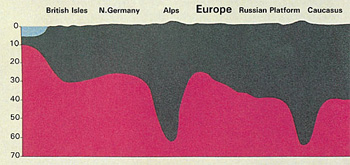
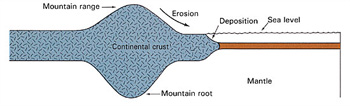
A book entitled Earth is a basic reference textbook in many universities around the world.  One of its two authors is Professor Emeritus Frank Press.  He was the Science Advisor to former US President Jimmy Carter, and for 12 years was the President of the National Academy of Sciences, Washington, DC. His book says that mountains have underlying roots.[1]  These roots are deeply embedded in the ground, thus, mountains have a shape like a peg (see figures 1, 2, and 3).
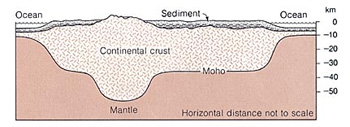
 

Figure 1: Mountains have deep roots under the surface of the ground. (Earth, Press and Siever, p. 413.)


Figure 2: Schematic section.  The mountains, like pegs, have deep roots embedded in the ground. (Anatomy of the Earth, Cailleux, p. 220.)


Figure 3: Another illustration shows how the mountains are peg-like in shape, due to their deep roots. (Earth Science, Tarbuck and Lutgens, p. 158.)


This is how the Quran has described mountains.  God has said in the Quran:

“Have We not made the earth as a bed, and the mountains as pegs?” (Quran 78:6-7)

Modern earth sciences have proven that mountains have deep roots under the surface of the ground (see figure 3) and that these roots can reach several times their elevations above the surface of the ground.[2]  So the most suitable word to describe mountains on the basis of this information is the word ‘peg,’ since most of a properly set peg is hidden under the surface of the ground.  The history of science tells us that the theory of mountains having deep roots was introduced only in the latter half of the nineteenth century.[3]

Mountains also play an important role in stabilizing the crust of the earth.[4]  They hinder the shaking of the earth.  God has said in the Quran:

“And He has set firm mountains in the earth so that it would not shake with you...” (Quran 16:15)

Likewise, the modern theory of plate tectonics holds that mountains work as stabilizers for the earth.  This knowledge about the role of mountains as stabilizers for the earth has just begun to be understood in the framework of plate tectonics since the late 1960’s.[5]

Could anyone during the time of the Prophet Muhammad have known of the true shape of mountains?  Could anyone imagine that the solid massive mountain which he sees before him actually extends deep into the earth and has a root, as scientists assert?  A large number of books of geology, when discussing mountains, only describe that part which is above the surface of the earth.  This is because these books were not written by specialists in geology.  However, modern geology has confirmed the truth of the Quranic verses. - islamreligion.com

FOOTNOTES:

[1]Earth, Press and Siever, p. 435.  Also see Earth Science, Tarbuck and Lutgens, p. 157.

[2]The Geological Concept of Mountains in the Quran, El-Naggar, p. 5.

[3]The Geological Concept of Mountains in the Quran, p. 5.

[4]The Geological Concept of Mountains in the Quran, pp. 44-45.

[5]The Geological Concept of Mountains in the Quran, p. 5.

Thursday, 19 May 2022

THE ABILITY TO SEE THE SIGNS OF GOD


“Say: ‘Praise be to God.  He will show you His Signs and you will recognize them.  Your Lord is not heedless of anything you do.’” (Quran 27:93)

“This is a communication to be transmitted to mankind so that they can be warned by it and so that they will know that He is One God and so that people of intelligence will pay heed.” (Quran 14:52)

In many other verses, God emphasizes that one of the most crucial purposes of the Quran’s revelation is to invite people to ponder.

In the Quran, God invites people to reject blindly accepting the beliefs and values society imposes on them and to ponder by pushing aside all the prejudices, taboos and constraints on their minds.

Man must think on how he came into being, what the purpose of his life is, why he will die and what awaits him after death.  He must question how he, himself, and the whole universe came into existence and how they continue to exist.  While doing this, he must relieve himself of all constraints and prejudices.

By thinking while isolating his conscience from all social, ideological and psychological obligations, the person should eventually perceive that the entire universe, including himself, is created by a superior power.  Even when he examines his own body or any other thing in nature, he will see an impressive harmony, plan and wisdom at work within its design.

Concerning this point again, the Quran guides man.  In the Quran, God guides us as to what we should reflect on and investigate.  With the methods of reflection given in the Quran, he who has faith in God will better perceive God’s perfection, eternal wisdom, knowledge and power in His creation.  When a believing person starts to think in the way shown in the Quran, he soon realizes that the whole universe is a sign of God’s power and art, and that, “nature is a work of art, not the artist itself”.  Every work of art exhibits the exceptional skills of the one who has made it and conveys his messages.

In the Quran, people are summoned to contemplate numerous events and objects that clearly testify to the existence and uniqueness of God and His attributes.  In the Quran, all these beings that bear witness are designated as “signs”, meaning “tested evidence, absolute knowledge and expression of truth”.  Therefore, the signs of God comprise all the beings in the universe in that they disclose and communicate the being and attributes of God.  Those who can observe and remember will see that the entire universe is entirely composed of the signs of God.

This, indeed, is the responsibility of mankind: to be able to see the signs of God.  Thus, such a person will come to know the Creator who created him and all other things, draw closer to Him, discover the meaning of his existence and his life and so prosper.

Each thing, the breath a human takes; political and social developments; the cosmic harmony in the universe; the atom, which is one of the smallest pieces of matter, is each a sign of God, and they all operate under His control and knowledge, abiding by His laws.  Recognizing and knowing the signs of God calls for personal effort.  One will recognize and know the signs of God in accordance with his own wisdom and conscience.

Undoubtedly, some guidelines may also help.  As the first step, one can investigate certain points stressed in the Quran in order to acquire the mentality that perceives the whole universe as an articulation of the things created by God.

God’s signs in nature are emphasized in a chapter called “The Bee”:

“It is He who sends down water from the sky.  From it you drink and from it come the shrubs among which you graze your herds.  And by it He makes crops grow for you and olives and dates and grapes and fruit of every kind. Therein is certainly a sign in that for people who reflect.  He has made the night and the day subservient to you, and the sun, the moon and the stars, all subject to His command.  Therein are certainly signs in that for people who use their intellect.  And also, the things of varying colors He has created for you in the earth.  There is certainly a sign in that for people who pay heed.  It is He who made the sea subservient to you so that you can eat fresh flesh from it and bring out from it ornaments to wear.  And you see the ships cleaving through it so that you can seek His bounty, and so that perhaps you may show thanks.  He cast firmly embedded mountains on the earth so it would not move under you, and rivers, pathways, and landmarks so that perhaps you might be guided.  And they are guided by the stars.  Is He Who creates like him who does not create?  O will you not pay heed?”(Quran 16:10-17)

In the Quran, God invites men of understanding to think about the issues which other people overlook or just dismiss using such barren terms as “evolution”, “coincidence”, or “a miracle of nature”.

In the creation of the heavens and the earth, and the alternation of night and day, there are Signs for people of intelligence: those who remember God standing, sitting and lying on their sides, and reflect on the creation of the heavens and the earth:

“Our Lord, You did not create this for nothing.  Glory be to You!  So guard us from the punishment of the Fire.” (Quran 3:191)

As we see in these verses, people of understanding see the signs of God and try to comprehend His eternal knowledge, power and art by remembering and reflecting on them, for God’s knowledge is limitless, and His act of creating flawless.

For men of understanding, everything around them is a sign of this creation. - islamreligion.com