Islam

Islam

Sunday, 14 July 2024

How Prophet Muhammad (PBUH) Spoke of Other Prophets


Prophet Muhammad (peace and blessings be upon him) was fully aware of the bond of faith and message that connects him with the blessed chain of Prophets.

In any relevant situation where any of the Prophets is recalled or referred to, Muhammad (peace and blessings be upon him) affectionately highlights this bond by humbly and positively referring to other prophets as brothers in Prophethood.

He humbly and appreciatively mentioned the merits that other prophets were endowed with. Ibn Abbas narrates, for example that the Messenger (peace and blessings be upon him) said: “The first to be clothed on the Day of Resurrection will be Abraham.” (Al-Bukhari)

Far from being jealous, he proudly talks about his brother Suleiman (Solomon) as the owner of a tremendous kingdom, the likes of which no person has or ever will.  Abdullah ibn Amr narrated that the Prophet said “Suleiman asked Allah the Exalted for a kingdom that no one after him would have, and he (Suleiman) was given it.” (An-Nasa’i)

Abu Huraira narrated that Allah’s Messenger said,

Both in this world and in the Hereafter, I am the nearest of all the people to Jesus, the son of Mary. The prophets are paternal brothers; their mothers are different, but their religion is one.“(Al-Bukhari)


Muhammad states that he loves and appreciates `Isa (Jesus), as another Hadith supports, as the messenger that was sent immediately before Muhammad. Furthermore, he commends `Isa because he was not touched by the Satan when he was born as everyone was. Abu Huraira narrated that the Prophet (peace and blessings be upon him) said

Satan touches every son of Adam on the moment he/she is born, except for Mary and her son.” (Muslim)

Do Not Compare Between Propphets

Abu Hurairah also narrated that one Muslim and one Jew started to argue and went into verbal fight and abuse. The Muslim swore, “By Him Who preferred Muhammad over all people!” The Jew swore, “By Him Who preferred Musa over all people!”

The Muslim then slapped the Jew on his face as he took what the Jew said as insult to Muhammad (peace and blessings be upon him).

The Jew went to the Messenger of Allah and told him about the incident. The Prophet said:

Do not say I am better than Musa. All Mankind will faint on the Day of Judgment and I will be the first to recover to find that Moses at that time will be holding the side of (God’s) Throne.

I do not know if he would faint and recover before me, or if Allah will make an exception for him because he fainted on earth once“.  (Muslim)

In another narration of the same hadith, the Prophet was very angry; anger was manifest on his face features and he commanded not getting involved in such comparisons between Prophets.

Jonah Is My Brother

One day, Prophet Muhammad went to the city of Ta’if to invite its people to Islam. He was fiercely rejected, stoned even by the children.

He and his servant took shelter near a vineyard. The orchard worker offered them some grapes. The worker heard Muhammad saying uncommon phrases before he was about to eat. The Prophet asked the man where he was from. The man said “I am a Christian from “Nineveh” (north of Iraq).

The Prophet compassionately remembers his brother in Prophethood and said, “You are from the same city as Yunus (Jonah) the son of Matta?

The man was puzzled by the fact that Muhammad would know Jonah and asked “How do you know him?”

The Prophet responded, “He is my brother, He is a Prophet, and I am also a Prophet.” (Ar-Rahiq Al-Makhtum)

When one person once talked to the Prophet and called him ‘the best of creation,’ he immediately and humbly corrected him saying “That is Abraham (peace and blessings be upon him)“.  (Muslim)

Mercy for All

Although Prophet Muhammad was honored by being the seal of the Prophets, he lived humbly recognizing other Prophets in appreciation and respect and love.  He said

O people, Fear Allah and do not be tricked by Satan. I am Muhammad the son of `Abdullah. I am the servant of Allah and His Messenger.

I do not like that you raise me above the position that Allah the Exalted has given me“. (Ahmad)

Now more than ever, Muslims are required to recall and put into practice the humility achieved through this kind of bond.

Muslims should remember that they are meant to be a mercy to Mankind. They should welcome people from any religious and ethnic background.

When the Prophet migrated to Madinah, he remained respectful of Christianity and Judaism. Madinah welcomed a 60-member Christian delegation from the city of Najran. In a respectful and appropriate setting, both Muslims and Christians debated and discussed their beliefs. When the discussion was over, the Najran Christians made their way home peacefully.

This spirit of mercy and compassion embodied so strongly and consistently throughout the Prophet Muhammad’s life should be an example for not only Muslims, but our Islamic centers, our Imams, our MSAs, and every Islamic association.

We should note what Allah said in surat Al-Ma’idah:

{Had Allah willed, He would have made you one nation [united in religion], but [He intended] to test you in what He has given you; so race to [all that is] good. To Allah is your return all together, and He will [then] inform you concerning that over which you used to differ. } (Al-Ma’idah 5:48)

- aboutislam.net

About Dr. Talaat Pasha
Talaat Pasha has a doctorate in Arabic and linguistics. He chaired the department of Arabic and Islamic Studies at the University of Bahrain. He is now a visiting scholar at the University of Michigan, USA.

Saturday, 13 July 2024

Putting Allah in Every Step You Take


People in their twenties are mostly described as ambitious figures who have high enthusiasm for achieving their dreams.

However, the reality is that this generation is also easily lost. What is worse now is that this generation also sees suicide as an option.

In my early twenties, I had a conversation with a friend, which was quite surprising to me. She said, ”she no longer found meaning in her life and that it was fine for her to just die”. Her life is like “she lives life because she lives.” The fatigue she felt on her journey brought her towards emptiness.

Although we are the same age, but at that time I think I am still too young to understand her pain. So, the best choice that could be made at that time was to just be a listener.

However, many questions came to mind, and there were parts that I don’t quite understand.

But then, there was a phase that hit me, and it brought a little bit of understanding towards the emptiness she felt. At that time. My father gave me a piece of advice where he said, ”Make it clear about your intention”.

My father himself was a spiritual man. Most of the advice he gives to his family members is related to spirituality. “Make it clear about your intention” is not just about the intention regarding the achievements that we want, or simply, it is not just about what and who, but he always emphasised, “Put Allah in every step you take.”

It’s not just advice a father gives to his daughter; he commits to it.

Once, there was heavy, thunderous rain, and my father was still doing his work. My mother was worried, and she asked him to stop. My father took a break when the time came, and then he said, “(as head of the family), I intend this for the sake of the family.

Through these words, he tried to bring peace to himself and my mother. Also, behind those words, there is a faith embedded in him that “Allah provides protection for him in carrying out his duties as head of the family.”

Allah says in Surah Al-Baqarah Ayah 152,

“So remember Me, and I shall remember you; give thanks to Me, and do not be ungrateful to Me for My favours.”

Al-Baqarah Ayah 152

Personally, based on what my father taught me, I found peace in the process. Putting Allah in every step means “what I do is because of Allah.” Because everything is directed towards Allah, it will give the feeling that “Allah is watching.

Thus, all expectations about the results, as well as fears or disappointments that might come in the process, can be broken.

As a young person, when anxiety takes over and you find it’s hard to commit. In the next Ayah, Allah explains how to find peace.

“Believers! Seek help in patience and in prayer; Allah is with those that are patient.”

Al-Baqarah, 153.

Putting Allah in every step that is directed to getting His love means directing ourselves to live life towards a goal. When we know where we want to go, every step we take will lead to that destination.

This means that this step is maintained and carried out consciously. This is a step that leads us towards meaning and keeps us away from emptiness.

Allah is with those that are patient. Truly, you are never alone.”

- aboutislam.net\

Friday, 12 July 2024

Warning against Shirk in the Noble Quran


Warning against Shirk in the Noble Quran

If murder and genocide are crimes denounced by humanity, Shirk (associating others with Allah in His Divinity or worship) is the greatest crime of all, as the former are crimes perpetrated against man, while the latter is committed against Allah, the Almighty. Allah’s rights are greater than those of man, as Allah created man, provided him with the means of subsistence, and granted him health, money, and children. However, man is heedless to Allah’s right to be worshipped and thanked and worships and draws close to other (and false) deities.

Due to the severity of Shirk, many Quranic verses warn against it in different ways, starting from showing its severity and ending with revealing the ruling on the polytheist and the punishment that he will receive in the Hereafter. We will tackle all these points by presenting all the verses stated in this regard.

Allah, the Almighty, clarifies the severity of the crime of Shirk, saying: “And [mention, O Muhammad], when Luqman said to his son while he was instructing him, ‘O my son, do not associate [anything] with Allah. Indeed, association [with Him] is great injustice.’” (Quran 31: 13) Allah describes Shirk as a great injustice because it is considered to be a transgression against Allah’s right in knowledge-related and practical terms; in knowledge-related terms by believing in a deity other than Allah, and in practical terms by worshipping other than Allah, the Almighty.

Allah, the Almighty, reveals the stupidity and naivety of the polytheists, as they avoid worshipping Allah and worship other deities that create nothing and can neither benefit nor harm them. Allah, the Almighty, says: “Do they associate with Him those who create nothing and they are [themselves] created?” (Quran 7: 191) Allah, the Almighty, says: “And they worship other than Allah that which neither harms them nor benefits them…” (Quran 10: 18) Despite the clear incompetence of the deities worshiped by the polytheists, they worship them claiming that they are their intercessors with Allah, so Allah responds to them, saying: “…and they say, ‘These are our intercessors with Allah.’ Say, ‘Do you inform Allah of something He does not know in the heavens or on the earth?’” (Quran 10: 18) What Allah does not know does not actually exist, so how do they claim that these false deities intercede with Allah for them? Allah criticizes them for worshipping these deities and does not acknowledge their intercession.

Allah, the Almighty, reveals that those polytheists’ belief in their deities is shaken, as they supplicate them when they are prosperous and at ease, but they desert them during calamity and distress. This indicates that the polytheists’ belief in these idols is no more than an imitation of their predecessors without guidance. Allah, the Almighty, says: “Then when He removes the adversity from you, at once a party of you associates others with their Lord.” (Quran 16: 54) Allah, the Almighty, says: “It is He who enables you to travel on land and sea until, when you are in ships and they sail with them by a good wind and they rejoice therein, there comes a storm wind and the waves come upon them from every place and they expect to be engulfed, they supplicate Allah, sincere to Him in religion, ‘If You should save us from this, we will surely be among the thankful.’” (Quran 10: 22)

In many verses, Allah, the Almighty, compares between what He does for His servants and what the so-called and claimed deities do in order to reveal His grace and favor in contrast to the incompetence and negativity of these idols. According to reason, undoubtedly, one should worship the One Who benefits, not those who do not benefit. Allah, the Almighty, says: “Say, ‘Are there of your “partners” any who guides to the truth?’ Say, ‘Allah guides to the truth. So is He Who guides to the truth more worthy to be followed or he who guides not unless he is guided? Then what is [wrong] with you—how do you judge?’” (Quran 10: 35) Allah is the One Who guides to the path of the truth and guidance, but the idols are mute and deaf, as they cannot hear or speak, so who is more worthy to be followed and worshipped? Allah, the Almighty, says: “[More precisely], is He [not best] Who created the heavens and the earth and sent down for you rain from the sky, causing to grow thereby gardens of joyful beauty which you could not [otherwise] have grown the trees thereof? Is there a deity with Allah? [No], but they are a people who ascribe equals [to Him]. Is He [not best] Who made the earth a stable ground and placed within it rivers and made for it firmly set mountains and placed between the two seas a barrier? Is there a deity with Allah? [No], but most of them do not know. Is He [not best] Who responds to the desperate one when he calls upon Him and removes evil and makes you inheritors of the earth? Is there a deity with Allah? Little do you remember. Is He [not best] Who guides you through the darkness of the land and sea and Who sends the winds as good tidings before His mercy? Is there a deity with Allah? High is Allah above whatever they associate with Him. Is He [not best] Who begins creation and then repeats it and Who provides for you from the heaven and earth? Is there a deity with Allah? Say, ‘Produce your proof, if you should be truthful.’” (Quran 27: 60-64) Allah sends down rain, causes plants to grow, created the earth, prepared it for people to live on it, guides people through the darkness of land and sea, and bestows on them other countless graces. What do your idols do, O polytheists? What are their graces and favors? If they have none, how do you worship them and do not worship the One Who bestows graces and favors upon you?

Allah, the Almighty, reveals that Shirk is not limited to the scope of worship and creed, but it extends to include obeying other than Allah in making lawful what Allah makes unlawful or prohibiting what Allah, the Almighty, permits. Allah, the Almighty, says: “They have taken their scholars and monks as lords besides Allah, and [also] the Messiah, the son of Mary. And they were not commanded except to worship one God; there is no deity except Him. Exalted is He above whatever they associate with Him.” (Quran 9: 31) The knowledgeable Sheikh Ash-Shanqiti stated in Adwa’ Al-Bayan:

When `Adiy ibn Hatim (may Allah be pleased with him) said to the Prophet ( sallallaahu  `alayhi  wa  sallam ( may  Allah exalt his mention )), “How did they take them as lords?” The Prophet ( sallallaahu  `alayhi  wa  sallam ( may  Allah exalt his mention )) said, “They made lawful for them what Allah made unlawful and made unlawful for them what Allah made lawful, so they followed them.” This is the intended meaning of taking their monks as lords. We can understand clearly and without any ambiguity that the one who follows the legislation of Satan and gives it precedence over the legislation sent down to the Messengers disbelieves in Allah, worships Satan, and takes him as lord, regardless of the names given to following Satan. This is because facts do not change by giving them different names, as is known.

Allah, the Almighty, clarified in many verses the reward gained by the one who worships Him alone, does good deeds, and avoids Shirk. Allah promises that He will meet and honor this person. Allah, the Almighty, says: “Say, ‘I am only a man like you, to whom has been revealed that your god is one God. So whoever would hope for the meeting with his Lord—let him do righteous work and not associate in the worship of his Lord anyone.’” (Quran 18: 110)

In other verses, Allah, the Almighty, clarified the moral decline lived by the polytheist, as he falls from the lofty peak of monotheism to the rock bottom of Shirk and idolatry. Allah, the Almighty, says: “Inclining [only] to Allah, not associating [anything] with Him. And he who associates with Allah—it is as though he had fallen from the sky and was snatched by the birds or the wind carried him down into a remote place.” (Quran 22: 31) Sayyid Qutb ( may  Allah  have  mercy  upon  him) said:

The text depicts a violent scene that reveals the status of a person falling from the peak of monotheism into the rock bottom of Shirk. He is getting lost as if he never existed before, as he is falling from a high place: “…it is as though he had fallen from the sky,” in the twinkling of an eye, he is torn into pieces …and was snatched by the birds or the wind carries him down to a remote place out of sight “or the wind carried him down into a remote place.” He is carried into an abyss that has no bottom. We notice that it is a speedy and violent movement and its steps follow each other in close succession using the Arabic letter ‘Fa’’, and this person disappears quickly, as depicted by the Noble Quran. This is a truthful image of the one who associates others with Allah in worship; he falls from the lofty peak of faith into extinction and isolation, as he loses the firm base that reassures him (the base of monotheism) and the secure foundation to which he returns. Therefore, vain desires snatch him like birds of prey, and illusions carry and throw him like winds while he is not adhering to the most trustworthy handhold and is not settling at a firm base that links him to the existence in which he lives.

If this is the status of the polytheist in the worldly life, his punishment in the Hereafter will be more severe and permanent. Allah, the Almighty, says: “Indeed, Allah does not forgive association with Him, but He forgives what is less than that for whom He wills. And he who associates others with Allah has certainly fabricated a tremendous sin.” (Quran 4: 48) Shirk is a sin that Allah, the Almighty, does not forgive on the Day of Judgement, and the polytheist shall be destined to dwell eternally in Hell if he dies as a polytheist, without any hope of salvation, unlike disobedient people and sinners from among the monotheists. At-Tabari narrated on the authority of Ibn `Abbas (may Allah be pleased with him) that he said concerning the explanation of the verse: “Indeed, Allah does not forgive association with Him…,” “Allah forbade forgiveness for the one who dies as a polytheist and left the destiny of monotheists to His will, but He did not let them lose hope of His forgiveness.”

The Quran includes many verses that reveal the ruling on Shirk and the status of polytheists in the worldly life and the Hereafter. They are too numerous to be listed in this article, but what we presented is sufficient to explain the severity of polytheism and the fate of the polytheist on the Day of Judgement. - islamweb.net

Thursday, 11 July 2024

DATES: RELIEF OF PAIN


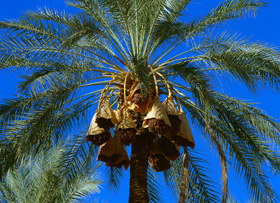
Dates_-_Relief_of_Pain_001.jpgIt is a long-established custom among Muslim parents to put a piece of well-chewed date (or other available sweet fruit) in the mouth of a newborn baby.  Muslims do this following the practice of the Prophet Muhammad, may the mercy and blessings of God be upon him, believing him to bee, as the Quran says, sent as a healing and a mercy to mankind.  We may infer from the way this custom originated that there is a virtue in it.  There is - complimentary to the virtue and pleasure of following the Sunnah (the practice of the Prophet) - placing a `sugary substance’ inside the mouth of a new-born baby dramatically reduces pain sensation and heart rate.

An interesting scientific medical study, published in the British Medical Journal (No. 6993, 10 June 1995), proved beyond any doubt the benefit of giving a new-born child sugar, in order to reduce the feeling of any painful procedure like heel pricking for a blood sample or before circumcision.

The study, entitled `The analgesic (pain killing) effect of sucrose in full term infants: a randomized controlled trial’, was done by Nora Haouari, Christopher Wood, Gillian Griffiths and Malcolm Levene in the post-natal ward in the Leeds General Infirmary in England.

60 healthy infants of gestational age 37-42 weeks and postnatal age of 1-6 days, were randomized to receive 2ml of one of the four solutions: 12.5% sucrose, 25% sucrose, 50% sucrose, and sterile water (control).

The first group of 30 babies received sugar syrup before a routine blood test (heel pricking, which is usually painful) done to detect jaundice.  The other 30 babies were given only sterile water as a control group.

Placing 2ml of a 25% or 50% sucrose solution on the tongue before pricking the heel significantly reduced the crying time, compared to babies who got water.  Also, their heart rate returned to normal more quickly.  The stronger sugar solution had the greater effect, crying being reduced further with increasing concentration of sucrose.  From which we may conclude that sucrose (sugar) placed on the tongue may bee a useful and safe form of analgesia for use with newborn infants.

Blass and Hoffmeyer also showed that 12% solution of inter-oral sucrose significantly reduced the duration of crying in new-born babies subjected to heel pricking or circumcision.  This study was reported in The Independent newspaper (Friday 9 June 1995) as well as in the British Medical Journal article.

The practice of the Prophet, upon him b piece, is recorded in the collections of his sayings and reports about him, of which the most revered are the two authentic collections of Al-Bukhari and Muslim:

Abu Buradah reported from Abu Musa, who said:

“I had a new-born baby; I took him to the Prophet Muhammad, who called him Ibrahim.  The Prophet chewed a date then he took it and rubbed the inside of the baby’s mouth with it.”

There are many other reported incidents like this one.

The date contains a very high percentage of sugar (70-80%); it has both fructose and glucose which have high calorific values, it is easily and quickly digestible, and very helpful to the brain.  The date contains 2.2% protein, vitamin A, vitamins B1, B2 ad nicotruic acid (against Pellagra); it has traces of minerals needed for the body such as potassium, sodium, calcium, iron, manganese, copper.  Potassium, of which percentage is very high, has been found to be very effective for cases of haemorrhage, such as the occasions of birth or circumcision.

We may note that the Sunnah also commends dates for the breaking of the fast in Ramadan.  Dates should be eaten, if available, before the sunset prayer - this is medically and nutritionally the best way and the Sunnah.

The great worth of dates is also indicated in a famous and beautiful passage of the Quran, in chapter named Maryam, verses 25-6:

“And shake towards you the trunk of the palm-tree and it will drop on you fresh ripe dates.  So eat and drink and be comforted.”

This was the prescription of God, the Creator, for the blessed Virgin Mary at the time of the birth of Jesus, the blessed Prophet of God.  It was a prescription to make the delivery easy and comfortable.

As the authors of the medical study referred to intend trying new sugary or sweet substances, we shall recommend that they try dates for the newborn for the relief of pain.

“We shall show them our signs on he furthest horizons and within themselves until it becomes clear to them that it is the truth.  Is it not sufficient that your Lord is witness over all things?” (Quran 41:53)

- islamreligion.com

Wednesday, 10 July 2024

Reflections on Tawwakul – Balancing Trust with Planning


One of the most fundamental pillars for Muslims is the concept of Tawwakul, which is often defined as trust and reliance in Allah.

However, many people misunderstand the concept of Tawwakul. They see Tawwakul as a passive, verbal characteristic which simply involves supplicating to Allah for what we want. 

However, there’s an incident from Prophet Muhammad’s (PBUH) life that shows a clear perspective on Tawwakul

One day the Messenger of Allah (PBUH) noticed a ‘bedouin’ (desert Arab) leaving his camel without tying it, and he asked the man, “Why don’t you tie down your camel?” The ‘bedouin’ answered, “I put my trust in Allah.” The Messenger of Allah (PBUH) then said, “Tie your camel first, then put your trust in Allah.”

Tirmidhi

This is a short hadith, but it carries an important lesson for us. If you have any kind of animal, you always tie it down so that it doesn’t run off when you’re gone.

However, in this hadith, the man wasn’t tying down his camel before leaving it.

When Prophet Muhammad (PBUH) asked the man why he didn’t do it, the man explained that he was trusting Allah to keep his animal from running off.

Prophet Muhammad (PBUH) replied the man to first tie his camel down and then put his trust in Allah. 

From Prophet Muhammad’s (PBUH) response, it’s obvious that this man didn’t understand what trusting Allah was.

He thought that Tawwakul meant expecting Allah to take care of everything without the person putting forth any effort.

The Prophet’s (PBUH) advice that demonstrating trust in Allah (Tawwakul) isn’t just a verbal and passive trait.

Instead, Tawwakul is an active trait, meaning that we show Allah our trust by taking action toward what we are trying to accomplish.

In other words, we must do our part first with our actions before trusting that Allah’s Divine help will come. 

To demonstrate true Tawwakul, we have to do our part first. For example, even though we believe Allah is the Giver of Life (Al-Muhyi) and The Protector/Preserver/Guardian (Al-Hafiz), we have to take the necessary health precautions to keep ourselves from falling sick, such as washing our hands and exercising.

We also believe Allah is The Provider (Ar-Razzaq), but we still have to go out and put forth the effort to create income. We don’t expect money to just fall from the sky.

Thus, if you or I are not doing our part—if we’re not putting forth effort toward our goals through our actions, then we’re not demonstrating true Tawwakul.

To expound on this point, we only need to look to the life of Prophe Muhammad (PBUH).

Whenever Prophet Muhammad (PBUH) or his companions were faced with any situation, they never sat back and passively trusted Allah to take care of them.

Instead, they were proactive about taking care of themselves, and they put their trust in Allah after they did everything they could do with their own actions.  

A great example of this is the Battle of the Trench (Ghazwat al-Khandaq). When the Muslims in Medina heard that an army of over 10,000 men was headed to crush the City of Medina, they did not just sit back and say that Allah would protect them.

Instead, the Prophet Muhammad (PBUH) and the Muslims showed their trust in Allah by taking action.

They convened a military council, and the Prophet Muhammad (PBUH) let people share ideas on how they could defend themselves.

It was there that Salman al-Farsi (RA) introduced the idea of building a trench around the city that could be used to hold the enemy back and even out the odds.

The battle began, and the Muslims relentlessly battled and outwitted their adversaries for about thirty days.


It was after Allah saw their determination and resolve that He sent in a gust of wind that wrecked the enemy camp and forced them to retreat. 

The lessons from this incident are that Tawwakul includes: 

  • Taking the time to properly plan
  • Taking action on that plan
  • Showing Sabr (patient perseverance and endurance) by maintaining our faith in Allah and staying steadfast in our actions

If Prophet Muhammad (PBUH) and his companions had to be proactive and patient in their trusting of Allah, then we as Muslims should learn to do the same. 

Realize that there is really nothing that we can control other than our own actions and our attitude.

We can’t control what our spouse does. We can’t control what our parents do. We can’t even control what our children do.

All we can control is what goes on in our mind and what we do with our limbs.

Tawwakul means taking action and trusting Allah with the results of our action. 

Insha’Allah may Allah make us all people of Tawwakul. I’d like to end by stating that anything right I have said comes from Allah.

However, anything wrong I have said comes from me and I ask for your forgiveness if I have said anything wrong. Jazak Allah Khair! 

- aboutislam.net

About Ammar Habib

Ammar Habib is a 26-year-old bestselling and award-winning author based out of Lake Jackson, Texas.

Tuesday, 9 July 2024

Prayer Is Better Than Sleep


When young Muslims meet others for the first time and find out that they are Muslim, often one of the very first questions they ask each other is, “Do you pray?” It’s as if this is their touchstone to see if the person they have met is a real Muslim or not. Calling yourself Muslim is one thing, being a Muslim is something else.

Praying five times a day is at the heart of Islam. It is one of the things that distinguishes a Muslim from everyone else in the world; that all the activities of life can be made significant by the cycle of prayer and praise which we offer to Almighty Allah. So why, then, do we have such a problem being faithful to prayer?

My first `Umrah was one of the most important experiences of my life and it had its effects on me. Being so close to the Ka`bah was a deeply moving experience. Being at the very place where our beloved Prophet (peace and blessings be upon him), like all the prophets before him, had walked and prayed, was amazing.


One of the things that hit me most about being in Makkah, amongst so many others, was when the call to Prayer sounded for Fajr, the Dawn Prayer. Thousands of people appeared from every direction and headed towards the Ka`bah for prayer.

Getting up in the middle of the night wasn’t difficult at all, because the experience of praying at the Ka`bah was so moving. At the time, moving with the vast crowd, I couldn’t help thinking about what it is usually like back home.

Those getting up and going to the mosque for the Dawn Prayer are certainly a minority, aren’t they? Away from Makkah, it is all too easy to ignore the Adhan completely and stay in the comfort of one’s bed.

At special times like Ramadan, or when we go on pilgrimage, it seems so much easier to be faithful to prayer and to take Islam so much more seriously. How many of us, for example, attended Tarawih Prayers in the mosque during Ramadan, even though we might occasionally miss one or two of the obligatory prayers?

It’s one of life’s paradoxes that we want so much to be good, and yet we find ourselves falling into the same old traps and doing things we later regret.

How odd we are as human beings! We can quite happily sit in front of the television for hours or sit idly chatting on the internet to no one in particular, yet we can’t manage to set aside ten minutes to pray.


We do pray, of course, when we want something. Prayer is no problem for us at all then. It comes quite naturally and is no inconvenience at all. The minute a plane begins to plummet to the ground because of engine failure, even the least religious person on board raises his hands in prayer. When a loved one is diagnosed with a serious illness or when we desperately want an interview to go well, we pray.

For Muslims, the call to Prayer is like an air raid siren. In times of war or danger, an air raid siren will sound to tell the citizens to run and take cover. No one thinks twice about doing so. The siren sounds and you run as fast as your legs can carry you to a place of safety.

The Adhan is just the same, but it is calling us to escape, not from bombs falling from the sky, but from the everyday concerns and worries of life which often threaten to crush us. It calls us, instead, to take shelter in Allah alone, Who knows us and cares for us and Who wants the best for us. How quickly we should rush to prayer, taking refuge in Allah. How quickly we should leave the inconsequential things of life and turn in prayer to life’s Creator.

We have all seen old people in the mosque and been deeply touched by this old man or that old lady who spends so much time in prayer. Praying has made a difference to them.

It is very moving, too, to see a man come into the mosque from the street, straight from his work which is both back breaking and hard, and to see him prostrate himself in prayer, praying, perhaps, for his children or for the money he needs just to make ends meet. With our foreheads touching the ground, we are all equal. There is no pretending when we pray.

Who Should We Thank, and How?

We are truly blessed as Muslims. Allah has given us everything we need to live a good life, which will bring us happiness. The five pillars of Islam guide us to Paradise.

The five daily prayers are a way of giving meaning to our lives and of setting aside just a few minutes each day to return thanks for all we have. Every Ramadan we make lots of resolutions about how we are going to improve. The greatest resolution of all is to be faithful to prayer.

All our talk about Muslims and about Islam is worthless if we don’t ground it in prayer. Being faithful to the five daily prayers changes us for the better.

Better than watching TV, better than chatting on the Internet, prayer on a regular basis re-charges our spiritual batteries and makes us feel good.

What’s more, regular prayer makes us better people, better Muslims, since its effects stay with us for the rest of the day. In the words of the Adhan which call us to get out of bed and to pray Fajr, the Dawn Prayer, “Prayer is better than sleep.”

- aboutislam.net

About Idris Tawfiq
Idris Tawfiq was a British writer, public speaker and consultant.He became a Muslim around 15 years ago.For many years, he was head of religious education in different schools in the United Kingdom.Before embracing Islam, he was a Roman Catholic priest.He passed away in peace in the UK in February 2016 after a period of illness.May Allah (SWT) have mercy on him, and accept his good deeds. Ameen.

Monday, 8 July 2024

A Blessed Life and a Continuous Impact


In his well-known book, Al-Hikam (Words of Wisdom), sheikh Ahmad ibn `Ataa’illah as-Sakandari says: 

How often has a long life brought about so little, and how often has a short life brought about so much. If someone’s life is blessed, he will attain, in a short time, bounties from Allah that cannot be expressed in words or comprehended in descriptions.

In  Islamic terminology, especially in Sufism, there is a lot of attention given to what is called barakah (blessing). Blessing is defined as the divine good displayed in something.

When we invoke Allah’s blessing in something, this means that we would have favorable results due to the divine blessing.

The Sheikh says in this word of wisdom:

‘How often has a long life brought about so little, and how often has a short life brought about so much.’

He wants to say that someone may live for so many years but there is no blessing in his life, and that some other person may live for a short time but there is much blessing and great good in his life.


Then, the Sheikh says:

‘If someone’s life is blessed, he will attain, in a short time, bounties from Allah that cannot be expressed in words or comprehended in descriptions’.

This means that you cannot count Allah’s bounties in a blessed life even if it were to be short.We have a good example in Prophet Muhammad’s life. During the twenty years which he lived after receiving Allah’s revelation, he conveyed Allah’s message to the world at his time, and he changed the course of human history until the Day of Judgment.

Great Examples

The Prophet’s life was a blessed life which brought about much good and success to all people of all ages in all aspects of life.

Some of the Prophet’s companions died at the age of thirty or forty, but they contributed greatly to the faith. Mus`ab ibn `Umayr (may Allah be pleased with him), for example, died when in his twenties, but he served the cause of da`wah (the call for the faith) in Madina before the Prophet’s immigration. Abu Bakr as-Siddiq (may Allah be pleased with him) governed  for three years only, but he founded a strong state and protected Islam against its many enemies at that time.

Many imams and scholars, such as, Shafi`i, abu Hamid al-Gazali, ibn al-Qayyim, died in their fifties. Yet, they left behind dozens of influential books and thousands of students. Today, after many centuries of their passing away, their knowledge and wisdom still benefits millions of people every day.

Seizing Barakah Opportunities

Because Allah knows that we are far behind those great people, He placed His blessings (barakah) in certain times and places. For example, Allah filled the Night of Destiny (Laylat al-Qdar) with infinite blessings:

{We have indeed revealed this (Message) in the Night of Power: And what will explain to you what the night of power is? The Night of Power is better than a thousand months. Therein come down the angels and the Spirit by Allah’s permission, on every errand; Peace! This until the rise of morn!.} ( Al-Qadr 97)

Worshipping Allah in this night is better than worshipping Him for a thousand months other than this night.


Allah also made Friday a blessed day. The hour before the dawn is a blessed hour. The early hours of the day are blessed by Allah. If you get up early, everything you do will be blessed, be it work, worship, sport, or anything.

Allah has also chosen some places to be more blessed than others. Allah says:

{Limitless in His glory is He who transported His servant by night from the Inviolable House of Worship at Mecca to the Remote House of Worship at Jerusalem – the environs of which We had blessed.} (Al-Israa’   17:1)

{Behold, the first house ever set up for mankind was indeed the one at Bakkah [Mecca]: rich in blessing, and a source of guidance unto all the worlds}. (Aal `Imran  3:96)

These places have been blessed by Allah in a special way.

There is abundant blessing (barakah) in sincerity. When something is done with pure sincerely for Allah, it will certainly be blessed. A sincere life is a blessed life, which cannot be expressed in words or comprehended in descriptions.

- aboutislam.net