Islam

Islam

Saturday, 10 November 2018

Women in Da'wah - III


Training in the field of Da'wah:

On the theoretical side of this step, training women to work in the field of Da'wah (call to Islam) may need to consider the following aspects: 

- Educational preparation through providing a good presentation of appropriate materials. 

- Psychological preparation by ensuring that the women callers have faith in Allah, sincerity, hopefulness, pride in Islam, patience, and knowledge of the conditions and environments of those they are addressing. 

 - Social preparation by having the women Daa'iyaat (callers to Islam) live an Islamic life in the family and society in a practical application of Islam. They should abide by the ethics of Islam and of the Da'wah. 

Adequate practical training and preparation is a must
This involves training female callers in speaking and writing to be able to bring Allah's religion to the people through speeches, lessons, lectures, and writing.

Writing and publishing must not be neglected in an age when people are easily reached by and engrossed in all sorts of books, booklets, newspapers, and articles. Writings should both be eloquent and convincing, through sincere, sound and documented arguments. Writing is the form of Da'wah which is, in many ways, one of the most appropriate and important means for women. They can write at home and thus make use of their spare time. They can in this way reach all classes of society.

Areas of Da'wah for women
The educational fields: These are related to the ennoblement of the spirit and the purification of the soul through faith. The minds and souls can thus be touched. These fields are to be found in mosques, schools, associations, Da'wah groups, and others.

The social fields: These relate to bodily and psychological health as well as to social development and interaction between people that reflect positively on the realization of spiritual education and the formation of Muslim character.

Both sides, spiritual and physical, are tied together and they should both be fulfilled in balance. To give the upper hand to the soul would be asceticism, and to the body would be hedonism. Fulfilling the physical needs has often been cause for many people embracing the guidance of Islam. Preachers of Christianity today, concentrate on this approach. It is difficult for the hungry, the naked, or the sick and homeless to listen to sermons.

More specific examples of what women can take part in as Da'wah are:

1. The Home: This is surely the most fertile and most effective channel. Almighty Allah has ordained both husbands and wives as nurturers for each other and the family. The mother shares with the father the responsibilities of educating and nurturing each other and their children in all physical, moral, psychological, social, and external aspects. Members of the family are gathered together in the home for many hours and this creates harmony among them as well as affords an opportunity for presenting good examples and guidance.

2. The Muslim Community: Charity, advice, and direction can be offered to relatives, neighbors, and the needy.

3. The Islamic School: Educational activities and curriculums can be used for the guidance of girl students as well as women teachers and staff.

4. The Masjid (Mosque): Women should be allowed to go to the Masaajid (pl. of Masjid) to benefit from the lessons held there. The Masjid is a suitable place for some of the women activities like Quran study groups and other training.

5. Hospitals, Prisons, and Social Welfare Institutions, Women's Colleges or Universities: "Women-only conferences can also be incorporated into already scheduled major conferences, thus providing them with someone to travel with,"

What we sow we reap
1. Banishing ignorance, increasing intellectual broad-mindedness, and the creation of qualified women Da'wah cadres. These results have a lasting and beneficial influence, not only on women and the Muslim community, but also on the whole society at large.

2. Rectifying conduct and restitution of many erroneous practices that have come to be social phenomenon in many societies.

3. Women's place and status in Islam would be highlighted and Muslim women would attain a better awareness of their rights and duties.

4. Efforts would be geared toward the cultivating of our young people, in order to ensure the Ummah (Muslim community) virtuous Muslims in the generations to come.

5. A sense of belonging to Islam would be fostered, and the key Muslim rite of enjoining good and forbidding evil would be upheld.

6. An important financial tributary for Da'wah work would be secured; i.e., women's charitable spending.

It is time that Muslims who profess to follow the Sunnah (Tradition of Prophet Muhammad, [ sallallaahu  `alayhi  wa  sallam ( may  Allah exalt his mention ) (may Allah exalt his mention)] rethink the issue of Da'wah among women and by women. We should remember Khadeejah, 'Aa'ishah, Sumayyah, may Allah be pleased with them, and many Muslim women throughout our history, and what they did for Islam and learn from
 it.
We also have to realize that mere talk and emotionalism are useless. We need to do something about our immediate situation now. Education, preparation, and qualification of women will be the key to our future success.
Throughout history, the yardstick used to measure the well-being of any society has been the condition of its women. Let us therefore, strive to improve the intellectual, spiritual and emotional condition of the Muslim woman by allowing her to fulfill all the Allah-given abilities and responsibilities made incumbent on her.
As mentioned in the article, women Da’wah is very important. We have to be careful not to fall in what a lot of Muslims they fell into with the good intentions of giving Da’wah (intermingling men and women, people with lack of knowledge altering the Deen and thinking that they have the authority since they are calling to Islam, etc..). Women who work in the field of Dawah should be away from men’s environment. Women don’t need to be part of a the board members of a masjid for example to be active in Da’wah!. So it needs to be stressed that things are done in the environment of women and women alone. -islamweb.net

Women in Da'wah - II


A definite role
The work of the Muslim woman in the field of Da'wah (call to Islam) strengthens the man's work, and expands it into areas where her effectiveness supersedes that of the man. The woman's role does not end at door. She can be greatly effective by being a good example to others, by being good-hearted, kindly spoken, and of friendly conduct. She can offer assistance, and share concerns as well as joys. She can also use all appropriate opportunities to educate, guide and call others through observing the conditions of those whom she addresses.
Examples are needed

Women, who understood their role, started educating themselves and achieving their rights to education. Look at the Hadeeth [narration attributed to Prophet Muhammad  sallallaahu  `alayhi  wa  sallam ( may  Allah exalt his mention ) (may Allah exalt his mention)] narrated by Abu Sa'eed, may Allah be pleased with him, that a women said to the Prophet  sallallaahu  `alayhi  wa  sallam ( may  Allah exalt his mention ) "The men are keeping you busy and we do not get enough attention from you; would you specify a day for us, women? He  sallallaahu  `alayhi  wa  sallam ( may  Allah exalt his mention ) promised them a day to meet them and educate and admonish them." [Al-Bukhari]
The fruits of this understanding and concern by the women companions of the Prophet  sallallaahu  `alayhi  wa  sallam ( may  Allah exalt his mention ) and the attention he gave them, are shining examples and a source of pride for Muslim women.
Muslim women played a great role in sacrifice and service for the religion of Allah. Sumayyah, may Allah be pleased with her, gave up her life when Abu Jahl, the head of disbelievers, killed her for becoming a Muslim. She was the first Muslim, and woman, killed in Islam. Khadeejah, may Allah be pleased with her, the first wife of the Prophet  sallallaahu  `alayhi  wa  sallam ( may  Allah exalt his mention ) who was very rich, spent a lot of her money to support the Da'wah. Umm Salamah, may Allah be pleased with her, left her husband and saw her children persecuted when she migrated. Umm Imaarah, may Allah be pleased with her, fought in defense of the Prophet  sallallaahu  `alayhi  wa  sallam ( may  Allah exalt his mention ) in the battle of Uhud. Tending the wounded in battles was the role Muslim Women played throughout history.

Building successful Dawah Programs
There are conditions that must be met for women's Da'wah work to succeed and achieve its expected outcome:

First: important guidelines

There are important points that should be used as guidelines when planning or doing Da'wah work:

Typically, the woman's main job is at home. This is clearly stated in Qur'an and Hadeeth. Allah Almighty Says (what means), "And abide in your houses..." [Quran 33:33] Of course women can go out for Salah (prayer) in the Masjid (mosque), participate in any other activities she may need and to do Da'wah. However, none of these activities should conflict with her essential duties at home as wife and mother.
2- There are special injunctions regarding women, such as the mixing of men and women that must be observed in any Da'wah activity and under any circumstances. 

a) Proper Hijab (Islamic woman dress) must be observed at all times.
b) Woman cannot travel without a male companion who is her Mahram (her husband or a man with whom marriage is unlawful).
c) Woman cannot intermix freely with men who are not directly related to her.
d) Women cannot exit from their homes except by permission of those who are in charge of them and care for them, i.e. their husbands or fathers, etc.
3- The enemies of Islam usually exploit these injunctions and use them to defame Islam as demeaning to women. Some Du'aat (callers to Islam) get affected by these allegations and they are thereby led to be lax and unmindful. The true Du'aat guided by the Sunnah (the way/ tradition of the Prophet  sallallaahu  `alayhi  wa  sallam ( may  Allah exalt his mention )) must be mindful, lest they be affected by the lusts and whims of society.
4- Men have the original right in Da'wah activities to take the lead as was the case in the age at the Prophet  sallallaahu  `alayhi  wa  sallam ( may  Allah exalt his mention ) and the excellent generations that followed. Women's role in Da'wah work is undeniable, provided the appropriate guidelines are adhered to.

Second: Objectives of the program:
Any Da'wah program directed towards women should strive to, at least, serve the following ends:
1- Strengthening Eemaan (faith): This comes about by increasing worship, remembrance of Allah (Thikr), and reflection on Allah's names, His power and creation in ourselves and in the universe. There is great power in reflection. And its positive impact on one's heart and Eemaan is almost limitless. This, however, would not be possible without the inculcation of the right understanding of certain issues related to our Aqeedah (Belief); the emphasis has to be on Tawheed (Monotheism).

2- Increasing knowledge: One cannot achieve much without knowledge. Special emphasis has to be put on the basics of Islam and on subjects that the Daa'iyah (caller to Islam) needs in her environments. Knowledge should be spread about deviant thoughts, ideas, groups and sects. Awareness must be raised concerning those who do not like to see the spreading of Islam and who are gaining grounds in the hearts and minds of people.

3- Building of the Da'wah personality: Da'wah requires sacrifices and, therefore, women must be prepared to bear the burdens of calling to Islam. This comes through awakening them to the conditions of the Muslims and the endeavors of the enemies of Islam. Leadership, responsibility and individual initiative should be taught. Theoretical and practical educational faculties must be nurtured. The Daa'iyah must be taught the necessary social skills and the importance of Da'wah through good example and conduct. They also must be taught the value of time, its management and how to use Halaal (lawful) fun activities during their times of leisure.

4- Building up immunity to sin: This includes recognizing the ills of sins, particularly those relating to women, and blocking the way to them by shunning the means leading to them and the places where they exist. -islamweb.net

Women in Da'wah (Call to Islam) - I


From the very beginning of the Islamic history, Muslim women have played vital roles in the propagation of the Divine Message (Islam). From the sacrifices of Sumayyah  may  Allah  be  pleased  with  her to the collected Ahadeeth [narrations of the Prophet  sallallaahu  `alayhi  wa  sallam ( may  Allah exalt his mention )] of 'Aa'ishah  may  Allah  be  pleased  with  her women have been instrumental in the flourishing and spreading of this religion, the process which is called "Da'wah" in Arabic.
Unfortunately, during our present times, the Islamic revival suffers from weaknesses in its properly qualified personnel, which limits its spreading and restricts the Da'wah work to an elite group of activists, with finite and limited efforts of Da'wah and Tarbiyah (education) being focused on women.

Da'wah amongst women deserves, and should get, far more attention than it does. So far, except in a few instances, women have been distanced from the field of Da'wah work. If we consider the situation of Islamic Da'wah work and the position of women in it today, we can easily find the following problems:

1- Deficiency in Da'wah capabilities among women.
2- The ill-use of existing limited-resources in combination with a lack of personal initiative on the part of women.
3- A neglect or omission of women's issues in the planning of Islamic Da'wah.
4- Absence of adequate education and the lack of fundamental Islamic knowledge in the Daa'iyaat (female callers) in the field of Da'wah. Only a few of the wives and daughters of Du'aat (male callers) have any worthwhile Islamic knowledge.
5- Most women do not possess a proper understanding of the role of Da'wah made incumbent on their husbands. Because of this, they may not understand the importance of time given to projects outside the home, which in turn, may become a source of tension within the home.
6- The level of general Islamic knowledge among most women is low.
7- Women's Da'wah programs, as well as overall Da'wah programs and institutions are rare and not well organized.

Roots of the problem:
Many obstacles and restraints have been the causes behind the weakness and neglect of Da'wah work amongst women. Once they have been recognized and analyzed, viable solutions can be sought and implemented.
One major reason is that many men are not convinced about the importance of women's role and responsibilities in the field of Da'wah. The Quranic verse (which means) "And abide in your houses..." [33:33] has been misinterpreted by many, and so has the concept of "Qawamah", orthe right/responsibility of stewardship. In many instances, we see men objecting to women's participation in Da'wah and thus preventing them from fulfilling their role toward their fellow-Muslims and to the larger society in general. Spreading Islam has been made incumbent on all Muslims, men and women.

"It is vital that husbands encourage their wives to participate in Da'wah work," said Dr. 'Aa'ishah Hamdan, Director of the Islamic Education Foundation (IEF), based in Minneapolis, Minnesota (USA). She has a Ph. D. in Clinical Psychology with a specialty in child and family issues. She teaches at a private university in the Twin Cities. The main goal of the IEF is to increase the level of awareness and provide training in giving Da'wah amongst Muslim women and men. "They (husbands) should encourage them to spread the message of this religion, perhaps by taking them along when they go out, and by instructing them on the proper ways of giving presentations about Islam," she added.


A more particular reason is the absence or confusion of priorities in the minds of the callers to Islam. Many of them have been overwhelmed and distracted by the state of the Ummah (Muslim community), even to the extent of ignoring to give proper attention to their homes and families. Their energies having been exhausted in the work outside the home, leaving them with nothing left for their families. This imbalance affects not only the families, but also the community as a whole.

The level of women's education and awareness of their position and responsibility plays an important role in the field of Da'wah.
A crucial role for the Muslim Women

The reasons women's participation in Da'wah is important are various and diverse: 

1. Women are more capable than men are in communicating with other women. Women are usually more affected by word, deed, and conduct of other women, more so than by men. On the other hand, women are more capable of recognizing the particularities and problems associated with women's education.

2. Women can better comprehend the direction in which women's Da'wah work should be geared. They can best discern the order of priorities, because they are more familiar with this sphere.

3. Women are freer than men in communicating with other women, either individually for Da'wah activities, or in women's learning and other forums and places of meeting.

4. Many Muslim women who are in need of guidance, education, and direction lack the presence of men-folk who can provide this service, therefore it makes sense that qualified women in the community should do the job.

5. The need of education with women is greater than that with men. They get pregnant, give birth, and nurse children. The children are more tied to them than they are to their fathers. Women stay at home with their sons and daughters, and thus can bring them up as they please. If they are not allowed to share in the Da'wah efforts of their husbands, a lot of the much-needed results may not be attained.

6. Women have a great effect on their husbands. If they have strong Eeman (faith) and character, they have a very good chance at helping their husbands become strong as well.

7. Women have a lot of characteristics that stress the importance of their Da'wah role. They should also be taken into account whenever any Da'wah work is planned. Some are:

* Women have the innate ability to communicate strongly what they believe to be true in their hearts. Dr. Hamdan also points out that, "Women are also generally stronger in terms of verbal abilities and emotionality."

* Women sometimes lack will-power and a sense of direction, and therefore need the assistance of other women to give strength and motivation
.
-islamweb.net

Tuesday, 6 November 2018

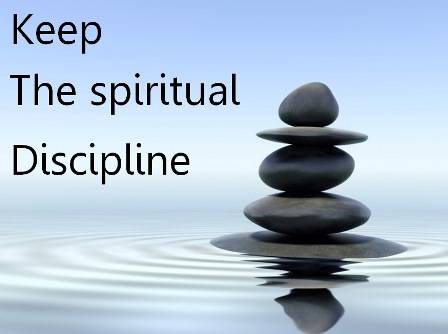
Maintaining Discipline in Worship


'Abdullah would rise before Fajr (dawn) each morning and rush to the Mosque to offer the prayer. He would return to the Mosque for Maghrib (sunset) and 'Ishaa' (evening) prayers as well. He read the Quran daily. He studied other Islamic books in his spare time. He spent much of his free time with his family and took his role as the spiritual leader in his home quite seriously.
Five years later, he found that he would go days, sometimes a whole week without performing a single prayer. He no longer attends congregational prayer at the Mosque—he didn't have time with his new job. This new job involved his working closely in nightclub establishments with people of questionable backgrounds. This resulted in his becoming very secretive about many of his work activities; he didn't even talk to his wife about them because he knew she would disapprove. Work kept him busy all night and throughout the entire weekend. Many of his new friends also worked with him and he began to spend a great deal of his free time with them. Because of this, he spent less time with his family. He had to sleep during the day in order to be able to work each night.
 
His wife noticed a great change in his demeanor. They had several discussions about his work and how it was affecting him and his relationship with Allah Almighty. He agreed, and would begin the process of searching for new work, but inevitably, chose to stay in his current job. He soon found himself feeling very distanced from his wife and children. Even though the money was abundant when he first began, it was now barely paying the bills.
 
He felt his marriage crumbling beneath the years of neglect. He found himself succumbing to depression over his circumstances, unmotivated to initiate the things he knew he would have to do in order for his life to change.
 
It is interesting to note that 'Abdullah's life seemed much more peaceful and balanced when he engaged in his regular religious duties, and began to suffer significantly when he abandoned them.
 
Could this simply be a coincidence? Imam Muhammad Baianouni  the scholar from North Carolina in USA accurately sums up situations like this stating: "The regulation of a man's conduct within one system of life is one of the most important reasons of success and stability. The absence of this regulation is one of the greatest crises a man suffers from in his life. This happens when man is left without guidance from Allah, The Most High, or without proper upbringing based on the Divine Guidance. Under these circumstances, man's life becomes miserable on this earth and he will be amongst the losers in the Hereafter".
 
A religion of discipline
 
It is only from the infinite wisdom and mercy of Allah that we have been given a system of belief that instructs and assists in guiding our actions and behavior. By participating in the daily obligations of our faith outlined in the Quran and the Sunnah of the Prophet Muhammad  sallallaahu  `alayhi  wa  sallam ( may  Allah exalt his mention ) we are more likely to enjoy Allah's bounty in this life, and reap the rewards in the Hereafter. Allah Almighty ordered all believers to be disciplined in their worship, and not to disobey Him. In the Quran, Allah Says (what means) "So remain on a right course as you have been commanded, [you] and those who have turned back with you [to Allah], and do not transgress. Indeed, He is Seeing of what you do." [Quran 11: 112]
 
The intensity of our faith changes throughout our lives. There are times when we are of strong faith, and times when we struggle. Many brothers and sisters who proudly claim Islam as their religion unintentionally find themselves "slipping" in their religious duties. Seemingly overnight their lives go from pleasurable and carefree to darkness and confusion. You may begin to acknowledge that you have landed in such a state because of the choices you made, but you are lost as to how to go about changing things.
 
Being steadfast in our duties to Allah Almighty is what keeps you from languishing during your darker moments. Remember that your ultimate return is to Him Almighty, so you must develop discipline and a consistency in your daily routine to keep your faith from sinking.
 
Developing discipline
 
Recognizing your shortcomings is the first step towards becoming more disciplined. Allah Almighty Says (what means): "…Indeed, Allah will not change the condition of a people until they change what is in themselves..." [Quran 13: 11] When you decide to change for the sake of Allah Almighty, Allah will help you change. Each one is responsible for oneself and will be questioned accordingly on the Day of Judgment, with no one to intercede on your behalf. You must make the choice to live your life according to Allah's Will on your own. You will not benefit from being told about what you need to do and how you need to change in order to have a more fulfilling life. You must take an interest in making those changes for yourself. Only then can you reap the rewards. Think about the wives of the Prophets Noah and Lut, may Allah exalt their mention. Each Prophet may  Allah  exalt  his  mention tried unsuccessfully to offer the best guidance to his wife, but because there was no real interest on their part, it was said to each of women (what means): "…Enter the Fire with those who enter!"[Quran 66: 10]
 
I have a good friend who was going through a very rough time. Her faith was at an all time low. During several of our conversations, she lamented that Allah Almighty was punishing her for not being a "good Muslim." I asked her: "Why must Allah be punishing you? Allah puts us through many tests and trials in this life to give us the chance to know Him better." We debated back and forth about this for some time. She was really stuck in the debts of despair, and found my comments annoyingly optimistic. I reminded her that Allah Almighty is also Merciful and that this trial for her could be the wake up call she needed to have an opportunity to renew and redeem her faith and become closer to Him Almighty. Perhaps Allah had to put her through such difficulty to get her attention and give her a chance to make changes.
 
There are many things you can do to establish discipline in your daily life. Such consistency not only balances our faith, but all other aspects of our lives as well: 
  •  Evaluate yourself regularly to make certain you are doing all that you can spiritually.
  • Perform your daily prayers punctually each day.
  • Read the Quran regularly, with an effort to truly understand what you are reading.
  • Seek knowledge regularly, religious and other, through books, CDs/tapes, classes and lectures.
  • Keep company with righteous people.
  • Have confidence in your faith and, more importantly, in Allah Almighty.
  • Regularly spend some time alone in contemplation and worship.
Islam is a complete way of life. As believers, we should desire the discipline that allows us to regulate our lives and keep chaos away. In choosing this way of life, peace and contentment are your right. Discipline comes as a result of performing certain duties consistently. Ask Allah to help you to establish discipline in your religious commitment and to be able to submit to all that pleases Him Almighty. -islamweb.net

CHAPTER 100, AL-ADIYAT (THOSE THAT RUN)

Introduction

Chapter-100.jpgChapter 100 is named from the words of the first verse describing charging war horses, or those that run.  It is an eleven-verse chapter amongst the short Meccan chapters at the end of the Quran.  These chapters were predominantly revealed at the beginning of the prophethood of Muhammad, may the mercy and blessings of God be upon him, and served to teach the new Muslims the basics of faith and to strengthen their hearts in the face of strong opposition and abuse.  At the time of this chapter’s revelation, the country was in chaos and turmoil.  Inter-tribal skirmishes and raids were a daily occurrence; thus the sight and sound of war horses was something that the people no doubt knew very well.   The subject matter is designed to show how evil a person can become if he constantly denies the Hereafter.

Verses 1 – 6 An oath by magnificent horses

God swears an oath by the charging steeds that pant, while producing sparks by striking their heels.  They make raids in the early morning when their enemies are unaware and stir up clouds of dust when they dash into the middle of the enemy troops.
When the Arabs of the time mounted raids on settlements or other tribes, they would leave at night in order to take the enemy by surprise when they launched their attack in the very early morning.   It was in this half-light that the sparks generated by the movement of horses would be visible.  God swears by these war horses and describes their movements.  In our mind’s eye we see a picture of the horses running, snorting, neighing, and arriving in the middle of the enemy.  Their hooves strike the rocky desert terrain producing sparks of fire, adding to the fear the enemy must have felt surrounded by these magnificent panting horses creating disorder and confusion.
This vision is one well-known to those persons to whom the Quran was at first addressed.  They were well aware of the widespread bloodshed, and the loot and plunder mentality that was prevalent at that time.  Thus God swears by this scene in order to make a statement and call attention to His words.  The horses God had bestowed upon them were, gifts and a blessing, they should not have been employed for unjust fighting, tyranny, and plunder.  God did not intend that these magnificent animals be used for this purpose.  To use them in this way demonstrates careless ingratitude.

Verses 6 – 8 People are ungrateful

God says that there is no doubt that the human being is disloyal to his master (God).  Most people are ungrateful for all the bounties and blessings He bestows upon them.  They deny God’s favors and this ingratitude is shown through their actions and verbal statements.  There are many who do not even believe that God exists let alone acknowledge the blessings He has bestowed.  On the Day of Judgment, each person will testify against him or herself because they will be unable to speak anything but the truth.   
Humankind’s love of wealth is excessive and intense.  He sees something that he wants or desires and becomes engaged in a relentless pursuit of it.  For many acquisition of wealth is the primary purpose of their lives irrespective of how it is obtained and without giving a thought to the legitimacy of the way it is earned.   However, having faith changes a person’s priorities, values, and concerns.  Faith brings God-consciousness and changes ingratitude to thankfulness.

Verses 9 – 11 Intentions and actions have consequences

Don’t people understand that when the contents of graves burst forth, and those who were dead are brought back to life, all their secrets will be made known? On that Day God will be fully aware of everything they did.
Pondering the final three verses provides a cure for ingratitude.  It describes a scene from the Day of Resurrection that makes any right-minded person shudder with fear.   We are shocked by a violent and frightening scene; the graves burst open scattering their contents.   People will exit their graves by being wrenched out and thrown around forcefully.  It leaves no doubt that the intense longing for wealth and multitudes of world possessions will provide no protection whatsoever. 
God will not pass judgment only on the apparent and obvious deeds but also the ones that a person tries to keep hidden.  All the intentions, aims, ideas and thoughts, as well as the motives behind a person’s acts and deeds, will be uncovered and examined in minute detail.  Everything that lies hidden in a person’s heart will be exposed. 
On that fateful Day of Resurrection, God will be fully aware of what is on the inside and what is on the outside. He will know what is what, who is who, what was visible and what was hidden, and He will know what punishment or reward is deserved. 
The chapter began with people carefree and unconcerned about consequences, however, it ends with the knowledge that a record was definitely kept, nothing is hidden from God, and there will indeed be consequences.  -islamreligion.com

Saturday, 3 November 2018

HINDU KARMA VS. ISLAM

Hindu-Karma-vs.-Islam.jpgKarma is a Sanskrit word meaning actions or deeds, and a spiritual concept in several Eastern religions, primarily Hinduism and Buddhism. Generally speaking, it is the principle of retributive justice determining a person's state in this life and in his reincarnations. Kar means the physicality of action and ma means producing or creating. Thus, karma is that which is created or produced by one's physical organs. However, karma as a concept does not mean only physical actions, because mental actions also create karma.

The concept of karma in the West, which is vastly different and often misunderstood, has developed over the past two centuries. Its popularity can be traced back to the formation of the Theosophical Society. The society modified and introduced Hindu beliefs to the West, but this view of karma is only loosely connected to the Hindu, Buddhist, Sikh or Jain philosophies. In some ways, the concept of karma that was developed in the West resembles the Islamic understanding of righteousness rather than the principles of Hindu karma. This idea of karma has gained enormous popularity and is often expressed in popular phrases such as, ‘what goes around comes around’ and ‘you will reap what you sow.’ Many people express the principles of karma in their everyday lives without realizing that reincarnation is a major doctrine of the laws of karma. Some people deny reincarnation while accepting the idea that positive actions will be rewarded whilst negative ones will be punished. They often view karma as a law of spiritual dynamics related to actions in their daily lives. This definition of karma suggests that actions can influence the future's quality and has become very popular.
As mentioned before, some people embrace karma without understanding its relationship to reincarnation and the immutable nature of its laws. Reincarnation refers to recurring rebirths or the transmigration of the soul from one physical body to another.  In Hinduism, karma is regarded as a fundamental law that is automatic and mechanical. It is not imposed by God, or a god; it is universal and cannot be interfered with. It is completely impersonal, and it is believed to be wholly just and fair. This karmic law is applicable to all living beings, including plants, animals and microorganisms.
Hindu karma tells us that when a person with good deeds dies, he goes to the next world through the path of light and enjoys the heavenly pleasures. When the karma that he had accumulated over his lifetime is exhausted, he returns to the earth to continue his life in a new incarnation. When a person with evil deeds dies, he goes to the dark world along a path of darkness and suffers there until his bad karma is exhausted, after which he returns to the earth reincarnated. Thus the consequence of having lived, what is, in Hinduism, considered a good or a bad life is exhausting karma in a pleasurable way or suffering in darkness.  When the soul begins its new life, it is free to begin again, accumulating both good and bad karma and attempting to free itself from the cycle of rebirth.
When discussing karma and Islam, it is important to understand that Islam categorically rejects any concept of reincarnation. In Islam, we have one life, with one chance to get it right, and then we experience one death. There is no going back and no moving between species or genders.
"Until when death comes to one of them, he says ‘My Lord, send me back, so I may do good in that which I left behind.’ Never! It is only a word he is saying; and behind them (the disbelievers) is a barrier until the Day they are resurrected." (Quran 23:99 & 100)
Death is the end of our transitory life in this world and the beginning of our infinite life in the Hereafter. Islam, therefore, requires us to believe in Paradise and Hell.  We are born into this life, and then we die; after we are resurrected we will begin a new and everlasting life in the Hereafter. God also explains that if we were to ‘go back and try again’ it would be pointless because we would undoubtedly repeat our mistakes.
"But if they were returned to the world, they would certainly revert to that which they were forbidden." (Quran 6:28)
Our actions, deeds and beliefs determine our Hereafter, and we have free will to choose how we behave. Thus, our behavior in this world is crucial. In order to guarantee our place in Paradise, a believer must live a good and righteous life.
"Whoever acts righteously — whether male or female — and is a true believer, We will surely give them a good life (in this world with respect, contentment and lawful provision), and We shall pay them certainly a reward in proportion to the best of what they used to do (i.e., Paradise in the Hereafter)." (Quran 16:97)
While there is no concept of karma in Islam, there is indeed a connection between our deeds and actions and our future, both in this world and in the next. Every person must face the consequences of their actions. But rather than being subject to an immutable law where man is helpless, Islam offers us ways to change our destiny and choose our destination. When we obey God’s laws and instructions we are on a path to a blissful Hereafter. If on the other hand, we choose to disobey God there is always a door open to forgiveness. God will accept our repentance, and He makes it easy for us to turn to Him.  He judges all our actions and is the One who determines our ultimate outcome.
Islam says that good actions lead to good outcomes and bad actions inevitably lead to bad outcomes. However, we have the chance to wipe out our sins with repentance and good behavior.
"…Verily, good deeds wipe out misdeeds (i.e., small sins). That is a reminder for the mindful (those who accept advice)." (Quran 11:114)
Prophet Muhammad, may the mercy and blessings of God be upon him, tells us to fear God and that following a bad deed with a good deed will wipe out the bad deed. He continues his advice by reminding us to have a good attitude and good manners towards others.[1] 
The concept of karma, due to its undeniable and unbreakable association to reincarnation, is a theory that is not acceptable in Islam. However, karma, as it is incorrectly understood nowadays, is close to the Islamic idea that righteousness is always attainable.  A person is strongly encouraged to be morally upright and respectful to everyone and everything on this earth. Islam is a set of guidelines made specifically for humankind by our Creator.

Bibliography

Castro, J, 2013 What is Karma? Accessed at: https://www.livescience.com/41462-what-is-karma.html
Jayaram, V, The Concept of Karma in Hinduism.  Accessed at: https://www.hinduwebsite.com/conceptofkarma.asp
ReligionFacts.com Karma (Hinduism). 2016. Accessed at: www.religionfacts.com/hinduism/karma
-islamreligion.com

FOOTNOTES:
[1]At-Tirmidhi

LIQUID GOLD - THE BENEFITS OF HONEY

Honey.jpgThe benefits of honey don’t just stop at the satisfaction of our taste buds.  The powerful healing attributes of honey have long been used to promote health and healing.  Both the holy Quran and Hadiths (Prophetic traditions) refer to honey as a healer of disease.  In the Quran we read, “And thy Lord taught the bee to build its cells in hills, on trees and in people’s habitations… there issues from within their bodies a drink of varying colors, wherein is healing for humankind.  Verily in this is a Sign for those who give thought.” 
Additionally, in Sahih Bukhari we read that the Prophet, may the mercy and blessings of God be upon him, said: “Honey is a remedy for every illness and the Quran is a remedy for all illness of the mind, therefore I recommend to you both remedies, the Quran and honey.”
Honey offers incredible antiseptic, antioxidant and immune boosting properties for our body and health.  It not only fights infection and helps tissue healing but also helps reduce inflammation and is often used for treating digestive problems such as indigestion, stomach ulcers and gastroenteritis.
Researchers from around the world are discovering new and exciting medical benefits of honey and other healing items produced in the hive such as propolis, royal jelly and bee pollen.
As in all foods, the health benefits of honey largely depend on its quality.  Raw honey, the purest form, comes straight from the comb and is placed into the honey extractor or press.  This is unheated, unpasteurized and unprocessed honey.  Because it is raw, it tends to have fine textured crystals in it that occur naturally when glucose, one of three main sugars in honey, spontaneously precipitates out of the super saturated honey solution.  If your raw honey crystallizes, simply place the container in hot water for 15 minutes and this will help return it to its liquid state.
Most honey found on supermarket shelves today is not raw honey, but rather commercial honey which has been heated and filtered so that it has a smoother, more appealing look to it.  When honey is heated and processed in such a way it will maintain a long shelf life but the vitamins and minerals which benefit the body’s immune system are largely destroyed in the process.  As such, it is not as nutritious as raw honey. 
Honey varieties differ widely in color, texture and flavor.  Comb honey, taken straight from the hive, is the rawest and purest form of honey.  Its characteristic hexagon-shaped wax cells that are filled with honey can be chewed like gum.
Liquid honey is the most recognizable and easiest to find.  It is pressed from the comb and filtered to remove any particles such as pollen grains, wax or crystals.
Creamed honey, also known as whipped honey, granulated honey or honey fondant, has a smooth and creamy consistency.  Cream honey does not drip as does liquid honey, and can be spread easily.
The color of honey, largely determined by the floral source of the nectar from which the bees have collected it, is graded into light, amber and dark categories, with darker varieties being more medicinally potent.  In general, lighter honey varieties, such as wild flower honey that has been collected from the nectar of several flowers, have a milder flavor.  The darker varieties, such as buckwheat honey, collected from the nectar of the flower of the buckwheat grain, have a more robust and stronger flavor.  Approximately 23 common varieties of honey include buckwheat, clover, linden, sage, tupelo and wildflowers. 
In addition to carbohydrates, honey contains protein (including enzymes) and amino acids, and is high in vitamins and minerals.  Some of the vitamins present in honey are B6, thiamin, niacin, riboflavin, pantothenic acid and certain amino acids.  The minerals include calcium, copper, iron, magnesium, manganese, phosphorus, potassium, sodium and zinc.  While the amino acid content is minor, the broad spectrum of approximately 18 essential and nonessential amino acids present in honey is unique and varies by floral source.  Also present are polyphenols, that can act as antioxidants and play a role in cleansing the body of free radicals and reactive compounds that can contribute to serious illness such as cancer and heart disease.  It is believed that honey contains a similar range of antioxidants that are found in green vegetables and fruit including broccoli, spinach, apples, oranges and strawberries.
To fight high cholesterol, look no farther than buckwheat honey.  In their 2004 study, Effect of honey consumption on plasma antioxidant status in human subjects, biochemist H.  Gross and his colleagues from the University of California, Davis, examined the blood results of 25 participants who were each given four tablespoons of buckwheat honey daily for 29 days in addition to their regular diets.  At given intervals, samples taken from them following honey consumption showed that there was a direct link between the subjects’ honey consumption and the level of polyphenolic antioxidants in their blood.  With its high levels of mineral, vitamin and high antioxidant content, a small amount of buckwheat honey added daily could help lower cholesterol by increasing blood levels of protective antioxidant compounds in the body.
People with diabetes often question whether they can take honey.  In his book, The Honey Revolution – Restoring the Health of Future Generations, Ron Fessenden MD says that a tablespoon of honey consists of nearly the same carbohydrate content as a cupful of quartered raw apple, and that a diabetic patient can be assured that consuming honey will produce a significantly lower blood sugar response than an equivalent amount of sugar or other glucose-rich starches.  The balance of sugars and the presence of multiple co-factors in honey serve to make this natural food quite different from table sugar, high-fructose corn syrup (HFCS) or other artificial sweeteners.
Dr.  Fessenden goes on to say that when consumed regularly over several weeks or months, honey will lower blood sugar and glycated hemogobin levels.  He says that generally adding three-to-five tablespoons of honey a day to the diet and eliminating most sugar and HFCS should be recommended to people with Type 2 Diabetes.
For centuries, pure honey has been used in children as a home remedy to help alleviate some of the symptoms associated with the common cold.  In the December 2006 study on cough suppressants, Effect of Honey and Dextromethorphan on Nocturnal Cough and Sleep from Penn State College of Medicine researchers compared honey to over-the-counter medicines for symptomatic relief of upper respiratory infection, such as cough, in children 2-to-18-years of age.  The conclusion was that honey provided a safe alternative for children.  Honey outperformed cough medicine in offering a better night’s sleep and reducing severity of cough.  Across the board, parents in the study rated honey as significantly better than cough medications or no treatment for symptomatic relief of their children’s nighttime cough and sleep difficulties.
The American Academy of Pediatrics and other children’s health professionals have raised concerns about common over-the-counter remedies, the safety of these cough suppressant products and whether the benefits justify any potential risks from the use of these products in children, especially in children under 2 years of age.  Ian Paul MD, M.Sc., a pediatrician, researcher and associate professor of pediatrics at Penn State College of Medicine and Penn State Children’s Hospital said, “Additional studies should certainly be considered, but we hope that medical professionals will consider the positive potential of honey as a treatment...” However, do not feed honey-containing products or use honey for infants under one year of age.
In caring for a wound, the American Journal of Dermatology, in Honey in the Treatment of Wounds and Burns says honey applied topically to a wound can promote healing just as well, or in many cases better than conventional ointments and dressings.  Its anti-inflammatory properties reduce swelling and pain while its antibacterial properties prevent infection.
To keep your energy levels up use honey as an excellent source of easily assimilated energy; honey is one of the most effective forms of carbohydrates to ingest just prior to exercise and to replenish your energy levels.  The glucose contained in honey is absorbed by the body quickly, giving an immediate energy boost, while the fructose content is absorbed more slowly, providing sustained energy.  Honey has also been found to keep levels of blood sugar fairly constant compared to other types of sugar, and it appears to be a carbohydrate source that is relatively mild in its effects upon blood sugar compared to other carbohydrate sources.
Honey has been used for thousands of years to help calm a child’s cough, aid in cholesterol relief and digestion and to promote healing of wounds.  Honey, in its purest form truly is a head-to-toe cure that will surely be used more and more in the years to come. -islamreligion.com