Islam

Islam

Thursday, 27 August 2026

The Family in Islam in Brief


The family, which is the basic unit of civilization, is now disintegrating.  Islam’s family system brings the rights of the husband, wife, children, and relatives into a fine equilibrium.  It nourishes unselfish behavior, generosity, and love in the framework of a well-organized family system.  The peace and security offered by a stable family unit is greatly valued, and it is seen as essential for the spiritual growth of its members.  A harmonious social order is created by the existence of extended families and by treasuring children. - islamreligion.com

Wednesday, 26 August 2026

Islam Enters the Far East


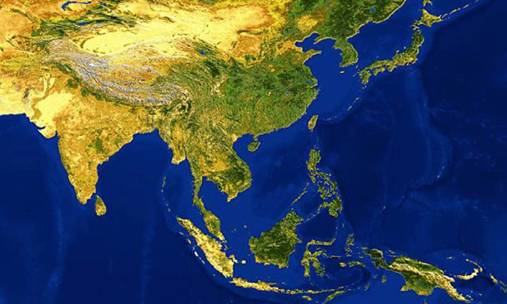
Islam-Enters-the-Far-East.jpgWhile conflict was an integral part in the spread of Islam in the Middle East this was not the case in China or Southeast Asia.  In this part of the world Islam meandered along following well-established trade routes.  It is said that the first Muslim to visit China was Sa’d ibn Abi Waqqas, who was the uncle of Prophet Muhammad, may the mercy and blessings of God be upon him.  It is thought that he arrived in Canton (Guangzhou) in 627 CE.  In 651 CE Sa’d visited China for the third time to set up an embassy.  The Tang Emperor, Gaozong, received the envoy and ordered the construction of the Memorial mosque in Canton.  Thus Canton (Guangzhou) became one of the first Muslim settlements in China. 

The first Arab traders to reach China had travelled along the Southern Silk Road, a maritime route that brought an intense exchange in ideas, goods and people.  Although western academia debates when Islam arrived in China, Prophet Muhammad and his companions certainly would have been aware of China and the Chinese aware of the events taking place outside their area. 

Further north, along the Central Asian Silk Road, that went from the Middle East through Central Asia to China via Samarqand, Kashgar and Xi’an, a similar exchange took place.  It brought an increasing number of Turkic and Persian populations eager to convert others to the new religion coming out of the Middle East.  Many of the Muslims who visited China settled and married local women which helped to foster closer ties.  And then hundreds of years later countless Muslims migrated to China during the Yuan Dynasty (1271–1368), when whole populations shifted across the vast Mongol Empire.

A detailed account of the arrival of Islam and settlement of Muslims in China can be found here: https://www.islamreligion.com/articles/486/viewall/islam-in-china/

Today, although Muslims make up less than two percent of the population, there are more than 20 million Muslims in China. Ten of China’s 55 officially recognized ethnic minorities are Muslim. According to government figures, there are 35 thousand Islamic places of worship and 45 thousand imams in China.[1]  However even after 1400 years Muslims who are culturally Chinese must justify their devotion to One God to their skeptical non-Muslim neighbors and do so in an increasingly intrusive state.

Southeast Asia is a subregion of Asia, consisting of the countries that are geographically south of China, east of India, west of New Guinea and north of Australia. Islam is the most widely practiced religion with more than 240 million adherents. Just how did Islam spread into Indonesia and Malaysia?  It travelled on the monsoon winds, and with the Arab traders who carried God’s message.  Indonesia now has a Muslim population of 88% and Malaysia has a Muslim population of 61.3%.[2]

Spread across a chain of 17 to 18 thousand islands Indonesia lies between Asia and Australia.  It has the world's largest Muslim population and Southeast Asia's biggest economy.  Indonesia stretches along the equator and 922 of its islands are permanently inhabited.  The country's strategic position fostered inter-island and international trade which in turn fundamentally shaped Indonesian history.

According to early accounts from the Abbasid caliphate, the Indonesian archipelago was famous among Muslim sailors due to its abundance of precious spice trade commodities such as nutmeg, cloves and galangal.  Arab traders had settled there by the 13th century CE and the gravestone of Sultan Malik Al-Saleh, dated 1297 CE, is one of the oldest Islamic inscriptions to be found in Indonesia.[3]  This indicates that the first ruler of Samudra, a Sumatran state, was Muslim.  Furthermore, and supplying more verifiable evidence for early Islam in Indonesia, famous Venetian traveler Marco Polo stopped in northern Sumatra on his way back to Europe from China in 1292.[4] He visited an Islamic town named Perlak.  Arab traveler Ibn Battuta visited the same town in 1345-46 and wrote that its monarch was a Sunni Muslim.[5]

Islam spread into the Indonesian islands slowly via one of two routes.  The native people came into contact with Islam and converted, or foreign Muslims, from India, China and the Middle East, visited Indonesia and settled there mixing in with the local communities.  It seems that the new comers did not force their own customs and culture on the local populations but instead adopted their local culture while introducing the Oneness of God and the requirements of the Shariah.  Islam was carried from island to island. Each time the inhabitants of an island accepted Islam; they then worked hard to convert others.

Particular consideration should be given to Aceh and Sultan Iskandar Muda (1607–1636) the twelfth Sultan of Aceh who took the kingdom to its most powerful level and instigated interaction with the Ottoman Empire.[6]  In the first half of the seventeenth century Aceh was the dominant economic and political power of the region. It captured and controlled the northern half of the Malay Peninsula and northern and parts of central Sumatra.[7]

The entire Malay Archipelago was at one time known as Malaysia; however, a geographically reduced Malaysia emerged out of the territories colonized by Britain in the late nineteenth and early twentieth centuries.  In 1963 parts of Malaysia, to the east and the west united into one country. Western Malaysia stretches from the Thai border to the island of Singapore and is on the southern tip of the Malay Peninsula.  The territories of Sabah and Sarawak separated by the country of Brunei, on the north end of Borneo, make up the area known as Eastern Malaysia.[8]

Bountiful natural resources such as tin, camphor, brazilwood, ebony and gold can be found in Malaysia’s interior.[9] Thus through the ages, ships have used the coast of the peninsula to dock and transact business.  Trade on the Strait of Malacca helped to create economic links between China, India and the Middle East, and thus Islam slipped effortlessly down the archipelago with Arab, Persian and Indian traders who controlled business in the area. It was a peaceful conquest.

The name Malacca comes from the Arabic word Malakut. An Arab trading post had been established in the 8th Century CE and Islam spread throughout the Malay Peninsula in the same way it spread in Indonesia; either the local inhabitants were attracted to and embraced Islam, or traders decided to settle in the area. 

By the time the Spanish and Portuguese arrived in the early 16th century, Islam was firmly established in Southeast Asia. It continued to develop in the 17th century, when Arab traders and scholars purposefully migrated to the area. European powers, or trading companies representing them, began to encroach on the region, establishing themselves as participants in its economic and political life. Despite colonialism by the 19th century Southeast Asia had established itself as an important part of the Muslim world.

- islamreligion.com

Footnotes:

[2]The Muslim Population of Indonesia. Pew Research Centre.
http://www.pewforum.org/2010/11/04/muslim-population-of-indonesia/
Malaysia Demographics Profile 2018 - IndexMundi
https://www.indexmundi.com/malaysia/demographics_profile.html

[3]Ancient Southeast Asia. John Norman Miksic & Goh Geok Yian Taylor & Francis, 2016 p497

[5]Indonesia - THE COMING OF ISLAM - Country Studies
http://countrystudies.us/indonesia/5.htm

[6]Architecture and the Politics of Identity in Indonesia.  Izziah Hasan 2009
https://digital.library.adelaide.edu.au/dspace/bitstream/2440/65554/8/02whole.pdf

Tuesday, 25 August 2026

The Miraculous Quran : Scientific Miracles


Scientific Miracles of the Quran

The_Miraculous_Quran_(part_10_of_11)_001.jpgThe “scientific miracles” of the Quran is a topic that many people are talking about nowadays, as the research in many fields continues.  The source for this is probably the fact that there are literally hundreds of verses of the Quran in which God points to different aspects of this creation and encourages humans to reflect and learn from what they are seeing.

Shortly after I became Muslim, I became aware of Maurice Bucaille’s The Bible, the Quran and Science.  For the sake of brevity, I wish to share with you the important conclusions that he reached:

The Quran follows on from the two Revelations that preceded it and is not only free from contradictions in its narrations, the sign of the various human manipulations to be found in the Gospels, but provides a quality all of its own for those who examine it objectively and in the light of science i.e. its complete agreement with modern scientific data.  What is more, statements are to be found in it (as has been shown) that are connected with science: and yet it is unthinkable that a man of Muhammad's time could have been the author of them.  Modern scientific knowledge therefore allows us to understand certain verses of the Quran which, until now, it has been impossible to interpret.

In view of the level of knowledge in Muhammad's day, it is inconceivable that many of the statements in the Quran which are connected with science could have been the work of a man.  It is, moreover, perfectly legitimate, not only to regard the Quran as the expression of a Revelation, but also to award it a very special place, on account of the guarantee of authenticity it provides and the presence in it of scientific statements which, when studied today, appear as a challenge to explanation in human terms.[1]

In his discussion of the Quran, Bucaille emphasizes three important points:

a)First, there is nothing in the Quran that contradicts modern science;

b)second, there is no mention of some of the false beliefs that people had at that time of the Prophet Muhammad, may the mercy and blessings of God be upon him, concerning the creation, the universe and science in general; and,

c)three, there is no way that the Prophet Muhammad could have known at his time many of the facts alluded to in the Quran.

For the sake of brevity, though, it will be possible to discuss only one verse in some detail here demonstrating the “scientific miracles” of the Quran.[2]

Upon reading the Quran, one topic that catches many a reader’s eye is the discussion of the creation of the human within the womb of the mother.  God says in the Quran:

“We created man from an extract of clay.  Then We made him as a drop in a place of settlement, firmly fixed.  Then We made the drop into an alaqah (leech, suspended thing, and blood clot), then We made the alaqah into mudghah (chewed-like substance)…” (Quran 23:12-14)

This brief passage is outstanding in its precise description of the actual process as well as its freedom from all of the incorrect theories and views that were prevalent at the time of Muhammad.  As noted in the translation, the Arabic word alaqah can imply leech, suspended thing or blood clot.  In reality, all of these terms are descriptive of the embryo.  In fact, in its earliest stage, the embryo not only actually physically looks like a leech[3] but it “obtains nourishment from the blood of the mother, similar to the leech, which feeds on the blood of others.”[4] Alaqah, again, can also mean, “suspended thing,” which is also true of the embryo in this stage as it sits hanging in the womb of the mother.[5]  Finally, alaqah can also mean blood clot.  Again, the relationship to the actual physical process is miraculous.  Ibrahim writes:

We find that the external appearance of the embryo and its sacs during the alaqah stage is similar to that of a blood clot.  This is due to the presence of relatively large amounts of blood present in the embryo during this stage… Also, during this stage, the blood in the embryo does not circulate until the end of the third week.  Thus, the embryo as this stage is like a blood clot.[6]

The verse states that the next stage is that of a mudghah or “chewed-like substance.”  This is also an amazingly accurate description of the next embryonic stage.  At this stage, the embryo develops somites at its back and these “somewhat resemble teeth marks in a chewed substance.”[7]

The kind of information described above has only been “discovered” and seen by humans since the development of powerful microscopes.  Ibrahim notes that Hamm and Leeuwenhoek were the first to observe human sperm cells, in 1677 due to the help of an improved microscope.[8]  This took place some 1000 years after the time of the Prophet Muhammad.

In fact, the details and the analysis of the Quranic verses related to embryology are so great that Keith Moore, Professor Emeritus of Anatomy and Cell Biology at the University of Toronto, has included them in a special edition of his textbook The Developing Human: Clinically Oriented Embryology.[9]  This is an interesting work that is comprised of Moore’s complete textbook with insertions describing some of the same topics from the point of view of the Quran and the sayings of the Prophet.  After discussing advanced topics in embryology—most of which are the result of research in the past few decades—this textbook would then have pages inserted describing what the Quran has stated concerning the same issues.  Can you imagine taking the best medical book from even just 200 years ago and doing something of this nature? It would be absurd and ludicrous as the material of the old textbook would be completely irrelevant.  However, they could do this with the Quran, a book that does not even claim to be a medical textbook.  Of course, it has a much stronger claim: it claims it is from God.

Commenting on the miraculous consistency between statements in the Quran and the historical development of Embryology, Dr. Moore stated in 1981, “It has been a great pleasure for me to help clarify statements in the Quran about human development.  It is clear to me that these statements must have come to Muhammad from God, because almost all of this knowledge was not discovered until many centuries later.  This proves to me that Muhammad must have been a messenger of God.”[10]

In fact, the Quran touches upon many sciences other than embryology, such as astronomy, physics, geography, geology, oceanography, biology, botany, zoology, medicine and physiology.[11]  Thus, numerous other scientists from various fields have made similar conclusions concerning the Quran.[12]

How could it be that this illiterate man of some fourteen hundred years ago, the Prophet Muhammad, produced a book of this nature having so many scientific facts and details with perfect accuracy in it? Could it have been the case that this was all a coincidence and that the Prophet was an imposter? At least in my opinion, the answers to questions like these were very clear.  Indeed, the claim that the Quran is not a revelation from God becomes more and more difficult to hold once one learns more about the Quran itself.

Incidentally, there are other historically related miraculous aspects of the Quran.  For example, as opposed to the Bible, the Quran refers to the ruler at the time of Joseph as a “king” and never refers to him as a Pharaoh, although that term is used in the Bible in the story of Joseph, and the Quran uses that term in the story of Moses.  It seems, from the best of what can be determined now, that Joseph lived among the Semitic Hyksos kings of Egypt and that his ruler was indeed not a Pharaoh.[13]  The Quran also makes it clear that the body of the Pharaoh of the Exodus would be recovered and preserved.[14]  Now, it is considered that all of the Pharaohs of that time have actually been preserved as mummies, something the Prophet also could not have known at that time.  This has led two researchers to state:

If the Holy Quran was derived from the Bible [as some people falsely claim, then] those many Biblical errors would have passed into it.  Why, for instance, would the Holy Quran describe the Israelites as a small nation when the Bible claims that they were 2-3 million, an enormously inflated number that no scholar would accept?... Why did the Holy Quran not go along the Biblical, and indeed logical belief that Pharaoh was swallowed by the sea, to state instead that Pharaoh’s “body” was rescued? And why would the Holy Quran say this about Pharaoh in particular but not about other people who were also destroyed by God?...[15]

Finally, Muslim scholars have noted that the particular miracle given to each prophet was related to issues that their people were most fascinated with.  Thus, for example, during the time of Moses, sorcery was very popular, and one of his signs was directly related to outdoing the weak tricks of humans.  During Jesus time, medicine was a popular issue and some of Jesus’ signs included healing the sick, raising the dead and so on.  The Arabs at the time were very proud of their literary skills and, as shall be noted shortly, the Quran is an Arabic masterpiece beyond what they could match.  However, the Prophet Muhammad was not sent only to the Arabs or only to the people of his century.  In this day and age, science has practically become a “god” to replace the traditional God of the Judeo-Christian tradition.  The Prophet Muhammad’s miracle is actually completely relevant to the field of science that captivates so many people today, once again indicating that the Prophet Muhammad was truly a prophet for all of humanity until the Day of Judgment.

- islamreligion.com

Footnotes:

[1]Maurice Bucaille, The Bible, the Quran and Science (Indianapolis, IN: American Trust Publications, 1978), pp. 251-252.

[2]For more details concerning the different stages of human development, the interested reader may also consult Keith L. Moore, Abdul-Majeed A. Zindani and Mustafa A. Ahmed, Quran and Modern Science: Correlation Studies (Bridgeview, IL: Islamic Academy for Scientific Research, 1990), pp. 15-47.

[3]See I. A. Ibrahim, p. 7, Figure 1.

[4]I. A. Ibrahim, p. 6.

[5]See I. A. Ibrahim, p. 7, Figure 2.

[6]Ibrahim, p. 8.

[7]Quoted by Ibrahim, p. 8, from Moore and Persaud, The Developing Human, 5th ed., p. 8. Also see Ibrahim’s figures on page 9.

[8]Ibrahim, pp. 8-10.

[9]See Keith L. Moore [along with Abdul-Majeed Azzindani], The Developing Human: Clinically Oriented Embryology [with Islamic Additions: Correlation Studies with Quran and Hadith] Jeddah, Saudi Arabia: Dar al-Qiblah for Islamic Literature, 1983, in conjunction with W. B. Saunders Company.

[10]Quoted in I. A. Ibrahim, A Brief Illustrated Guide to Understanding Islam (Houston: Darussalam, 1997), p. 10.

[11]For examples concerning these different fields, see Zakir Naik, “The Quran and Modern Science: Compatible or Incompatible?”  www.ahya.org.

[12]See I. A. Ibrahim, A Brief Illustrated Guide to Understanding Islam (Houston: Darussalam, 1997), pp. 10ff. This work, in its entirety, is available at www.islam-guide.com. Ibrahim reviews and summarizes the conclusions of Moore and a number of others.

[13]For more details on this point, see Louay Fatoohi and Shetha al-Dargazelli, History Testifies to the Infallibility of the Quran: Early History of the Children of Israel (Delhi, India: Adam Publishers & Distributors, 1999), pp. 81-93.

[14]God says, “So this day We shall deliver your (dead) body (out from the sea) that you may be a sign to those who come after you!  And verily, many among mankind are heedless of signs” (Yoonus 10:92). For more on this point, see Fatoohi and al-Dargazelli, pp. 141-145.

[15]Fatoohi and al-Dargazelli, pp. 247-248.

Monday, 24 August 2026

Salvation from Hellfire

 God has said in the Quran:

"Those who have disbelieved and died in disbelief, the earth full of gold would not be accepted from any of them if one offered it as a ransom. They will have a painful punishment, and they will have no helpers." (Quran 3:91)

Salvation_from_Hellfire_001.jpgSo, this life is our only chance to win Paradise and to escape from Hellfire, because if someone dies in disbelief, he will not have another chance to come back to this world to believe.  As God has said in the Quran about what is going to happen for the unbelievers on the Day of Judgment:

"If you could but see when they are set before the Fire (Hell) and say, "Would that we might return (to the world)!  Then we would not reject the verses of our Lord, but we would be of the believers!" (Quran 6:27)

But no one will have this second opportunity.

The Prophet Muhammad, may the mercy and blessings of God be upon him, said: "The happiest man in the world of those doomed to the Fire (Hell) on the Day of Judgment will be dipped in the Fire once.  Then he will be asked, ‘Son of Adam, did you ever see any good?  Did you ever experience any blessing?’  So he will say, ‘No, by God, O Lord!’"[1]

- islamreligion.com

Footnotes:

[1]Narrated in Saheeh Muslim, #2807, and Mosnad Ahmad, #12699.

Sunday, 23 August 2026

“Rivalry in worldly increase distracts you…”

"Rivalry in worldly increase distracts you, until you come to the graves. Nay, but you will come to know!" (Quran 102:1-3)

Rivalry-in-worldly-increase-distracts-you.jpgTwenty years ago, I wrote an article which I gave the title "The Age of Reduction". It was published in the book Islamic Views on Contemporary Issues. Now I find the need to talk about "The Age of Increase".

There is no contradiction between these two descriptions of our age. They are two sides of the same coin – a coin we could give the name "wretchedness".
We live in the Age of Reduction with respect to the human being, but it is the Age of Increase with respect to material things.

The reduction we see is in the human spirit. It is in our feelings, our sensitivities, our very humanness. This is while we revel in the excess of material things, go to dizzying heights in building our cities, and rush forward in technological progress. Nevertheless, people are not happy. Human happiness continues to diminish.

We are losing ourselves. We are becoming more and more superficial. Our spirits are shallow. We have lost the richness of our inner sensibilities. We rush towards the material world and our experience becomes inseparable from it, moving, expanding, growing. However, our faith, our inner meaning, and our moral sensibilities are lost on the wayside.

There is an increasing abundance of services, consumer goods, essentials, and amusements. We have more choices of entertainment than ever before. There is more wealth, and more things to buy. Science and technology are advancing at an increasing rate. So why is it that people feel more and more wretched? What have we lost of life’s beauty?

We are becoming closed in by material things more and more every day. We are becoming less social as a consequence, more distant from family and friends, from our spouses and our children. We are even becoming strangers to our own selves. We are slowly blocking ourselves off from each other with invisible walls.
Even the voices that are raised here and there seem to get caught in their throats so that no one really hears them.

This blockade of material things has deluged us. It is difficult for anyone to stand in its way. It moves forward relentlessly and irresistibly. We have put ourselves into a difficult situation from which we cannot extract ourselves.

I am reminded of a play of the French playwright Eugène Ionesco where the protagonist finds himself blocked in by things, which encroach upon him more and more every day, until the protagonist is cut off from everything around him. He is expelled from the world. Even his screams can barely be heard by anyone. Things do not merely posses the ability to exclude the person, but even his ability to speak out, like in a dream or a nightmare where one cannot make an utterance.

I am also reminded of what Leopold Weiss writes in The Road to Mecca about his experiences as a Western man living the incessant and feverish quest for material increase. He reproaches his people for their depression and wretchedness. He writes:

One day -- it was in September 1926 -- Elsa and I found ourselves travelling in the Berlin subway. It was an upper class compartment. My eye fell casually on a well-dressed man opposite me, apparently a well-to-do businessman, with a beautiful briefcase on his knees and a large diamond ring on his hand. I thought idly how well the portly figure of this man fitted into the picture of prosperity which one encountered everywhere in Central Europe in those days: a prosperity the more prominent as it has come after years of inflation, when all economic life had been topsy-turvy and shabbiness of appearance the rule. Most of the people were now well dressed and well fed, and the man opposite me was therefore no exception. But when I looked at his face, I did not seem to be looking at a happy face. He appeared to be worried: and not merely worried but acutely unhappy, with eyes staring vacantly ahead and the corners of his mouth drawn in as if in pain -- but not in bodily pain. Not wanting to be rude, I turned my eyes away and saw next to him a lady of some elegance. She also had a strangely unhappy expression on her face, as if contemplating or experiencing something that caused her pain; nevertheless, her mouth was fixed in the stiff semblance of a smile which, I was certain, must have been habitual. And then I began to look around at all the other faces in the compartment -- faces belonging without exception to well-dressed, well-fed people; and in almost every one of them I could discern an expression of hidden suffering, so hidden that the owner of the face seemed to be quite unaware of it.

This was indeed strange. I had never before seen so many unhappy faces around me; or was it perhaps that I had never before looked for what was now so loudly speaking in them? The impression was so strong that I mentioned it to Elsa; and she too began to look around her with the careful eyes of a painter accustomed to study human features. Then she turned to me, astonished, and said: "You are right. They all look as though they were suffering torments of hell... I wonder, do they know themselves what is going on in them?"

I knew that they did not -- for otherwise they could not go on wasting their lives as they did, without any faith in binding truths, without any goal beyond the desire to raise their own "standard of living," without any hopes other than having more material amenities, more gadgets, and perhaps more power...

When we returned home, I happened to glance at my desk on which lay open a copy of the Koran I had been reading earlier. Mechanically, I picked the book up to put it away, but just as I was about to close it, my eye fell on the open page before me, and I read:

You are obsessed by greed for more and more
Until you go down to your graves.
Nay, but you will come to know!
Nay, if you but knew it with the knowledge of certainty,
You would indeed see the hell you are in.
In time, indeed, you shall see it with the eye of certainty:
And on that day you will be asked what you have done with the boon of life.


For a moment I was speechless. I think the book shook in my hands. Then I handed it to Elsa. "Read this. Is it not an answer to what we saw in the subway?"

It was an answer: an answer so decisive that all doubt was suddenly at an end. I knew now, beyond any doubt, that it was a God-inspired book I was holding in my hand: for although it had been placed before man over thirteen centuries ago, it clearly anticipated something that could have become true only in this complicated, mechanized, phantom-ridden age of ours.

At all times people had known greed: but at no time before this had greed outgrown a mere eagerness to acquire things and become an obsession that blurred the sight of everything else: an irresistible craving to get, to do, to contrive more and more -- more today than yesterday, and more tomorrow than today: a demon riding on the necks of men and whipping their hearts forward toward goals that tauntingly glitter in the distance but dissolve into contemptible nothingness as soon as they are reached, always holding out the promise of new goals ahead -- goals still more brilliant, more tempting as long as they lie on the horizon, and bound to wither into further nothingness as soon as they come within grasp: and that hunger, that insatiable hunger for ever new goals gnawing at man's soul: Nay, if you but knew it you would see the hell you are in...

This, I saw, was not the mere human wisdom of a man of a distant past in distant Arabia. However wise he may have been, such a man could not by himself have foreseen the torment so peculiar to this twentieth century. Out of the Koran spoke a voice greater than the voice of Muhammad...

Leopold Weiss had read Surah al-Takathur and embraced Islam. We can read above his translation of this chapter of the Quran the way he understood it at that time. His "You are obsessed by greed for more and more" captures much of the essence of the meaning of the verse "Rivalry in worldly increase distracts you."

He articulates the problem when people put a premium on outward appearances and give little value to inner worth, when they prefer worldly success over success in the Hereafter, when they place greater stake in personal interests than they do on ethical conduct, and when they focus their lives on material acquisition over the development of their inner selves.

What happiness have we achieved in this deluge of material excess? How can we recapture our own souls? We know more about the physical aspects of our lives than ever before in history. However, the inner dimensions of our lives have fallen to a disgraceful state.. - islamreligion.com

Saturday, 22 August 2026

Prophet Muhammad’s Biography : From Birth to Adulthood


The Prophet’s Birth

It was in the year 570 of the Christian Era that Prophet Muhammad, may the mercy and blessings of God be upon him, was born in Mecca, a city in present day Saudi Arabia.  His father, Abdullah, was a great-great-grandson of Qusayy, the founder of Mecca, and belonged to the Hashimite family of Quraish.  His mother, Ameena, was descended from Qusay’s brother.  Returning with a caravan from Syria and Palestine, Abdullah stopped to visit relatives in an oasis to the north of Mecca, fell ill there and died several months before his son’s birth.

It was customary to send the sons of Quraysh into the desert to be suckled by a wet-nurse and spend their early childhood with a Bedouin tribe.  Apart from considerations of health, this represented a return to their roots, an opportunity to experience the freedom that accompanies the vastness of the desert.  Prophet Muhammad was taken by Halima, and spent four or five years with this Bedouin family, tending the sheep as soon as he was old enough to walk, learning the ways of the desert.

When he was six, not long after he had rejoined his mother, she took him on a visit to Yathrib, where his father had died, and she herself fell ill with one of the fevers prevalent in the oasis, dying on the journey home.  Muhammad now came under the guardianship of his grandfather, Abdul-Muttalib, chief of the Hashimite clan.  When the boy was eight years old, Abdul-Muttalib died, and thus he entered the care of the new Hashimite chieftain, his uncle Abu Talib.  Prophet Muhammad tended sheep, and when he reached the age of nine, he was taken by his uncle on the caravan journey to Syria so that he could learn the art of trade.

He continued working as a merchant, and soon he made a reputation for himself.  Among the substantial fortunes of Mecca was that of the twice widowed Khadeeja.  Impressed by what she heard of Muhammad, who was now commonly known as al-Ameen, ‘the trustworthy’, she employed him to take her merchandise to Syria.  Even more impressed by his competence, when this task was completed, than by his personal charm, she sent a proposal for marriage.  By this time Prophet Muhammad was twenty-five, and Khadeeja was the age of forty.  Khadeeja presented her husband with a young slave, Zayd, who was then freed by Muhammad.  When Zaid’s relatives came to ransom him, his affection ran so deep for his benefactor that he chose to remain with Prophet Muhammad.  Khadeeja bore Muhammad six children, including one boy, Qasim, who died before his second birthday.

Prophet Muhammad was by now a man of substance, respected in the community, admired both for his generosity and his good sense.  His future seemed assured.  In due course, having re-established the prosperity of his clan, he would become one of the more influential elders of the city and end his life, perhaps, as his grandfather had done, reclining in the shade of the Kaaba and recollecting long years well spent in worldly terms.  Yet his spirit was uneasy and became increasingly so as he approached middle age.

The Hunafa

The Meccans claimed descent from Abraham through Ishmael, and their temple, the Kaaba, had been built by Abraham for the worship of the One God.  It was still called the House of God, but the chief objects of worship came to be a number of idols placed inside, sculptural depictions of deities they believed to be the daughters of God which acted as intercessors.  The few who felt disgust at this idolatry which had prevailed for centuries longed for the religion of Abraham.  Such seekers of the truth were known as Hunafaa, a word originally meaning “those who turn away” from idol-worship.  These Hunafaa did not form a community, but rather each sought the truth by the light of their own inner consciousness.  Muhammad son of Abdullah was one of these. - islamreligion.com

Friday, 21 August 2026

Why do Muslims Call others to Islam?


WhydoMuslimsCalltoIslam.jpgIf you discovered something so amazing you felt like jumping up and down in excitement, what is the first thing that you would want to do?  If you worked out the answer to a puzzle and knew others were trying to do the same thing, how would you feel, how would you react?  If you discovered the meaning of life or the secrets of the universe, what would you do with that knowledge? If you worked out a way of banishing fear and sadness and replacing it with eternal happiness what would you do? 

Most people would not be able to contain their excitement and would want to tell as many people as possible.  They would want to tell everyone what they had discovered in the hope that they would be just as thrilled and just as excited.  And that is the short and concise answer to why Muslims call others to Islam.  Because they are convinced without a shadow of a doubt that Islam is the meaning of life, the secret of the universe and the key to eternal happiness are all rolled into an attainable and understandable package and they want every single person on the face of this earth to know that.

But there is a longer answer and it involves obeying the commands of God, following in the footsteps of the prophets, and gathering rewards in the hope of attaining eternal peace and happiness in the Afterlife.

Islam is what is sometimes called a proselytizing religion.  That means it is a religion that attempts to convince people that its belief system is the correct belief system.  Islam is a religion that not only holds all of the answers to life’s big questions but it is also inclusive in that there are no restrictions on who can be a Muslim.  Islam is a religion for all places, all time and all people.  No one can be barred from learning the truth no matter what their religious background is, or what ethnicity or nationality they belong to.   

Once a person is a Muslim, he or she is fully equal to every other Muslim and it does not matter where they are from, what they look like or what the state of their lives and hearts was before they embraced Islam.   The truth about God and His purpose for us, His creation, is something everybody should have access to.  Thus those of us who know are commanded by God, to tell others. 

"Let there be a group among you who call others to good, and enjoin what is right, and forbid what is wrong: those who do this shall be successful." (Quran 3:104)

"Call to the way of your Lord with wisdom and fair preaching, and argue with them in the best manner possible…" (Quran 16:125)

Most people want to spread the exciting news about Islam and at the same time fulfill the commands of God.  The scholars of Islam agree that calling others to the way of God is a communal obligation, that is that every believer should undertake this great work, however if in a particular place there are a sufficient number of people doing this,  the others are released from this obligation.

This work is called da’wah and the person who engages in it is called a da’ee.   However it would be wrong to assume that only specialized people can do da’wah.  Of course, preaching to a large crowd would require training, but the reality is that all practicing Muslims do some form of da’wah every day.  Their manner of living and dealing with others is often the best forms of da’wah.  Islam is a way of life and when people see the contentment, modesty and justice imbedded in a Muslims’ everyday life - it must, and does, look very appealing.  Being a good example is an easy way to call the people to Islam.  A religion of mercy and forgiveness where the people behave that way every day is attractive, to those whose lives are not so grounded.

From the reasons that people like to call others to the way of Islam is that they wish to follow in the footsteps of the prophets of God.  Their mission was to call the people out of darkness and into light.  They tried to take the people from disbelief to belief in the Oneness of God.  Prophet Muhammad, the last in a long line of prophets was sent to humankind by God to tell them, among other things, about the immense rewards in the Hereafter for those who believe in One God and worship Him correctly.   

"We have not sent you (O Muhammad) but to all mankind as a giver of good news and as a warner, but most people do not know." (Quran 34:28)

"O Prophet, indeed We have sent you as a witness, and a bearer of glad tidings and a warner.  And as one who invites to God by His leave and as a lamp spreading light.  And announce to the believers the glad tidings, that they will have from God a great bounty." (Quran 33:45-47)

Another reason to do da’wah is that it is a source of unlimited goodness and reward.  When a person embraces Islam because of another’s influence the caller to Islam takes rewards every time that person worships God.   Prophet Muhammad said, "Whoever calls to guidance will have a reward similar to that of those who follow it, without the reward of either of them being lessened at all."[1] He also said, "If God guides one person through you, this will be better for you than possessing red camels."[2]  In the time of Prophet Muhammad, camels were very valuable and the red variety were the most valuable of all.

Muslims believe that the only way to be successful in this life and in the next is by living the religion that is Islam.  They believe that all of life’s big questions, the one’s that keep you up at night and the ones that make you day dream about an eternity of enlightenment, can be answered by Islam.  Sincerity is an important concept in Islam; those who are insincere know their rewards will dwindle rapidly.  Those believers who sincerely want to spread the good news of Islam can see their rewards multiply even if their efforts are unsuccessful.  Muslims sincerely want everybody on this planet to know and to love God the way they know and love God.  And that is why Muslims call others to Islam. 

- islamreligion.com

Footnotes:

[1]Saheeh Muslim

[2]Saheeh Bukhari & Saheeh Muslim