Islam

Islam

Sunday, 13 September 2026

Core Values of Islam


Core_Values_of_Islam._001.jpgIt is difficult to limit all of Islam into a few core values.  Nevertheless, the most important beliefs and religious practices were identified by Prophet Muhammad himself.  Thus, there is general agreement on them among all Muslims.  It provides an interesting comparison since modern Jews and Christians do not have similar uniformity in their belief systems.  Christians, for example, have numerous creeds[1] and Jews do not have any agreed upon beliefs.  Modern Jews mostly agree over the 613 commandments that Maimonides, a Jewish rabbi from Muslim Spain, recorded and classified in the 12th century.

Additionally, Muslim scholars, past and present, have also identified and in certain cases agreed on the core teachings of the Quran, of Prophet Muhammad, may the mercy and blessings of God be upon him, and the ‘essentials’ of Islamic Law (Shariah).

Core Islamic Beliefs: Six Articles of Faith

More than a billion Muslims share a common set of fundamental beliefs that are described as "Articles of Faith." These articles of faith form the foundation of Islamic belief system.

1.  Belief in One God: The most important teaching of Islam is that only God is to be served and worshipped.  Also, the biggest sin in Islam is to worship other beings with God.  In fact, Muslims believe that it is the only sin that God does not forgive if a person dies before repenting from it.

2.  Belief in Angels: God created unseen beings called angels who work tirelessly to administer His kingdom in full obedience.  The angels surround us at all times, each has a duty; some record our words and deeds.

3.    Belief in Prophets of God: Muslims believe that God communicates His guidance through human prophets sent to every nation.  These prophets start with Adam and include Noah, Abraham, Moses, Jesus and Muhammad, peace be upon them.  The main message of all the prophets has always been that there is only One true God and He alone is worthy of being supplicated to and worshipped.

4.    Belief in Revealed Books of God: Muslims believe that God revealed His wisdom and instructions through ‘books’ to some of the prophets like the Psalms, Torah, and the Gospel.  Over time, however, the original teachings of these books got distorted or lost.  Muslims believe the Quran is God’s final revelation revealed to Prophet Muhammad and has been fully preserved.

5.    Belief in Day of Judgment: The life of this world and all that is in it will come to an end on an appointed day.  At that time, every person will be raised from the dead.  God will judge each person individually, according to his faith and his good and bad actions.  God will show mercy and fairness in judgment.  According to Islamic teachings, those who believe in God and perform good deeds will be eternally rewarded in Heaven.  Those who reject faith in God will be eternally punished in the fire of Hell.

6.    Belief in Destiny and Divine Decree: Muslims believe that since God is the Sustainer of all life, nothing happens except by His Will and with His full knowledge.  This belief does not contradict the idea of free will.  God does not force us, our choices are known to God beforehand because His knowledge is complete.  This recognition helps the believer through difficulties and hardships.

Core Religious Practice of Islam: The Five "Pillars" of Islam

In Islam, worship is part of daily life and is not limited to mere rituals.  The formal acts of worship are known as the five "pillars" of Islam.  The five pillars of Islam are the declaration of faith, prayer, fasting, charity, and pilgrimage.

1.    Declaration of Faith: The "Declaration of Faith" is the statement, "La ilaha illa Allah wa Muhammad Rasul-ullah", meaning "There is no deity worthy of being worship except God (Allah), and Muhammad is the Messenger (Prophet) of God".  The Declaration of Faith is more than just a statement; it must be shown with one's actions.  To convert to the faith of Islam, a person has to say this statement.

2.    Daily Prayer: Prayer is a method by which a Muslim connects to God and gathers spiritual strength and peace of mind.  Muslims perform five formal prayers a day. 

3.    Zakah: A type of charity.  Muslims recognize that all wealth is a blessing from God, and certain responsibilities are required in return.  In Islam, it is the duty of the wealthy to help the poor and needy. 

4.    Fast of Ramadan: Once each year, Muslims are commanded to fast for an entire month from dawn to sunset.  The period of intense spiritual devotion is known as the fast of Ramadan in which no food, drink and sex is allowed during the fast.  After sunset one can enjoy these things.  During this month Muslims practice self-control and focus on prayers and devotion.  During the fast, Muslims learn to sympathize with those in the world who have little to eat.

5.    The Hajj Pilgrimage to Mecca: Every Muslim strives to make once-in-a-lifetime pilgrimage to the sacred sites in Mecca, in present-day Saudi Arabia.  It is the most intense spiritual experience for a Muslim.  Typically, 2-3 million perform hajj every year.

Core of the Quran: Surah (Chapter)al-Fatihah

Scholars consider Surah al-Fatihah, the first chapter of the Quran, to be the core of the Quran.  It is recited in every formal prayer in the Arabic language.  The translation follows:

"I begin with the name of God, the Most Beneficent, the Most Merciful.   All praise and thanks are for God, the Lord of the worlds.  The Most Beneficent, the Most Merciful. Sovereign of the Day of Recompense.  You alone we worship and You alone we ask for help.  Guide us to the Straight Path (of Islam), the path of those You have blessed, not the path of those who have incurred Your wrath nor of those who have gone astray."

To listen the recitation of Surah al-Fatiha click here

Core Teachings of Prophet Muhammad

Classical scholars of Islam have condensed the teachings of Prophet Muhammad into a few statements.  These comprehensive statements touch every aspect of our lives.  Some of them are:

1)Actions are judged by the intention behind them.

2)God is Pure and does not accept anything unless it is pure and God has commanded the faithful with what He commanded the prophets.

3)Part of a person’s good observance of Islam is to leave aside what does not concern him.

4)A person cannot be a complete believer unless he loves for his brother what he loves for himself.

5)One should not harm himself or others.

6)Don’t let your focus in this life be to amass worldly gain and God will love you.  Don’t be concerned with what people have, and they will love you.

Core of Islamic Law or Shariah

The core of Islamic Law is preservation of:

1)Religion

2)Life

3)Family

4)Mind

5)Wealth

6)Some contemporary scholars suggest either justice or liberty to be the sixth category.

In the vision of Islam, they are known as "essentials" because they are considered essential to human welfare.

In conclude, if someone were to ask, what is the core of Islam in the fewest possible words, the answer would be, "it is within the word Islam itself: to serve, worship, and lovingly submit to God."


- islamreligion.com

Footnotes:

[1]www.creeds.net

Saturday, 12 September 2026

The Prophet and Children


The_Prophet_and_Children_001.jpgProphet Muhammad, may God send His praises upon him, was an extraordinary husband, a perfect father, and a unique grandfather.  He was unique in every way.  He treated his children and grandchildren with great compassion and never neglected to direct them to the straight path and to good deeds.  He loved them and treated them tenderly, but did not allow them to neglect matters related to the afterlife.  He showed them how to lead a humane life and never allowed them to neglect their religious duties or to become spoiled.

His ultimate goal was to prepare them for the Hereafter.  His perfect balance in such matters is another dimension of his divinely-inspired intellect.  Anas Ibn Malik, the Messenger’s helper for 10 years, says:

“I have never seen a man who was more compassionate to his family members than Muhammad.”[1]

Muhammad was a human like us, but God inspired in him such an intimate affection for every living thing that he could establish a connection with all of them.  As a result, he was full of extraordinary affection toward his family members and others.

All of the Prophet’s sons died.  Ibrahim, his last son, died in infancy.  The Prophet often visited his son before the latter’s death, although he was very busy.  Ibrahim was looked after by a nurse.  The Prophet would kiss and play with him before returning home.[2]

When Ibrahim took his last breaths, the eyes of the Prophet started shedding tears.  Abdur-Rahman Ibn Awf said:

“O God’s Messenger, even you (weep)!”  The Prophet said, “O Ibn Auf, this is mercy.”

Then he wept more and said:

“The eyes shed tears and the heart grieves, and we will not say except what pleases our Lord, O Ibrahim!  Indeed we are grieved by your separation.”

The Messenger was completely balanced in the way he brought up his children.  He loved his children and grandchildren very much, and instilled love in them.  However, he never let his love for them be abused.  None of them deliberately dared to do anything wrong.  If they made an unintentional mistake, the Messenger’s protection prevented them from going even slightly astray.  He did this by wrapping them in love and an aura of dignity.  For example, once Hasan or Hussain wanted to eat a date meant for distribution among the poor as alms.  The Messenger immediately took it from his hand, and said:

“Anything given as alms is forbidden to us.”[3]

In teaching them while they were young to be sensitive to forbidden acts, the Prophet, may the mercy and blessings of God be upon him, established an important principle of education.

Whenever he returned to Medina, he would carry children on his mount.  On such occasions, the Messenger embraced not only his grandchildren but also those in his house and those nearby.  He conquered their hearts through his compassion.  He loved all children.

He loved his granddaughter Umamah.  He often went out with her on his shoulders, and even placed her on his shoulders while praying.  When he prostrated, he put her down; when he had finished praying, he placed her on his back again.[4]

The Prophet showed this degree of love to Umamah to teach his male followers how to treat girls.  This was a vital necessity; only a decade earlier, it had been the social norm to bury infant or young girls alive.  Such public paternal affection for a granddaughter had never been seen before in Arabia.

The Messenger proclaimed that Islam allows no discrimination between son and daughter.  How could there be?  One is Muhammad, the other is Khadijah; one is Adam, the other is Eve; one is Ali, the other is Fatima.  For every great man there is a great woman.

As soon as Fatimah, the daughter of the Messenger, entered the room where the Messenger was, he would stand, take her hands, and make her sit where he was sitting.  He would ask about her health and family, show his paternal love for her and compliment her.

Fatimah, knowing how fond he was of her, loved him more than her own self.  She always watched her father and how he called people to Islam.  She wept profusely when the Messenger told her that he would die soon, but her tears of sorrow turned to tears of joy when he informed her that she would be the first of his family to follow him.[5]

This is the Prophet and his relation to children, A man respected by leaders, cherished and loved by children.

- islamreligion.com

Footnotes:

[1]Saheeh Muslim

[2]Saheeh Muslim

[3]Saheeh Muslim

[4]Saheeh Muslim

[5]Saheeh Al-Bukhari, Saheeh Muslim

Friday, 11 September 2026

“Fear God Wherever You Are”


Fear-God-Wherever-You-Are.jpgAbu Dharr al-Ghifari and Muadh ibn Jabal relate that the Prophet, may the mercy and blessings of God be upon him, said: "Fear God wherever you are.  Follow up a bad deed with a good deed and it will blot it out.  And deal with people in a good manner."[1]

The importance of this hadith (Prophetic narration):

Ibn Rajab says: "This is powerful advice, bringing together the rights of God and the rights of His servants."

The fear of God

The Arabic word for the "fear of God" is taqwa.  It comes from the root word meaning "to protect from something, to prevent".  Indeed, a person exhibits the fear of God by seeking to prevent God's punishment by carrying out what God has commanded of him and abstaining from what God has prohibited him. 

God had called upon all people in every era to fear Him.  God says: "And We had enjoined upon those who were given the Scripture before – as well as yourselves – to fear God." (Quran 4:131)

It is God's right over His servants that they fear Him as He ought to be feared.  God says: "O you who believe! Fear God as He ought to be feared and do not die except as believers." (Quran 3:102)

Ibn Mas`ud explained what it means to fear God as He ought to be feared by saying: "It means that He is to be obeyed not disobeyed, remembered not forgotten, and shown gratitude not ingratitude."

The fear of God is the path to forgiveness, salvation, and the attainment of God's mercy.  God says:

"Indeed, God is with those who fear Him and those who do good." (Quran 16:128)

"And My mercy encompasses all things, and I shall decree it for those who fear Me." (Quran 7:156)

"He is worthy of being feared and worthy of granting forgiveness." (Quran 47:56)

"And whoever fears God – He will pardon him his sins and grant him a great reward." (Quran 65:5)

"Indeed, those who fear God will be among gardens and rivers, in a seat of truth near an All-Powerful Sovereign." (Quran 54:54-55)

God promises those who fear Him that He will provide for their needs and grant them a way out of their worldly difficulties.  God says: "And whoever fears God, He will make for him a way out, and provide for him from whence he could never imagine." (Quran 65:2-3)

This is God's promise.  We should draw strength from it when we are tried in life with difficulties that tempt us to resort to what God has forbidden. 

The relationship between knowledge and the fear of God

God says: "It is only those who have knowledge among God's servants who fear Him." (Quran 35:28)

There are two ways in which knowledge and the fear of God are related.  The first is that true fear of God comes about as the result of having proper knowledge of God and His perfect attributes. 

Ibn Abbas said about this verse: "They are those who know that God is capable of all things."

He also said: "The verse means: The only people who fear me are those who know my power, my might, and my dominion."

Ibn Kathir says in his commentary of this verse: "The only people who fear God in the true sense are those who are knowledgeable about God.  This is because the more knowledge a person has about the Almighty, the All-Powerful and All-Knowing, who possesses the attributes of perfection and the best of names – the more perfect and complete this knowledge is – the greater and more total his fear of God will be."[2]

The second way that the fear of God and knowledge are related stems from the fact that the fear of God is to seek to prevent God's punishment by carrying out God's commands and abstaining from His prohibitions.  Consequently, a Muslim needs to have knowledge of these matters in order to fear God properly.  An ignorant Muslim may have a sense of fear, but he will not be able to fully carry out what that fear requires of him. 

Ibn Abbas said: "To have knowledge of the Most Merciful is to be someone who associates nothing as a partner with Him, who deems lawful what He has made lawful, who prohibits what He has prohibited, who preserves what He has enjoined upon him, and who has certainty that he shall meet Him and that his actions will be accounted for."

Follow up a bad deed with a good deed

The Prophet, may the mercy and blessings of God be upon him, tells us that performing a good deed wipes away the sin incurred from perpetrating an evil one.  Scholars have disagreed whether the "good deed" being referred to here refers specifically to the context of repentance or whether it is general for all good works. 

The strongest view is that all good deeds can wipe away evil deeds.  God says: "And establish prayer at the two ends of the day and at the approach of the night.  Indeed, good works do away with evil deeds.  That is a reminder for those who take heed." (Quran 11:114)

A man once came to the Prophet, may the mercy and blessings of God be upon him, and informed him that he had contact with a woman like a husband has with his wife, except that he did not go so far as to fornicate with her.  This man had just prayed the Fajr prayer.  The Prophet said: "Have you prayed with us the Fajr prayer?" When he replied that he had, the Prophet recited: "Indeed, good works do away with evil deeds."[3]

However, a believer should always repent for his sins.  God says: "And those, who when they commit an indecency or wrong themselves, remember God and seek forgiveness for their sins – and who forgives sins except God – and then do not knowingly persist in what they have done, for them is forgiveness from their Lord and gardens beneath which rivers flow, wherein they shall abide forever.  How great is the reward for those who work righteousness." (Quran 3:135)

A believer should follow up his sincere repentance with the performance of good works.  This is what God wants from us.  He says: "Indeed, I am Most Forgiving to whomever repents, believes, and works righteous deeds and then continues upon guidance." (Quran 20:82)

God also tells us: "Except for those who repent, believe, and work righteous deeds.  For those, God will change their evil deeds into good deeds, and God is Most Forgiving, Most Merciful." (Quran 25:70)  This is especially true for major sins.  A Muslim must never leave a major sin to go without repentance, for God's promise of forgiveness is for those who turn to Him in sincere repentance.  The Prophet said: "A servant, if he acknowledges his sin and then repents, God will forgive him."[4]

And deal with people in a good manner

God tells us repeatedly in the Quran to observe good manners in our dealings with others.  He says: "Keep to forgiveness (O Muhammad), and enjoin kindness, and turn away from those who are ignorant." (Quran 7:199)

God says: "Nor can goodness and evil be equal.  Repel (evil) with what is better.  Then he between whom and you there had been hatred will become as though he were your dear friend." (Quran 41:34)

Prophet Muhammad is the perfect example of what it means to possess good manners.  God says, describing him: "Indeed you are of a great moral character." (Quran 68:4)

The Prophet emphasized how good manners are of paramount importance in Islam when he said: "I was sent only to perfect good manners."[5]

Indeed, he tells us that good manners are part of faith.  He said: "The believers with the most complete faith are those who have the best manners."[6]

Among the good manners that we should cultivate is to be sensible in our dealings with others and not to react hastily when they do that which displeases us.  The Prophet said to Ashajj `Abd Qays: "You possess within yourself two qualities that God loves: discernment and forbearance."[7]

- islamreligion.com

Footnotes:

[1]Sunan al-Tirmidhi

[2]Tafsir Ibn Kathir

[3]Saheeh Al-Bukhari, Saheeh Muslim

[4]Saheeh Al-Bukhari, Saheeh Muslim

[5]Musnad Ahmad

[6]Sunan At-Tirmidhi, Sunan Abi Dawood

[7]Saheeh Muslim

Thursday, 10 September 2026

Prophet Muhammad’s Last Sermon: A Final Admonition


Prophet_Muhammad_s_Last_Sermon_-_A_Final_Admonition_001.jpgBeloved Prophet Muhammad, may the mercy and blessings of God be upon him, was born in Mecca, Saudi Arabia circa 570 C.E.  He is an example for all of humanity.  He was a remarkable man at all times.  He excelled in all walks of life by being a prophet, ruler, orator, soldier, husband, friend, father, uncle, nephew, and a grandfather.  He was a man of love, patience, courage, wisdom, generosity, intelligence and magnitude who inspired millions of lives throughout the world.

God says in the Quran that he was sent as a mercy for the people of the world.

"We sent thee not save as a mercy for the peoples." (Quran 21:107)

His Prophetic Mission began at the age of forty, circa 610 C.E., and continued until 632 C.E.  From the path of ignorance, mankind was lead to the straight path and was blessed with the guidance of God.

Shortly before his death, Prophet Muhammad delivered a sermon during the Hajj, which came to be known as his "Final Sermon".  This final sermon was not only a reminder to his followers, but also an important admonition.  The final sermon confirms the end of his Prophetic Mission.

Year 10 A.H.  of the Islamic Calendar is considered to be one of the most significant years for three reasons.  Firstly, this was the year when the Prophet delivered his Last Sermon during his farewell pilgrimage to Mecca.  Secondly, this was the year where a number of deputations came to the Prophet to announce their Islam as well as their tribes.  Thirdly, it was the golden period of Islam when multitudes of people embraced the faith by accepting the message of the Prophet.

Prophet Muhammad undertook his farewell pilgrimage in the year 10 A.H.  His farewell pilgrimage to Mecca is one of the most significant historical events in the minds of Muslims, for it was the first and last pilgrimage made by Prophet Muhammad, as well as being the model for performing the fifth pillar of Islam, the Hajj.

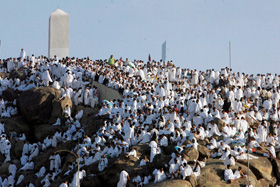
Prophet Muhammad’s final sermon was delivered during the Hajj of the year 632 C.E., the ninth day of Dhul Hijjah, the 12th month of the lunar year, at Arafat, the most blessed day of the year.  There were countless Muslims present with the Prophet during his last pilgrimage when he delivered his last Sermon.

The Final Sermon:

After praising, and thanking God, the Prophet, may the mercy and blessings of God be upon him, said "O People, lend me an attentive ear, for I know not whether after this year, I shall ever be amongst you again.  Therefore, listen to what I am saying to you very carefully and take these words to those who could not be present here today.

O People, just as you regard this month, this day, this city as Sacred, so regard the life and property of every Muslim as a sacred trust.  Return the goods entrusted to you to their rightful owners.  Hurt no one so that no one may hurt you.  Remember that you will indeed meet your Lord, and that He will indeed reckon your deeds.  God has forbidden you to take usury (interest), therefore all interest obligation shall henceforth be waived.  Your capital, however, is yours to keep.  You will neither inflict nor suffer any inequity.  God has Judged that there shall be no interest, and that all the interest due to Al-Abbas ibn Abd’el Muttalib shall henceforth be waived...

Beware of Satan, for the safety of your religion.  He has lost all hope that he will ever be able to lead you astray in big things, so beware of following him in small things.

O People, it is true that you have certain rights with regard to your women, but they also have rights over you.  Remember that you have taken them as your wives only under a trust from God and with His permission.  If they abide by your right then to them belongs the right to be fed and clothed in kindness.  Do treat your women well and be kind to them for they are your partners and committed helpers.  And it is your right that they do not make friends with any one of whom you do not approve, as well as never to be unchaste.

O People, listen to me in earnest, worship God, perform your five daily prayers, fast during the month of Ramadan, and offer Zakat.  Perform Hajj if you have the means.

All mankind is from Adam and Eve.  An Arab has no superiority over a non-Arab, nor does a non-Arab have any superiority over an Arab; a white has no superiority over a black, nor does a black have any superiority over a white; [none have superiority over another] except by piety and good action.  Learn that every Muslim is a brother to every Muslim and that the Muslims constitute one brotherhood.  Nothing shall be legitimate to a Muslim which belongs to a fellow Muslim unless it was given freely and willingly.  Do not, therefore, do injustice to yourselves.

Remember, one day you will appear before God and answer for your deeds.  So beware, do not stray from the path of righteousness after I am gone.

O People, no prophet or apostle will come after me, and no new faith will be born.  Reason well, therefore, O people, and understand words which I convey to you.  I leave behind me two things, the Quran and my example, the Sunnah, and if you follow these you will never go astray.

All those who listen to me shall pass on my words to others and those to others again; and it may be that the last ones understand my words better than those who listen to me directly.  Be my witness, O God, that I have conveyed your message to your people."

Thus the beloved Prophet completed his Final Sermon, and upon it, near the summit of Arafat, the revelation came down:

"…This day have I perfected your religion for you, completed My Grace upon you, and have chosen Islam for you as your religion…" (Quran 5:3)

Even today the Last Sermon of Prophet Muhammad is passed to every Muslim in every corner of the world through all possible means of communication.  Muslims are reminded about it in mosques and in lectures.  Indeed the meanings found in this sermon are indeed astounding, touching upon some of the most important rights God has over humanity, and humanity has over each other.  Though the Prophet’s soul has left this world, his words are still living in our hearts. - islamreligion.com

Wednesday, 9 September 2026

Intimate Issues : Bedroom Etiquette


IntimateIssues2.jpgIslam offers clear guidelines for all worldly matters.  God did not create us and then abandon us to the cosmos.  He set out all that we need to know in the Quran and followed it up with the traditions of Prophet Muhammad. God did not leave us floundering about in a sea of misconceptions and misunderstandings; Prophet Muhammad educated us and taught us that one should ask if they do not know. Of course this indicates that one should be open and truthful and never shy away from asking difficult or embarrassing questions.  Thus a lot of what we understand about bedroom etiquette comes from the questions asked by the people around the Prophet, may God praise him.

God says to enjoy each other’s intimate company, to take pleasure, comfort and delight in the intimacy of marriage but He also sets out a few rules about unacceptable behaviour.  We learned in article 1 that refraining from sexual intercourse when the woman is menstruating or still bleeding after childbirth is essential.  Both husband and wife should satisfy each other’s sexual needs and take into consideration the guidance of the Quran and the traditions of Prophet Muhammad, may God praise him. God, the Exalted, says:

And they ask you concerning menstruation.  Say, “It is a harmful thing, so keep away from women during menstruation, and go not in unto them until they are pure.  And when they have purified themselves, then come to them from where God has ordained for you.  Indeed, Allah loves those who are constantly repentant and loves those who purify themselves.” (Quran 2:222)

Post natal bleeding is treated in the same way as menstruation.  A couple should refrain from intercourse during this time and only recommence once the wife has performed the ritual bath.

We also learned that anal intercourse is a grave sin.  Prophet Muhammad said that the one who had anal intercourse with his wife was cursed.[1]  In another documented tradition he said specifically to avoid the anus and having sex during the time of menstruation.[2]  Even if anal intercourse is performed with the consent of the wife, or if she is menstruating, it is still a grave sin. Mutual agreement does not allow something that has been made forbidden.

Homosexuality (sex between members of the same gender) is also forbidden.  Homosexuality is not accepted in Islam and this website can provide you with more information on the reasons for this prohibition.    

It is permissible for a husband and wife to masturbate each other.  This comes under the rulings derived from the verse that encourages a married couple to enjoy and delight each other.  “Your wives are a tilth for you, so go to your tilth when and how you will…” (Quran 2:223)

As far as the issue of oral sex is concerned, it is also a part of enjoying each other’s company and it is governed by two conditions; it must not cause harm or degradation to either spouse, as well impurities must not be swallowed.

Having sex, even lawful sex will invalidate a fast.  Thus a couple must abstain from it while fasting. This may pose as a problem during the month of Ramadan, wherein a Muslim fasts around 30 days, but God has allowed married couples to engage in it after the fast has been broken.

“It has been made permissible for you the night preceding fasting to go to your wives [for sexual relations].  They are clothing for you and you are clothing for them.  God knows that you used to deceive yourselves, so He accepted your repentance and forgave you.  So now, have relations with them and seek that which God has decreed for you.  And eat and drink until the white thread of dawn becomes distinct to you from the black thread [of night].  Then complete the fast until the sunset…” (Quran 2:187)

The issue of sex education is often debated in Muslim communities but there is no doubt that Islamic education must include a component that explains intimate matters.  It is the responsibility of parents to prepare and educate their children about all aspects of their lives, including the physical and emotional changes that take place at puberty, and the Islamic position on sexuality.

Sadly within the Muslim community there are many misunderstandings about sexuality.  Many husbands neglect the right of sexual fulfillment that is owed to their spouses. They may even believe that a wife cannot be virtuous and sexual at the same time.  Feeling desire does not mean that a woman is promiscuous and Prophet Muhammad advised husbands to let their wives achieve sexual fulfillment.  He spoke about the importance of foreplay and using loving words during intimacy.  Sexual dissatisfaction is considered legitimate grounds for divorce on the part of either the wife or husband.  Such issues can be overcome with age appropriate sex education.

The relationship between a husband and wife is the foundation on which a family is built and good strong families are what make a strong community of believers.  Intimate issues between the husband and wife should always be seen as something special and private.  It is a right for both men and women. God alludes to it in the verse, “…They are clothing for you and you are clothing for them …” (Quran 2: 187) The word clothing symbolises a covering; just as a garment protects one’s body spouses, as well, act as a covering for each other by protecting one another’s secrets, honour and shortcomings.  In intimate situations words are spoken, secrets told, souls are laid bare.  These issues must be kept between the married couple except in circumstances of dire need such as medical matters.

= islamreligion.com

Footnotes:

[1]Abu Dawood, Imam Ahmad

[2]Ibid

Tuesday, 8 September 2026

Who is Prophet Muhammad?


Who_is_Prophet_Muhammad_001.jpgProphet Muhammad, may the mercy and blessings of God be upon him, is the man beloved by more than 1.2 billion Muslims.  He is the man who taught us patience in the face of adversity, and taught us to live in this world but seek eternal life in the hereafter.  It was to Prophet Muhammad that God revealed the Quran.  Along with this Book of guidance God sent Prophet Muhammad, whose behavior and high moral standards are an example to us all.  Prophet Muhammad’s life was the Quran.  He understood it, he loved it and he lived his life based on its standards.  He taught us to recite the Quran, to live by its principles and to love it.  When Muslims declare their faith in One God, they also declare their belief that Muhammad is the slave and final messenger of God. 

When a Muslim hears Muhammad’s name mentioned they ask God to send blessings upon him.  Prophet Muhammad was a man, a human being just like any other man, but it is his love for humanity that sets him apart.  Muslims love Prophet Muhammad, but it is his love for us, that makes him a man like no other.  He longed for Paradise not only for himself but also for all of us.  He wept tears not for himself but for his Ummah[1], and for humanity.  He was often heard to cry "O God, my Ummah, my Ummah".

Muslims also believe in the same Prophets mentioned in Jewish and Christian traditions, including Noah, Moses, Abraham and Jesus, and they believe that all prophets came with the same message – to worship God alone, without partners, sons or daughters.  There is a difference, however, between all other prophets and Prophet Muhammad.  Before Muhammad, prophets were sent to particular people in particular places and periods.  Muhammad however, is the final Prophet and his message is for all of humankind.

God tells us in the Quran that He did not send Prophet Muhammad except as a mercy for humankind.  "And we have sent you O Muhammad, not but as a mercy for humankind and all that exists."  (Quran 21:107)  God did not say Muhammad  was sent to the people of Arabia, or to men, or to the people of the 7th century.  He made it clear that Prophet Muhammad was a prophet like no other, one whose message would spread far and wide and be applicable in all places for all times.  Muslims love him, respect him and follow him.  They hold him in such regard that for many it is emotionally painful to see or hear their beloved mentor ridiculed or disrespected. 

Throughout history and around the world non-Muslims have shown great respect and honour to Prophet Muhammad and he is considered influential in both religious and secular matters.  Mahatma Ghandi described him as scrupulous about pledges, intense in his devotion to his friends and followers, intrepid, fearless, and with absolute trust in God and in his own mission.  Prophet Muhammad taught Islam as a way of life, founded an empire, laid down a moral code and instituted a code of law focusing on respect, tolerance and justice.

What is it about Prophet Muhammad that inspires such devotion?  Is it his gentle and loving nature, his kindness and generosity or is it his ability to empathise with all of humanity?  Muhammad was a selfless man who devoted the last 23 years of his life to teaching his companions and followers how to worship God and how to respect humanity.  Prophet Muhammad was acutely aware of just how much responsibility had been thrust upon him by God.  He was careful to teach the message just as God had prescribed and warned his followers not to adulate him the way Jesus, son of Mary was praised.[2]

Muslims do not worship Prophet Muhammad; they understand that he is only a man.  However, he is a man worthy of our utmost respect and love.  Prophet Muhammad loved humanity so much that he would weep out of fear for them.  He loved his Ummah with such deep and profound devotion that God remarked on the depth of his love for us in Quran.

"Verily, there has come unto you a Messenger (Muhammad) from amongst yourselves.  It grieves him that you should receive any injury or difficulty.  He (Muhammad) is anxious over you (to be rightly guided, to repent to God, and beg Him to pardon and forgive your sins, in order that you may enter Paradise and be saved from the punishment of the Hell-fire), for the believers he is full of pity, kind, and merciful." (Quran 9:128)

Prophet Muhammad taught us to love God and to obey Him.  He taught us to be kind to each other, to respect our elders, and care for our children.  He taught us that it was better to give than to receive and that each human life is worthy of respect and dignity.  He taught us to love for our brothers and sisters what we love for ourselves.  Prophet Muhammad taught us that families and communities are essential, and he pointed out that individual rights although important are not more important than a stable, moral society.  Prophet Muhammad taught us that men and women are equal in the sight of God and that no one person is better then another except in respect to his or her piety and devotion to God.

Who is Prophet Muhammad?  Quite simply he is the man who will stand before God on the day of Requital and beg God to have mercy on us.  He will intercede for us. Muslims love him because he is the slave and messenger of God, he is a mercy to humankind and his gentleness, and devotion to humanity is unprecedented.

- islamreligion.com

Footnotes:

[1]The translation of the Arabic word Ummah is nation.  However, it means more than a country with borders, it is a fellowship of men women and children united in their love for One God and their admiration for Muhammad, the Prophet of God.

[2]Saheeh Al-Bukhari

Monday, 7 September 2026

The Theme of 'Difference' in Surah al-Rum


The_Theme_of_Difference_in_Surah_al-Rum._001.jpgGod has made difference a reality of life.  Even parents and their children differ, in spite of the children being the immediate genetic descendants of their parents and in spite of their parents having raised them from infancy.  They differ in their outlook on life, their personalities, their temperaments, and even their physical appearances.  In fact, sexual reproduction and the exchange of the parents’ genetic material that it entails guarantees that children will be different. 

The theme of difference, and the associated phenomena of change, alternation, and disagreement, are employed thematically throughout Surah al-Rum, the thirtieth chapter of the Quran, to affirm God’s greatness, His wisdom, and his absolute monotheism. 

God says: "And from among His signs is the creation of the heavens and the Earth and the differences in your colours and tongues." (Quran 30:22)

The differences between people’s complexions is one of the most obvious of differences.  Our various colours are a sign of God’s creative power, and a manifestation of his wisdom.  At the same time, skin colour has proven to be a trial for many who have used this superficial difference as a criterion for judging others. 

As for the differences in our tongues, there are a number of possible interpretations.  This can be understood to refer to our various languages.  It can also be understood to refer to the differences in people’s vocal qualities and speaking skills.  It can also refer to the content of people’s discourse, whether pleasant or abusive, optimistic or despondent, ethical or wanton. 

This verse appears in Surah al-Rum, the chapter of the Quran entitled "Romans".  This chapter opens with a discussion about the most virulent manifestation of human differences: war, particularly the war which was raging at the time between the world’s two great powers: Byzantine Rome and the Persian Empire.  This discussion then opens up into a broader discussion of the differences between the fortunes of nations and a promise that the Muslims – who were at that time weak and downtrodden – will have a brighter future: "And on that day the believers will rejoice with God ’s help." (Quran 30:4-5)

This is immediately followed by a description of how civilizations have their time of ascendency and weakness, and how the balance of power shifts over historical time: "Do they not travel through the Earth, and observe what was the end of those who came before them, those who had been superior to them in strength?" (Quran 30:9)

This thematic development comes to its most poignant example by addressing the different fates that await people in the Hereafter: "And at the time when the hour shall come, at that time they shall become separated one from the other." (Quran 30:14)

With each example of difference, the Quran counterpoints God’s divine unity with the variety and change that exists in His Creation.  This is expressed with regard to time when God says: "Therefore glory be to God when you enter upon the night and when you arise in the morning.  And praise be to Him in the heavens and the Earth, and at nightfall, and when you find yourselves at midday." (Quran 30:17-18)

Following this focus on time is a thematic treatment of place, and then of the alternation of life and death, which is concluded with reference to the variety that exists within the human species: "Among His signs is that He created you from dust; and then,- behold, you are human beings scattered (far and wide)!" (Quran 30:20)

This moves to a focus on the differences within the human entity on the most intimate level: "And among His Signs is that He created for you mates from among yourselves, that you may dwell in tranquility with them, and He has put love and mercy between your hearts." (Quran 30:21)

The verses progress from the heavens and the Earth through the variety that exists in Creation, and arrives in a very satisfying manner to the sweetness of human intimacy.  There is a parallel treatment of the heavens and Earth on the one hand and the complementary relationship between a man and woman within the context of marriage on the other, and what both these relationships entails of stability and creative potential. 

It is in this context that the discussion arrives at the differences between people’s colours and tongues, and then moves on to the alternation of the night and the day, through other manifestations of the differences within Creation, culminating in praising those people for whom this great variety becomes an affirmation of faith in the oneness and wisdom of their Creator. 

Throughout Surah al-Rum, the theme of difference in Creation is employed purposefully to affirm monotheism and establish faith, and in an eloquent rhetorical turn, to negate disagreement and dissention in how people should relate to their Lord: "Turn back to Him in repentance, and fear Him.  Establish regular prayers, and be not among those who associate others with God, those who split up their religion, and become mere sects, each party rejoicing in that which is with itself!" (Quran 30:31-32)

This chapter of the Quran mobilizes an impressive range of examples – even invoking the stages of the human life from infancy to adulthood, to old age – to achieve its rhetorical aim.  It affirms that change and variation in Creation are part of the divine plan, and ultimately attest to the unity and absolute wisdom of the Creator. - islamreligion.com