Islam

Islam

Tuesday, 6 October 2020

How to Protect Our Prayer in a Fast-Paced World


The Worship of Busyness – A Psychological View on How Fast-Paced World Harms Our Prayer and How We Can Protect It 

Keeping busy is a source of pride today. Relaxation is considered a reward only after hard work. We are “spinning” 24/7, but just as appliances go on the fritz if they’re always turned on, humans pay their price too. 

Muslims are no better. When was the last time you felt khusu (deep focus; humility) in your prayer?


Thankfulness
A fast-paced lifestyle robs us of many Islamic virtues

The Prophet says: “Whoever is not grateful for small things will not be grateful for large things.” (Saheeh At-Targheeb by Al-Albani 976)

Experts found that if we operate at this hectic pace too often, we become increasingly task-orientated. This means that we no longer derive the same level of pleasure from relationships and smaller experiences.

Deep reflections

While numerous ayas of the Quran calls us to “iqraa – read,” ponder, and reflect, researchers note that this push for speed is changing the way people think. 

The need to be efficient and instantaneous leads to a dumbing down of information intake so that people become scanners of information rather than delving towards a deeper understanding.

The problem is modern life has made us believe that progress equals fast, which equals success. City people walk faster not for exercise and enjoyment, but to save time for more production!

However, studies suggest that city living is associated with increased rates of depression, anxiety, and psychosis, with 39% more mood disorders and 21% more anxiety disorders. The flight or fight mode of people’s nervous system keeps the body activated by releasing stress hormones – a recipe for addiction and depression. 

Struggling to gain focus

Our attention span is worse than a goldfish

Imagine sitting on a bench staring at the birds playing tag. How many minutes do you think will pass before you jump up shouting “I’m bored, let’s do something”?

A 2015 study by Microsoft Canada, found that our average attention span—the amount of concentrated time on a task without becoming distracted—was 12 seconds in 2008. Five years later, it was only eight seconds—one second less than a goldfish’s attention span.

I cannot even imagine where we stand today. 


If we have a global problem with focus, our prayers are in trouble too because it lacks what we Muslims call – khusu. Without focus, our faith is in danger

Khusu is the soul of the prayer. 

Ibn Katheer says about it: “Khusu happens when a person empties his heart for it (prayer), and focuses on it to the exclusion of all else…”

If we don’t focus, khusu does not exist in our prayers. If we pray without khusu, we cannot connect with Allah properly. 

Improving khusu – from a psychological perspective

Does psychology have anything to offer Muslims in improving their khusu? I asked this question as an NLP® Practitioner and a student of psychology and found many interesting treasures.  

Through the lenses of psychology, praying is a form of meditation that puts your brain in the alpha brainwave state (khusu). This state enhances concentration, inspires creativity, and induces a state of deep relaxation. 

Clients in therapy need this mental state (khusu) to connect with their unconscious mind – where the solutions lie. Therapists facilitate this process through simple techniques. I’ve taken inspiration from this approach.

Silence

Without quietness and the feeling of comfort, the doors to the unconscious mind and its perspicacity stay closed. Therefore, therapists minimalize the outside impulses that could take away the clients’ attention from his insights.

Likewise, we need to choose a quiet place for praying.

So, tell your family to turn off the TV and ask your husband to hold the baby until you pray. Cut off all outside stimuli before you start praying and create silence.

Slow motions

During therapy, the clients’ body posture shows relaxation. They often fix their eyes on a certain point (usually somewhere on the floor) as they reach deeper inside themselves. Their speech and gestures slow down as well. 

These signs indicate to the therapist that the client has entered the room of his unconscious mind. 

So when you pray, move slowly. Salah is not an exercise routine anyway. Fix your eyes at one point on the mat. Take your time in each position. 

Recite slowly. Formulate the words carefully, and stop to take a deep breath after each ayah. 

The soul of meditation: breathing 

Therapists teach clients that they cannot manipulate the stressors that surround them but they can develop healthier ways of responding to them. 

One way is to invoke the relaxation response (this calms down the nervous system’s fight or flight mode) and the easiest way to evoke this response is by breathing deeply.

Therapists use many types of breathing techniques to relax their clients; belly breathing, alternate nostril breathing, progressive body relaxation. The simple 4-7-8 breathing technique might be one you also want to acquire – and maybe start and end your prayers with.

Inhale through your nose gently for 4 seconds. Now hold your breath for 7 seconds and then forcefully breathe out through your mouth for 8 seconds, emptying your lungs. Do this four times in a row. 


Allah said: “O mankind, indeed We have created you from male and female and made you peoples and tribes that you may know one another.” {49:13}Slow down, focus, connect with Allah

When a fast-paced lifestyle threatens our natural human life and our faith, shouldn’t we try everything to protect our life here and in the Hereafter? Shouldn’t we strive to stay close to Allah and fight the fitnah?

If we do not slow down, it’s no wonder if we can’t improve our prayers. If we do not improve our prayers, there’s no wonder if we feel disconnected from Allah.  - aboutislam.net

Monday, 5 October 2020

Three Marriage Tips for New Muslim Sisters


Today I would like to discuss three pitfalls revert Muslims encounter in seeking to marry.

It is, unfortunately, a statistical fact that a very high percentage of reverts, especially revert sisters, end up getting divorced at some point.

No one enters a marriage to be divorced. Unfortunately, a high percentage of revert marriages end in divorce.

To hopefully avoid such an unfortunate circumstance, let’s review three of Ustadha Amina Blake’s tips for revert marriage.

1. Take Your Time to Find a Spouse

Immediately after making shahada, reverts face an onslaught of well-meaning brothers and sisters imploring: Now, you have to complete the other half of your deen! You must get married! – this is when you should slam on the breaks; and hard.

How can anyone expect that your first steps as a new Muslim should be jumping into marriage?!? One of the most important things you need to be doing is establishing your deen – growing in your knowledge and practice of your newfound faith.

As a new Muslim, insha’Allah, you will grow and learn so much in the first year or two, evolving into the established Muslim Allah Almighty intended you to be.

And through this journey, your expectations and goals will change.

When I first became Muslim, my idea of a good Muslim man was somebody who looked like a Muslim and said masha’Allah a lot!

That was all I had to go on! I was a new Muslim who didn’t know any better!

But as we grow into practicing Muslims, we learn that there is more to being Muslim than what another Muslim wears on their body or face.

In short, do not rush into marriage. Do not get married just because you became Muslim or because anyone is pushing you to marry.

It is 100% your right to say no, thank-you.

2. Avoid the Unsuitable Spouse

Whether a person is Muslim or not, people choose to marry someone with whom they are incompatible.

We have to start looking beyond the basic appearance of faces, smiles, eyes, hair, height, weight, accents, ethnicity, or bank accounts.

We also have to look beyond the use of sprinkled terms, such as “Masha’Allah” and “Al-hamdulillah.”

These factors alone do not necessarily make two people compatible with one another.

Even if a potential spouse appears to be a practicing Muslim, that person can still be the wrong one for you.

One of the most overlooked aspects of seeking a partner in a Muslim marriage is making sure that you are culturally compatible.

That does not necessarily mean you have to marry somebody with the same cultural background as yours. However, it is undeniably significant that you and your spouse can co-exist on common ground.

Why? Because, when that honeymoon period is over, and you discover that your expectations of one another do not match, serious problems – or even a breakdown of the marriage – become inevitable.

So, to my sisters – because I recognize that this happens a lot – do not rush or allow yourself to be pressured into marriage before you are fully ready. And do not hesitate to trust your God-given instinct for detecting red flags.

And, not to offend our brothers, but the majority of men brought-up in traditional Muslim families – were raised as princes. The expectation of what these men are looking for in marriage will mirror what they know. From food to housekeeping and child-rearing, the expectations and pressure will leave little room for a sister to exercise or grow into her style or habits.

So, be forewarned. If your expectations are at the opposite end of the spectrum from your spouse, you will run into problems that can lead to divorce.

Above all – value yourself. Do not race into marrying the first person who comes along and flutters their eyelids at you. Take time to get to know the person, ask the right questions, and get your wali involved.

3. The Contract and the Safeguards

A. The Wali

Your wali should not be some guy pulled in off the street. Neither should your marriage be with two random witnesses.

A wali is someone acting as a guardian – the person a wife should be able to turn to when problems arise – who will help guide, mediate solutions.

For brothers: make sure you and your family get to know the sister’s family. When possible, include non-Muslim family members in the conversation. They will want to be involved and will feel honored to be included on the journey to finding your ideal marriage and life partner.

B. The Contract (Nikah)

In Islam, marriage is a legal contract between a man and a woman. Both the bride and groom consent to marriage with free will. A formal, binding marriage contract (verbal and/or on paper) is considered integral to a religiously valid Islamic marriage and outlines the rights and responsibilities of the groom and bride.

Sisters, you have the right to a mahr – or dowry. Why are you selling yourselves short? A man must value you when he gets married to you. Too often, sisters agree to a mahr in some minuscule amount saying, “Well, I don’t want anything, just teach me a verse of the Quran.”

You are not dealing with the companions here! You are dealing with people that may not have the best intentions – one of the biggest pitfalls revert sisters encounter.

So, when you are determining the amount of your rightful mahr, ask for something significant. The mahr does not have to be something out of reach. However, the mahr, by intention, is something for a sister to fall back on if the marriage deteriorates. And make sure the mahr is in your hand at the nikah rather than some randomly postponed date that you may never see.

Finally, let us revisit our expectations. Before your nikah, sit down and make a list of things that you expect from your marriage.

Sisters, here are some items to include in your marriage contract:

1. If your spouse wants you to relocate, and you do not want to, the marriage contract can state a solution to the problem.

2. If there is a lifestyle you are accustomed to living, for example, if you want to work, put it in the contract.

3. Sometimes, a sister can feel trapped in a marriage she needs to get out of, as in the case of irreconcilable differences or domestic abuse. But most sisters have never heard of the “tafwid” clause – where the husband permits a wife to divorce him at any time she feels the need to – which can be part of the contract.

The tafwid clause will prevent the husband from being able to hold you in the marriage. Alternatively, the sister would have to go through shariah councils to get the marriage dissolved by khul.

Sisters, safeguard yourselves from the start by adding the right of tafwid to your marriage contract; if a brother denies this right to you; that is a red flag. He should accept your request as a right given to the wives of the Prophet Muhammad (peace be upon him) by Allah the Almighty in the Quran.

May Allah bless you and bless your spouses. And if you are hoping to marry, may Allah the Almighty bless you with a compatible spouse and a life-long marriage. - aboutislam.net


About Ustadha Ameena Blake
From Sheffield, UK; Ustadha Ameena Blake embraced Islam in 1992. Her academic qualifications include undergraduate in English Studies, Post Graduate in teaching, MSc in Leadership and Management and MA in Islamic Studies.Ameena has been active since 1994 having studied under various shuyukh and academics including Dr Jamal Badawi, Sh Abdul Aziz Atiq (Yemen), Sh Faisal Manjoo, Dr Atullah Siddiqui and others. Roles have included Vice President of MAB, Assistant Secretary General of the MCB and Head teacher of a girl’s Islamic school. She is founding director of the EHUK women’s refuge project and is a lecturer at Markfield Institute of Higher Education. She also sits on Mosque boards and is an Islamic advisor on Halal Guide.Ustadha Ameena lectures about Islam nationally and internationally and has appeared at conferences, fundraisers and events across the globe.Her topics include tazkiyah, women in the Quran, dawah and Seerah and others. She delivers regular live interactive lectures on Facebook and has appeared on channels including Channel 4, Sky TV, The Islam channel, BBC radio, Iqraa TV and others.

3 REASONS FOR GOD


3ReasonsforGod.jpgWhen we reflect upon the nature of our world, we see order everywhere from the water cycle to the movement of the earth around the sun.  Commenting on the order found in the universe, the physicist Stephen Hawking explains that the overwhelming impression ‘‘is one of order, the more we discover about the universe, the more we find that it is governed by rational laws.’’[1]  This observation is shared by the vast majority of scientists.

Since the universe has order and is governed by the ‘laws of science’, we should question how this order came about.  The most effective way to answer this question is to reason to the best conclusion.  Take your mobile phone for example, your phone is made of glass, plastic and metal.  Glass comes from sand, plastic comes from oil and metal is extracted from the ground.  Imagine you were walking in a desert (where there is lots of oil, sand and metals in the ground), and you found a mobile phone lying around.  Would you believe that it came together by itself? That the Sun shone, the wind blew, lightning struck, the oil bubbled to the surface and mixed with the sand and metal, and over millions of years the mobile came together by chance?

No one would believe such an explanation.  A mobile phone is clearly something that was put together in an organized way, so it would be rational to believe that it must have an organizer.  In the same way, when we see the order in the universe, isn’t it rational to say that the universe also has been organized in an amazing way by some being?

This organization is best explained by the existence of God.  God is the one who brought about the order in the universe.

Beginning of the Universe

If something has always existed it doesn’t need a creator.  In the first part of the 20th century some physicists held the view that the universe had always existed.  If the universe had always existed it wouldn’t need a creator.

However, according to Cosmology the universe had a beginning some 14 billion years ago with a cosmic event commonly known as the ‘Big Bang’[2].

Imagine you heard a loud bang, and you asked ‘where did that sound come from?’ Would you be satisfied with the answer that it came from ‘nothing’ and it ‘just happened?’ Of course not!  You would say ‘what was the cause of that loud bang?’ In the same way, rationally the ‘Big Bang’ must also have a cause that bought it about.  Now we can ask since the ‘Big Bang’ has a cause, what was the cause of that cause? Then we can ask, what was the cause of that cause? And so on and so on.  But this can’t go on forever and must end with a first cause, because of the following example:

Imagine a sniper who has just found his target and calls back to base to get permission to shoot.  The person at the base tells the sniper to hold on while they seek permission from someone else higher up.  So the guy higher up seeks permission from the guy even higher up and so on and so on.  If this goes on forever, will the sniper ever get to shoot the target?

The obvious answer is that he wouldn’t be able to shoot.  The only way the sniper can shoot is if someone gives permission without asking for anyone else’s permission.  That person would be the first cause of the sniper shooting.  In the same way, the Big Bang must have a first cause.

We can conclude that this first cause must be powerful as it brought the whole universe into existence, and it must be intelligent as it caused the ‘laws of science’ which govern the universe.  Also, this first cause must be timeless, spaceless and immaterial, because time, space and matter began at the ‘Big Bang’.  Finally, since it is uncaused it must have always existed.

All of these attributes of the first cause make up the basic concept of God.  God is the uncreated first cause of the universe.

Human Nature

Throughout the history of the world, the majority of people have believed in God.  There seems to be something built in the human mind that makes us want to believe.

Over the last decade some really startling facts have been found that show that children have an innate belief in God.  Dr Justin Barrett, a senior researcher at the University of Oxford Centre for Anthropology and Mind, states “The preponderance of scientific evidence for the past 10 years or so has shown that a lot more seems to be built into the natural development of children’s minds than we once thought, including a predisposition to see the natural world as designed and purposeful and that some kind of intelligent being is behind that purpose…” He adds that “If we threw a handful [of children] on an island and they raised themselves…they would believe in God”[3].  To put it simply, his answer as to why anyone would believe in God is that, our minds are designed to do so.  Disbelief in God is something which is unnatural to the human being.  Oxford University development psychologist Dr Olivera Petrovich, who is an expert in the Psychology of Religion states that, belief in God develops naturally and that “atheism is definitely an acquired position”[4].

So where did this natural belief in a creator come from?  We can’t say it is taught by society as this belief is innate, and studies show that it is independent of societal pressures and is cross-cultural[5].

The best explanation for this belief is that God has instilled it into humanity.You have just read three independent reasons why it makes sense to believe in God.  Belief in God is not only rational but it’s also part of human nature.  There are many questions raised by the existence of God, such as why is there evil and suffering in the world? Doesn’t evolution disprove God? Do we have a purpose in life? All these issues and more will be answered in future articles. - islamreligion.com

FOOTNOTES:

[1]Antony Flew, There Is a God: How the World’s Most Notorious Atheist Changed His Mind

[2]Derek Raine, An Introduction to Science of Cosmology (Astronomy & Astrophysics)

[3]Justin L.  Barrett, Why Would Anyone Believe in God?

[4]Dr Olivera Petrovich, Childs Theory of World

[5]Justin L.  Barrett, Jonathan A.  Lanman, The Science of Religious Beliefs

Saturday, 3 October 2020

ARROGANCE AND TYRANNY WILL NOT REMAIN UNPUNISHED


Arrogance-and-Tyranny-will-.jpgThe Quran is a book of guidance.  It is a road map to success and eternal happiness, a gift from the Creator to the creation.  It is a book full of signs; God calls them evidences, proofs and lessons.  They prove the existence of God and warn humankind of a Day of Judgement, when each one of us will stand before God weighed down, or held high, by our deeds.

One of the most manifest signs is the story of Moses[1].  It is a story that holds many lessons for humankind.  One part of the story in particular has intrigued people for centuries – the parting of the Red Sea and the drowning of the Egyptians.  All three major monotheistic religions, Judaism, Christianity and Islam tell relatively the same Moses story, however Quran is able to fill in details and correct misinterpretations.  While all versions include the parting of the Red Sea and the drowning of Pharaoh, Quran tells us that Pharaoh’s body will be preserved for all time, as a sign.

“So this day We shall deliver your (dead) body (out from the sea) that you may be a sign to those who come after you! And verily, many among mankind are heedless of Our signs.” (Quran 10:92)

When Pharaoh had power, wealth, good health and strength he refused to acknowledge God.  He denied the signs and condemned himself.  At the last minute, as the waves crashed over him and his heart constricted in fear, Pharaoh acknowledged God.  Pharaoh’s arrogance fell away, but alas it was too late, he saw death approaching and cried out to God with fear and horror.  Renowned Islamic scholar Ibn Kathir describes Pharaoh’s death.

“The curtain fell on Pharaoh’s tyranny, and the waves threw his corpse up to the western seashore.  The Egyptians saw him and knew that the god whom they worshipped and obeyed was a mere man who could not keep death away from his own neck.”

God calls it a sign for those “who come after”

Many of the Pharaoh’s of Egypt behaved as if they were gods.  If a Pharaoh reigned for thirty years there was a ceremony called a Sed festival where the king was officially turned into a god.  Many Pharaoh’s especially those who reigned during what is known as the Second Kingdom built numerous monuments and statues to themselves.  Some, particularly Amenhotep III and Ramses II wanted to leave a mark, a reminder of their great strength, wealth and divinity.

(God said to Moses), “Go to Pharaoh; verily he has transgressed all bounds (he is arrogant and too proud and has refused to believe in God).  And say to him: “Would you purify yourself (from the sin of disbelief by becoming a believer)?” (Quran 79: 17 & 18)

Then he (Pharaoh) gathered his people and cried aloud, “I am your lord, most high.  “So God seized him with punishment for his last and first transgression.  Verily, in this is an instructive admonition for whosoever fears Allah. (Quran 79: 24 & 25)

Pharaoh said: “O chiefs! I know not that you have a god other than me.  So kindle for me (a fire), O Haman, to bake (bricks out of) clay, and set up for me a lofty tower in order that I may look at (or look for) the God of Moses...” (Quran 28:38)

The Pharaohs of Ancient Egypt were known for their excesses, their beliefs in multiple gods and at times their cruelty and oppression of slaves, and ordinary citizens.  When a human being believes himself to be a god, he is arrogant and tyrannical, yet as in this case of the Pharaoh of Moses (whoever he may, or may not have been) who was at the height of his arrogance, God was still willing to forgive him.  He sent sign after sign and proof after proof of His existence, but Pharaoh chose to live as if there was no tomorrow.  Pharaoh chose to reject the offer of forgiveness and for him and those like him, there is always a tomorrow and inevitably a judgement.

Go you and your brother with My signs and do not, you both, slacken and become weak in My Remembrance.  Go, both of you, to Pharaoh, verily he has transgressed (all bounds in disbelief and disobedience and behaved as an arrogant and as a tyrant).  And speak to him mildly, perhaps he may accept admonition or fear (God). (Quran 20: 43&44)

The signs sent by God to Pharaoh were meant to be a reminder, but he rejected those signs out of his arrogance and became one of the losers.

We are able to look at the preserved body of a Pharaoh, any pharaoh, and be reminded of God’s words.  We can also look at the behaviour of people today, who behave as if they were 21st century pharaohs and remember how God punished the pharaohs of the past.  The end result of Pharaoh is a reminder for all of humankind.

It reminds us that those who knowingly choose not to worship God in the manner He rightly deserves, risk never being guided to the right path.  How many signs will God send?  One, one million? Is it worth giving up eternal bliss for moments of happiness based on arrogance and ego? In the Hall of Mummies, in the Cairo Museum lie a group of men and women who just may have discovered the answer. - islamreligion.com

FOOTNOTES:

[1](http://www.islamreligion.com/articles/3366/)

Friday, 2 October 2020

WAS ISLAM SPREAD BY THE SWORD?


It is a common misconception with some non-Muslims that Islam would not have millions of adherents all over the world, if it had not been spread by the use of force.
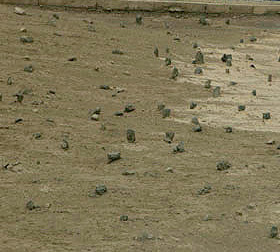
The following points will make it clear, that far from being spread by the sword, it was the inherent force of truth, reason and logic that was responsible for the rapid spread of Islam.

Islam has always given respect and freedom of religion to all faiths.  Freedom of religion is ordained in the Quran itself:

“There shall be no compulsion in [acceptance of] the religion.  The right course has become clear from the wrong.”  (Quran 2:256)

The noted historian De Lacy O’Leary wrote:[1]  “History makes it clear however, that the legend of fanatical Muslims sweeping through the world and forcing Islam at the point of the sword upon conquered races is one of the most fantastically absurd myths that historians have ever repeated.”

The famous historian, Thomas Carlyle, in his book Heroes and Hero worship, refers to this misconception about the spread of Islam: “The sword indeed, but where will you get your sword? Every new opinion, at its starting is precisely in a minority of one; in one man’s head alone.  There it dwells as yet.  One man alone of the whole world believes it, there is one man against all men.  That he takes a sword and tries to propagate with that will do little for him.  You must get your sword! On the whole, a thing will propagate itself as it can.”

If Islam was spread by the sword, it was the sword of intellect and convincing arguments.  It is this sword that conquers the hearts and minds of people.  The Quran says in this connection:

“Invite to the way of your Lord with wisdom and good instruction, and argue with them in a way that is best.”  (Quran 16:125)

The facts speak for themselves

·      Indonesia is the country that has the largest number of Muslims in the world, and the majority of people in Malaysia are Muslims.  But, no Muslim army ever went to Indonesia or Malaysia.  It is an established historical fact that Indonesia entered Islam not due to war, but because of its moral message.  Despite the disappearance of Islamic government from many regions once ruled by it, their original inhabitants have remained Muslims.  Moreover, they carried the message of truth, inviting others to it as well, and in so doing endured harm, affliction and oppression.  The same can be said for those in the regions of Syria and Jordan, Egypt, Iraq, North Africa, Asia, the Balkans and in Spain.  This shows that the effect of Islam on the population was one of moral conviction, in contrast to occupation by western colonialists, finally compelled to leave lands whose peoples held only memories of affliction, sorrow, subjugation and oppression.

·      Muslims ruled Spain (Andalusia) for about 800 years.  During this period the Christians and Jews enjoyed freedom to practice their respective religions, and this is a documented historical fact.

·      Christian and Jewish minorities have survived in the Muslim lands of the Middle East for centuries.  Countries such as Egypt, Morocco, Palestine, Lebanon, Syria, and Jordan all have significant Christian and Jewish populations.

·      Muslims ruled India for about a thousand years, and therefore had the power to force each and every non-Muslim of India to convert to Islam, but they did not, and thus more than 80% of the Indian population remains non-Muslim.

·      Similarly, Islam spread rapidly on the East Coast of Africa.  And likewise no Muslim army was ever dispatched to the East Coast of Africa.

·      An article in Reader’s Digest ‘Almanac’, yearbook 1986, gives the statistics of the increase of the percentage of the major religions of the world in half a century from 1934 to 1984.  This article also appeared in The Plain Truth magazine.  At the top was Islam, which increased by 235%, while Christianity had increased by 47%.  During this fifty-year period, there was no “Islamic conquest” yet Islam spread at an extraordinary rate.

·      Today the fastest growing religion in America and Europe is Islam.  The Muslims in these lands are a minority.  The only sword they have in their possession is the sword of truth.  It is this sword that is converting thousands to Islam.

·      Islamic law protects the privileged status of minorities, and that is why non-Muslim places of worship have flourished all over the Islamic world.  Islamic law also allows non-Muslim minorities to set up their own courts, which implement family laws drawn up by the minorities themselves.  The life and property of all citizens in an Islamic state are considered sacred whether they are Muslims or not.

Conclusion

It is clear, therefore, that Islam did not spread by the sword.  The “sword of Islam” did not convert all the non-Muslim minorities in Muslim countries.  In India, where Muslims ruled for 800 years, they are still a minority.  In the U.S.A., Islam is the fastest growing religion and has over six million followers.

In his book The World’s Religions, Huston Smith discusses how the prophet Muhammad granted freedom of religion to the Jews and Christians under Muslim rule:

The Prophet had a document drawn up in which he stipulated that Jews and Christians “shall be protected from all insults and harm; they shall have an equal right with our own people to our assistance and good offices,” and further, “they shall practice their religion as freely as the Muslims.”[2]

Smith points out that Muslims regard that document as the first charter of freedom of conscience in human history and the authoritative model for those of every subsequent Muslim state. - islamreligion,com

FOOTNOTES:

[1]In his bookIslam at the Crossroads, p.8.

[2]Quoted inThe World’s Religionsby Huston Smith, Harper Collins, 1991, p. 256

Thursday, 1 October 2020

DEATH IN THE CONTEXT OF FAITH


Death-in-the-Context-of-Faith.jpgIn the old days, when a woman saw in a dream a man extinguish the lantern in the house, or when she saw that a great house has collapsed on its foundations, she would be told by a dream interpreter that the man of the house was going to die!
One person said: "I saw in a dream that I was walking with crutches in the morning, and an hour later I was informed that my father had passed away."

The Arabs of old thought the crow was an evil omen.  This was all superstition stemming from the days of ignorance before Islam. 

Prophet Muhammad said in a sermon: "God gave a servant of his a choice between being given the flower of the Earth and between what He had in store for him, and he chose what He had in store for him." The people were bewildered, but Abu Bakr began to weep, understanding that the Prophet was telling the people his life was coming to an end."[1]

A little girl was asked: How many children are in your family?"

She replied: "We are seven."

He asked: "Where are they?"

She said: "Five of us are here, and two of us are beneath the tree over there."

He looked in the direction she was pointing and saw two small gravestones under the tree. 

"You are five, then." "No," she said, "We are seven."

Death is neither obliteration nor is it the end.  It is a transition from one state of being to another.  It is being born anew into another world.  Though it looks like the plug has been pulled on an electrical appliance, it is a fleeting, transitory state.  We say to children that the deceased "has gone to their Lord".  It is a good way to describe it.  It is a positive way of looking at it and it accords well with our faith. 

The Meaning of Life

Albert Camus, the French existential philosopher, said that since we all must die, nothing has any meaning. 

Much earlier, al-Khayyam said: "This glass was made in this exquisite form, so why must it succumb to destruction?"

These are destructive, nihilistic thoughts.  In contrast, Prophet Muhammad said: "be in this world as a stranger or a wayfarer."

Ibn Umar used to say: "When you go to sleep at night, do not await the dawn, and when you wake up, do not wait for night to come.  Take advantage your health for your times of sickness and take advantage of your life before your death."[2]

Life is like an airport; it is merely a preparation for the long journey to come. 

God says: "He it is who created death and life to test you as to which of you are best in deeds." (Quran 67:2)

This is a positive way of looking at it.  Instead of being seen as a cessation of activity, this inevitable event is seen as a catalyst for activity.  We need to get things done and make our mark while we still can. 

When we appreciate that life is short, it will help us to be more forgiving people.  We will be willing to set personal grudges aside, knowing that our time with others is limited. 

We are forced to ask ourselves three crucial questions:

1.    How can we live happy, productive lives?

2.    What will people say after we are gone?  What inspiration will they find in our life stories?

3.    What will our good deeds be like when we move on to the Hereafter?  

One of the Pious Predecessors said: "There are people who are doing so many good deeds, that if they knew they were going to die tomorrow, they would not be able to increase what they are doing."

Ali ibn Abi Talib said: "With every breath, a person’s comes that much closer to death." He also said: "Work in this world as if you are going to live forever, but work for the Hereafter as if you are going to die tomorrow."

Steve Jobs gave a commencement address where he described how he used to have to sleep on the floor in friend’s rooms, how he had to walk for miles to get a free meal, how his young mother had to struggle to find people to adopt him when he was born, how he was so easily pushed out of the company he established, and how he felt when he was diagnosed with pancreatic cancer.  He then said: "if you live each day as if it was your last, someday you’ll most certainly be right."

How to Look at Death Positively

1.    It is enough to think of it as a journey to a place without oppression or injustice.  On the Day of Judgment, it will be said: "Today, each soul will be recompensed according to what it has earned.  There is no injustice today." (Quran 40:17)

2.    It is a reunion with our loved ones who have passed away.  Right before he died, Muadh ibn Jabal said: "Tomorrow, I will meet with those I love, Muhammad and his Companions."

3.    It is liberation from the prison of material existence.  The Prophet said: "The world is the believer’s prison."[3]

4.    It is a mercy for those whose lives are strained by debilitating illness, deprivation or incapacity or when a person’s mind deteriorates so much that they can no longer interact with their loved ones.

5.    Death is akin to sleep.  Both are a change in our state of existence.  One is a permanent move to another life, and the other foreshadows it.

6.    Knowing that we are going to die one day helps us to hold on to our values when facing the tribulations of life, and makes it easy for us to make the right decisions when we are confronted with unethical but appealing choices. - islamrelugion.com

FOOTNOTES:

[1]Saheeh Al-Bukhari, Saheeh Muslim

[2]Saheeh Al-Bukhari

[3]Saheeh Muslim

Wednesday, 30 September 2020

A SYSTEM PLANNED IN ITS EVERY DETAIL


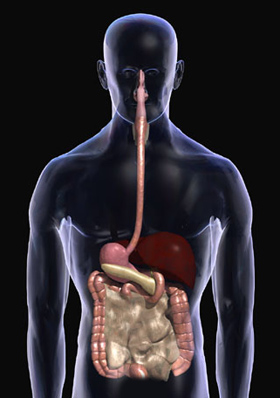
Breathing, eating, walking, etc, are very natural human functions.  But most people do not think about how these basic actions take place.  For example, when you eat a fruit, you do not contemplate on how it will be made useful to your body.  The only thing on your mind is eating a satisfying meal; at the same time, your body is involved in extremely detailed processes unimaginable to you in order to make this meal a health-giving thing.

The digestive system where these detailed processes take place starts to function as soon as a piece of food is taken into the mouth.  Being involved in the system right at the outset, the saliva wets the food and helps it to be ground by the teeth and to slide down the esophagus.

The esophagus transports the food to the stomach where a perfect balance is at work.  Here, the hydrochloric acid present in the stomach digests the food.  This acid is so strong that it has the capacity to dissolve not only the food but also the stomach walls.  Of course, such a flaw is not permitted in this perfect system.  A secretion called mucus, which is secreted during digestion, covers all the walls of the stomach and provides a perfect protection against the destructive effect of the hydrochloric acid.  Thus the stomach is prevented from consuming itself.

The point that deserves attention here is that evolution can by no means explain the system briefly summarized above.  Evolution maintains that today’s complex organisms have evolved from primitive cellular forms by the gradual accumulation of small structural changes.  However, as stated clearly, the system in the stomach could in no way have been formed step by step.  The absence of even one factor would bring about the death of the organism.

When food is received into the stomach, the ability of the gastric juices to break down food is effectuated as a result of a series of chemical changes.  Now, imagine a living being in the so-called evolutionary process in whose body such a planned chemical transformation is not complete.  This living being, unable to develop this ability autonomously, would not be able to digest the food it ate and would starve to death with an undigested mass of food in its stomach.

In addition, during the secretion of this dissolving acid, the stomach walls simultaneously have to produce the secretion called mucus.  Otherwise, the acid in the stomach would destroy the stomach.  Therefore, in order for life to continue, the stomach must secrete both fluids (acid and mucus) at the same time.  This shows it was not a step-by-step coincidental evolution that must, in effect, have been at work, but rather a conscious creation with all its systems intact.

What all this shows is that the human body resembles a huge factory made up of many small machines that work together in perfect harmony.  Just as all factories have a designer, an engineer and a planner, the human body has an “Exalted Creator.” - islamreligion,com