Islam

Islam

Thursday, 14 May 2020

Ramadan Dua: Days 22 & 23


Allah, on this day, open for me the doors of Your grace, send down on me its blessings, help me towards the causes of Your mercy, and give me a place in the comforts of Paradise,
O The One who answers the call of the distressed.
Wash away my sins, purify me from all flaws, examine my heart with (for ) the piety of the hearts, O One who overlooks the shortcomings of the sinners
--------------------------------------------------------------------------------
Daily Reading
Juz 22 (Al-Qu'ran 33:31- 36:21)

Juz 23 (Al-Qu'ran 36:22 - 39:31)
-------------------------------------------------------------------------------
Helpful Thoughts

In the three Ashras of Ramadan, it is the third one that is valued greatly among Muslims. One of the major reasons why it is valued and revered is the fact that it is the last Ashra and with it Ramadan ends, so Muslim try making the most out of it. The lines below discuss how a Muslim can make the most out of the last ten days of Ramadan.
A hadith reported regarding the last Ashra about the routine of Prophet Muhammad (PBUH) is as follows:
“Allah’s Messenger used to exert himself in devotion during the last ten nights to a greater extent than at any other time.” (Muslim)
Therefore, the last ten days of Ramadan require greater devotion and dedication towards making the most out of it. The lines below give some tips that can help effectively in this regard.
Itikaf:
Itikaf is the renowned Sunnah of Prophet Muhammad (PBUH), which is most popular among Muslims. Itikaf refers to the last ten days of Ramadan in which Prophet Muhammad (PBUH) used to live in seclusion and avoid worldly interaction till the last night when the moon of Shawal is sighted. Hazrat Aisha (RA) narrates:
“Prophet Muhammad (PBUH) used to perform Itikaf in the last ten days of Ramadan until Allah the Mighty & Majestic took Him.” (Bukhari)
From this hadith, it becomes clear that Itikaf was one of His consistent Sunnahs which He used to perform on regular bases on every Ramadan and throughout His life. Therefore, a Muslim should find encouragement from this fact and should pursue Itikaf. In another hadith, Prophet Muhammad (PBUH) said:
“Whoever makes Itikaf with me is to make Itikaf during the last ten (nights).” (Bukhari)
Therefore, Itikaf is one of the major Sunnahs of Prophet Muhammad (PBUH), therefore, every Muslim must try observing Itikaf whenever the chance is available.
Increase Worship Duration:
The last ten days are the ones that end with the end of the Ramadan and after that there is a whole year before it comes back again. Thus, those Muslims who are aware of the transitory nature of this worldly life understand the value of the last days of Ramadan, hence, the increase the intensity as well as duration of their prayer so that they get the maximum out of the parting days. Hazrat Aisha (RA) narrates about Prophet Muhammad (PBUH) in the following way:
“With the start of the last ten days of Ramadan, the Prophet (PBUH) used to tighten His waist belt (i.e. work harder) and used to pray all the night, and used to keep his family awake for the prayers.” (Bukhari)
From this hadith it is clear that Prophet Muhammad (PBUH) used to pray excessively during the last ten days of Ramadan. In addition to praying all night, He also made sure that His family members also stayed awake during the nights and indulged in prayer. Therefore, a Muslim must not only limit him or herself with own prayers, rather he or she must also make sure that all the other family members are also a part of the prayer and they also make the most out of the last precious nights of Ramadan.
Recite Quran Abundantly:
In Ramadan, Muslims make special preparations to recite Quran. Some of the Muslims recite the whole Quran one time, while there are others who recite the whole Quran several times. Each and every word of Quran brings great reward for a Muslim when recited in Quran. Besides the conventional reading of Quran from the start till its end, a Muslim must also search for different hadiths of Prophet Muhammad (PBUH) in which He emphasized over different Surahs of Quran in terms of their greater reward. A hadith in this regard is as follows:
“Whoever recited Surah Zilzilah would get the reward of reciting half the Quran. Whoever recited Surah al Kaafirun would get the reward as if reading a quarter of the Quran. Whoever recited Surah al Ikhlas would get a reward as if reading one third of the Quran.” (Tirmidhi)
Therefore, while reciting Quran a Muslim must consider different hadith of Prophet (PBUH) that specifically refer to particular Surahs and try reading and reciting them more frequently to earn greater reward. However, to be able to read and recite Quran, you must be able familiar with Arabic language. If you are someone who is naive to reading Quran in Arabic, you can avail services of QuranReading.com to be able to learn Quran Online in this holy month of Ramadan.
Laylatul Qadr:
In Quran, Allah says:
“By the manifest Book (the Quran) that makes thing clear. We sent it (this Quran) down on a Blessed Night (i.e. the Night of Qadr)….” (44:2-4)
The Blessed night refers to the Night of Qadr and it is one of the highly revered and cherished nights in the Islamic calendar. This night can be found in the odd nights in the last ten days of Ramadan. Therefore, every Muslim in addition to praying excessively in all the last ten days, should worship, pray and supplicate more in the odd nights.
Prophet (PBUH) said in a hadith:
“Whoever stands (in Qiyaam) in Laylat ul-Qadr out of faith and expectation (of Allah’s reward), will have All of his previous sins forgiven.” (Bukhari)
Therefore, a Muslim must seek the Blessed night by praying excessively in the last ten days of Ramadan.
Conclusion:
In a nutshell, the last ten days should be observed with more spirit and enthusiasm as with them the Ramadan ends and who knows whether someone will live another year to welcome this Holy Month again and collect all the riches and rewards that it comes with.

Useful read:

Tips and Blessings for The Last 10 (Third Ashra) Days Of Ramadan

Each and every day of Ramadan is no less than a blessing. Muslims start preparing for Ramadan in advance so that they are able to make the most out of it without losing a moment in adjusting to its routine. Therefore, with the progression of each day of Ramadan, the spirit and enthusiasm of Muslims towards its observance to the best of efforts increases.


Tips for Last Ten 10 days of Ramadan
In the three Ashras of Ramadan, it is the third one that is valued greatly among Muslims. One of the major reasons why it is valued and revered is the fact that it is the last Ashra and with it Ramadan ends, so Muslim try making the most out of it. The lines below discuss how a Muslim can make the most out of the last ten days of Ramadan.
A hadith reported regarding the last Ashra about the routine of Prophet Muhammad (PBUH) is as follows:
“Allah’s Messenger used to exert himself in devotion during the last ten nights to a greater extent than at any other time.” (Muslim)
Therefore, the last ten days of Ramadan require greater devotion and dedication towards making the most out of it. The lines below give some tips that can help effectively in this regard.
Itikaf:
Itikaf is the renowned Sunnah of Prophet Muhammad (PBUH), which is most popular among Muslims. Itikaf refers to the last ten days of Ramadan in which Prophet Muhammad (PBUH) used to live in seclusion and avoid worldly interaction till the last night when the moon of Shawal is sighted. Hazrat Aisha (RA) narrates:
“Prophet Muhammad (PBUH) used to perform Itikaf in the last ten days of Ramadan until Allah the Mighty & Majestic took Him.” (Bukhari)
From this hadith, it becomes clear that Itikaf was one of His consistent Sunnahs which He used to perform on regular bases on every Ramadan and throughout His life. Therefore, a Muslim should find encouragement from this fact and should pursue Itikaf. In another hadith, Prophet Muhammad (PBUH) said:
“Whoever makes Itikaf with me is to make Itikaf during the last ten (nights).” (Bukhari)
Therefore, Itikaf is one of the major Sunnahs of Prophet Muhammad (PBUH), therefore, every Muslim must try observing Itikaf whenever the chance is available.
Increase Worship Duration:
The last ten days are the ones that end with the end of the Ramadan and after that there is a whole year before it comes back again. Thus, those Muslims who are aware of the transitory nature of this worldly life understand the value of the last days of Ramadan, hence, the increase the intensity as well as duration of their prayer so that they get the maximum out of the parting days. Hazrat Aisha (RA) narrates about Prophet Muhammad (PBUH) in the following way:
“With the start of the last ten days of Ramadan, the Prophet (PBUH) used to tighten His waist belt (i.e. work harder) and used to pray all the night, and used to keep his family awake for the prayers.” (Bukhari)
From this hadith it is clear that Prophet Muhammad (PBUH) used to pray excessively during the last ten days of Ramadan. In addition to praying all night, He also made sure that His family members also stayed awake during the nights and indulged in prayer. Therefore, a Muslim must not only limit him or herself with own prayers, rather he or she must also make sure that all the other family members are also a part of the prayer and they also make the most out of the last precious nights of Ramadan.
Recite Quran Abundantly:
In Ramadan, Muslims make special preparations to recite Quran. Some of the Muslims recite the whole Quran one time, while there are others who recite the whole Quran several times. Each and every word of Quran brings great reward for a Muslim when recited in Quran. Besides the conventional reading of Quran from the start till its end, a Muslim must also search for different hadiths of Prophet Muhammad (PBUH) in which He emphasized over different Surahs of Quran in terms of their greater reward. A hadith in this regard is as follows:
“Whoever recited Surah Zilzilah would get the reward of reciting half the Quran. Whoever recited Surah al Kaafirun would get the reward as if reading a quarter of the Quran. Whoever recited Surah al Ikhlas would get a reward as if reading one third of the Quran.” (Tirmidhi)
Therefore, while reciting Quran a Muslim must consider different hadith of Prophet (PBUH) that specifically refer to particular Surahs and try reading and reciting them more frequently to earn greater reward. However, to be able to read and recite Quran, you must be able familiar with Arabic language. If you are someone who is naive to reading Quran in Arabic, you can avail services of QuranReading.com to be able to learn Quran Online in this holy month of Ramadan.
Laylatul Qadr:
In Quran, Allah says:
“By the manifest Book (the Quran) that makes thing clear. We sent it (this Quran) down on a Blessed Night (i.e. the Night of Qadr)….” (44:2-4)
The Blessed night refers to the Night of Qadr and it is one of the highly revered and cherished nights in the Islamic calendar. This night can be found in the odd nights in the last ten days of Ramadan. Therefore, every Muslim in addition to praying excessively in all the last ten days, should worship, pray and supplicate more in the odd nights.
Prophet (PBUH) said in a hadith:
“Whoever stands (in Qiyaam) in Laylat ul-Qadr out of faith and expectation (of Allah’s reward), will have All of his previous sins forgiven.” (Bukhari)
Therefore, a Muslim must seek the Blessed night by praying excessively in the last ten days of Ramadan.
Conclusion:
In a nutshell, the last ten days should be observed with more spirit and enthusiasm as with them the Ramadan ends and who knows whether someone will live another year to welcome this Holy Month again and collect all the riches and rewards that it comes with.

Wednesday, 13 May 2020

Ramadan, Day 21: Prayer, Beyond Ritual

Muslims pray before breaking of the fast during Ramadan on July 13, 2014 in Surabaya, Indonesia

BY SOHAIB N. SULTAN 
The holy month of Ramadan is a time of deep reflection for Muslims worldwide. Over the 30 days of Ramadan, Imam Sohaib Sultan of Princeton University will offer contemplative pieces on contemporary issues drawing from the wisdoms of the Qur’an – the sacred scripture that Muslims revere as the words of God and God’s final revelation to humanity. The Qur’an is at the heart of Muslim faith, ethics, and civilization. These short pieces are meant to inspire thought and conversation.
There is probably no time when Muslims pray as much as they do during the blessed month of Ramadan. This is saying a lot for folks who pray five times a day as part of their daily schedule. Every night, throughout Muslims lands and wherever Muslims live, the Mosques are filled with devout and able worshipers who spend at least a portion of their usual sleeping hours to turn to God, attempting to reap all the blessings they can from the holy month. As the month comes to a close, this worship becomes more intense.
Prayer in the Islamic tradition is a prescribed ritual with set times and motions. The life of prayer is given such importance that when the Prophet Muhammad was on his deathbed, one of the last pieces of advice for his community was, “Prayer, prayer, prayer.” The Prophet also described prayer as “the key to paradise.” One of the most common prescriptions for believers in the Qur’an is to institute and be constant in prayer.
Yet, the challenge with prayer is that it can easily become routine and unfocused when it is taken as mere ritual without proper contemplation. In reality, every step of the Muslim prayer – from preparing to pray to concluding the prayer – is full of rich meanings that bring the ritual to life.
A Muslim prepares for his or her prayer with a pre-ritual washing that is meant as much for approaching God in a physically clean state as it is a means for spiritual purification. The washing involves washing the hands, rinsing the mouth, sniffing water up the nose canal, washing the face, washing the arms up to the elbows, wiping the head and neck and ears with wet hands and, finally, washing the feet up to the ankles. Sounds complicated, but it’s easy to get the hang of it after a while. With every limb that is washed, there is spiritual purification and rejuvenation, with water acting as that very real and symbolic purifying agent for dirt and wrongdoings. The washing points to the importance of purifying one’s heart in the journey to God.
After the wash, a Muslim finds a quiet and clean space to pray and faces toward Mecca. Contrary to popular belief, Mecca is the direction of Muslim prayer, not because it is the birth place of the Prophet Muhammad, but rather because it connects worshippers to the ancient footsteps and path of Prophet Abraham – known as the spiritual forefather of the faithful – and his devout family. It is Abraham and his family’s monotheism, trust in God and willingness to sacrifice that led them to the barren deserted land of Mecca where God would bring forth a water spring from the earth for a desperate mother – Lady Hagar – and her babe – Prophet Ishmael – when they were seemingly abandoned and on the brink of losing all hope. This water spring became the source of life and community and an opportunity to impart monotheistic teachings. Years later, Abraham returns to visit his wife and son, and together they build a temple for the worship of God intended for all people (Qur’an 2:125—129). This turning to the ancient temple, known as the kabba, is an act of uniting people toward a common direction and purpose – celebrating the Oneness of God.
Facing the kabba, the Muslim then lifts his or her hands in an upward motion with palms facing outward. It is, among other things, an inauguration of the prayer and a symbolic act of taking everything of worldliness that is before them between their hands and putting it behind them as they turn their attention solely to God.
This is followed by a period of standing in which the opening chapter of the Qur’an and any other Qur’anic passage is recited – either silently or melodically. Standing is the first meditative posture of the prayer. In this posture the mind is over the heart as the words of the Qur’an are being deeply contemplated. Standing is also a preparation for the day of resurrection in which all will have to stand accountable before God.
After standing, the next meditative posture is bowing – a universal symbol of deep respect and honor – to the One most worthy of awe. In this posture, words of divine glorification are sung within the heart. The bowing is also meant to instill, even outside of prayer, a deep respect for the ever living presence of God in our lives, for “God is with you wherever you may be,” says the Qur’an (57:4). In this position, the heart and mind are aligned in their devotion.
After briefly moving back into the standing position, the devotee falls with a state of loving surrender into a state of prostration whereby their hands, knees, feet, forehead and nose are all laid on the earth. It is an act of complete devotion that is meant to instill a life of devotedness to the only One worthy of such dedication. In this position, the heart is over the mind as all doubts are overwhelmed with an inner peace. The worshiper briefly sits after prostration only to fall right back into prostration a second time – like a lover re-embracing their beloved after separation.
When this cycle of standing, bowing and prostrating has been completed at least twice, the devotee moves to the final part of the prayer – the meditative posture of calmly sitting. In this posture, a heavenly moment is recalled when the Prophet journeyed to the high heavens to visit all of the previous prophets and ultimately a special meeting with God. There the Prophet testified that there is “No god but God,” and God testified that “Muhammad is the servant and messenger of God.” The two testimonies join together to form the devout Muslim’s creed and consciousness. Peace is, then, sent upon all of the righteous servants, upon Muhammad and the followers of Muhammad, and upon Abraham and the followers of Abraham.
Finally, after receiving this peace from the Source of Peace, the Muslim turns his or her head to right and to the left, to the East and to the West, and prays in both directions: “May the peace and blessings of God be upon you.” Thus, the spiritual seeker is directed to spread peace and to be among the peacemakers. The prayer concludes with the worshipper embracing a profoundly ethical mission in the world.
In this way, prayer goes beyond mere ritual – it becomes the source of internal and external transformation, and the necessary component in living the life of a spiritually vibrant and ethically upright human being. - time.com

Tuesday, 12 May 2020

Ramadan, Day 20: The Night of Glory - 13 May 2020


BY SOHAIB N. SULTAN 
The holy month of Ramadan is a time of deep reflection for Muslims worldwide. Over the 30 days of Ramadan, Imam Sohaib Sultan of Princeton University will offer contemplative pieces on contemporary issues drawing from the wisdoms of the Qur’an – the sacred scripture that Muslims revere as the words of God and God’s final revelation to humanity. The Qur’an is at the heart of Muslim faith, ethics, and civilization. These short pieces are meant to inspire thought and conversation.
As we approach the last 10 nights of Ramadan, Muslims wait in high anticipation of what can be translated as The Night of Glory (laylatul qadr). It is a brilliant night that is described in the Qur’an in the following way:


The Night of Glory is the night in which the Prophet Muhammad began receiving revelation from God through the archangel Gabriel while he was meditating in the Cave of Hira on top of the Mountain of Light near the outskirts of Mecca, according to Muslim belief. It is that night in history when Muhammad went from being a simple man among his people to becoming the messenger of God. Not only did that night transform Muhammad the man into Muhammad the Prophet, but it also marked the beginning of the transformation of many parts of the world – beginning with the Arabian Peninsula and stretching as far as China within less than a century – as the new civilization of faith spread from coast to coast and continent to continent.
The first words that the Prophet received from God on that night, now some 1,448 years ago, are words that continue to inspire and guide more than 1.6 billion people worldwide. Chapter 96 of the Qur’an contains these verses: “Read! In the name of your Lord who created: He created the human being from a clinging form. Read! Your Lord is the Most Bountiful One who taught by the pen, who taught the human being what he did not know” (96:1—5).
Receiving these divine words shook the Prophet to his core as he experienced the unexpected power of the glorious night and the command of an outer force. Afraid and befuddled, the Prophet ran home to the warm embrace of his beloved wife, Khadijah, who covered his trembling body with a blanket and reassured his anxious soul. Khadija suggested visiting her cousin, Waraqa ibn Nawfal, who was a Christian sage and scholar, to interpret the experience. Waraqa listened carefully to the Prophet’s experience and declared: “This was the same one [archangel Gabriel] who keeps the secrets, whom God had sent to Moses. I wish I were young and could live [to see the day] when your people will drive you out.” The Prophet, startled and surprised, asked, “Will they [really] drive me out?” Waraqa nodded affirmatively and said, “Anyone who came with something similar to what you have brought was treated with hostility; and if I should remain alive till the day when you will be driven out then I will support you.”
So, the Night of Glory commemorates the advent of the Prophet, the beginning of the revelation of the Qur’an to Muhammad, and the centrality of God and knowledge in Islam. But, as Chapter 97 of the Qur’an indicates, the Night of Glory continues to visit every year with great spiritual gifts. In this night, it is believed, the doors of forgiveness are opened to all who ask, the decree of God is reconsidered and determined for every human soul, and salvation is brought closer for anyone who seeks it. As such, it is a night full of praying, seeking and acting goodly.
One of the great mysteries is that no one knows for certain which night in the blessed nights of Ramadan the Night of Glory falls on. It is anticipated during the last 10 nights. And, some say that it falls on one of the odd nights of the last 10 nights. God knows best – our task is to seek it; God’s grace is to grant it! - time.com

Thursday, 7 May 2020

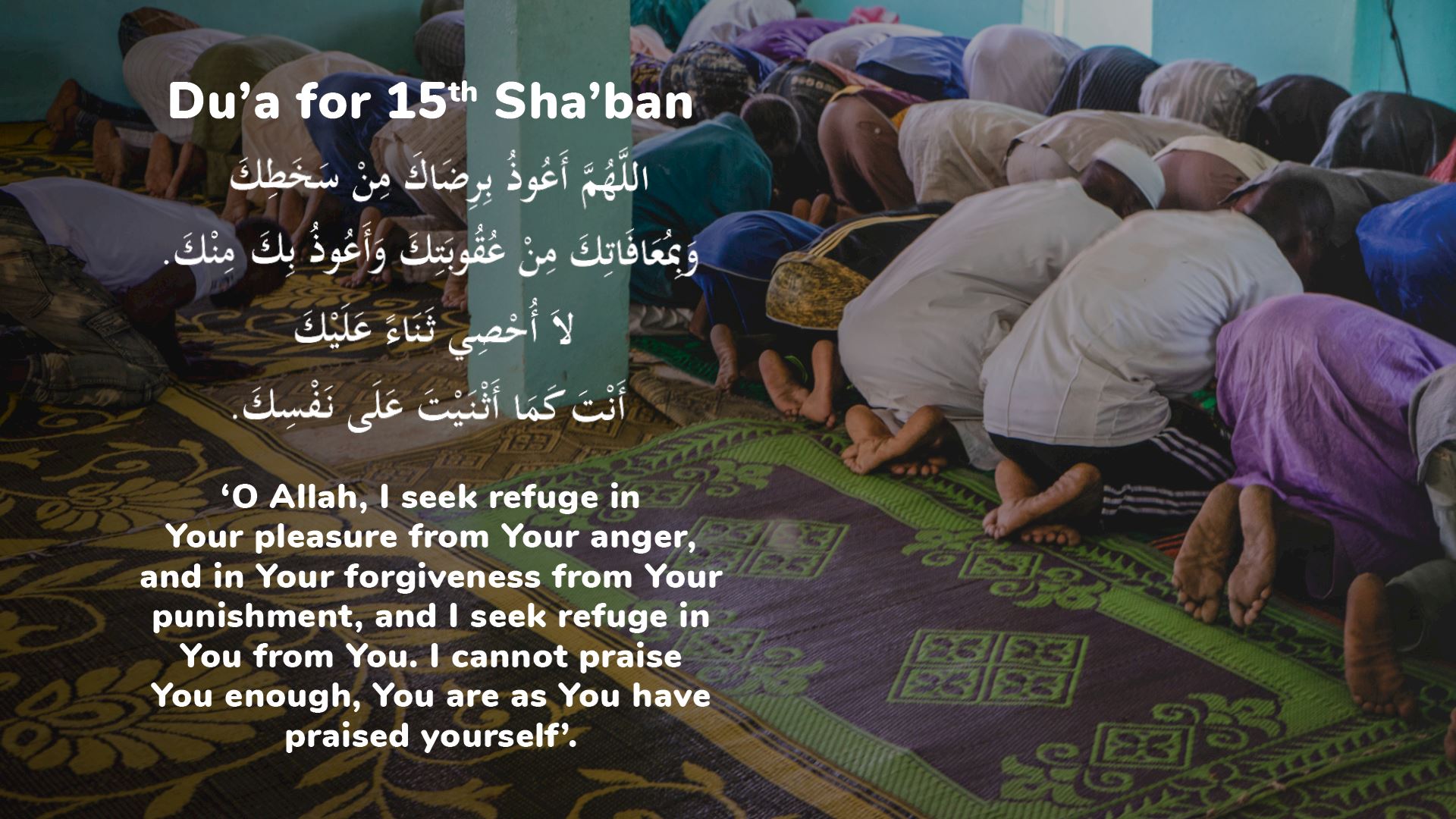
The 15th of Sha’ban - A Night for Asking Forgiveness


Note: This miracle took place on one of the middle nights of Sha’ban i.e. the 13th, 14th or 15th night.

Thursday 7th April 2020 (at Maghrib) will mark the night of 15th Sha’ban, also referred to as ‘Shab-e-Barat’, ‘Laylat-ul-Barat’, and ‘Laylat-ul-Nisf-min-Sha’ban’.
The importance of the 15th night of Sha’ban is a subject of debate among Muslims. Some celebrate the night with special prayers and fast the following day, while others say that this practice is not from the Sunnah.
The reality is that scholars consider the hadiths about 15th Sha’ban as being sound (Sahih), good (Hassan) and weak (Dha’if). However, due to the fact that there are numerous hadith, and the weakness of many of the hadith is not severe, the virtue of this night is accepted as authentic by scholars.
Ibn Taymiyyah says, ‘So many Ahadith and reports exist regarding the excellence of the 15th night of Sha’ban that one is compelled to accept that this night does possess some virtue’. This is the general consensus of scholars regarding this night.
So what are the blessings of 15th Sha’ban, and how can you take advantage of them?
Allah (swt) forgives many of His servants on this night
The main blessing of this night is that Allah pours His mercy and forgiveness upon earth from Maghrib until Fajr. The Prophet (saw) described the extent of His forgiveness in powerful language in numerous narrations:
The Prophet (saw) said, Allah gazes at His creation on the fifteenth night of Sha’ban and then forgives all His slaves except for two types of people: those who attribute partners to Allah and those who have rancour for their fellow Muslims’. (Ahmad)
(In other narrations, he (saw) mentioned more categories of people who wouldn’t be forgiven, including those who severed the ties of kinship and those who disobeyed their parents, among others).
Aisha (ra) also narrated that the Prophet (saw) once remained in Sajdah for so long during this night that she became scared, and touched his foot to make sure he was still alive. He (saw) moved his foot and she heard him reciting the following du’a:

Note: this du’a is Sahih (authentic) and can be found in Imam Baihaqi’s collection, among others. It is narrated that the Prophet (saw) used to recite it during Sujood and after Witr prayer. It being recited on 15th Sha’ban is considered acceptable by scholars.

The Prophet (saw) also said to Aisha (ra), ′Allah descends on the night of the middle of Sha’ban to the lowest heaven, and He forgives more than the numbers of hairs on the sheep of Banu Kalb (an Arab tribe renowned for their great flocks of sheep)’. (Ibn Majah and others)
Finally, the Prophet (saw) said that on this night, from sunset until dawn, Allah asks His servants, ′Is there anyone seeking forgiveness from Me so that I may forgive him? Is there anyone seeking provision from Me so I may provide for him? Is there anyone suffering so I may relieve his suffering?′ (Ibn Majah)
Therefore, make du’a for forgiveness on the 15th night of Sha’ban. Increase your dhikr, and ask Allah particularly for forgiveness, mercy, relief from suffering and provision. Remember to forgive anyone who you have a grudge against and resolve your problems with them, especially if they are family members, so Allah will forgive you.
Fasting on 15th Sha’ban
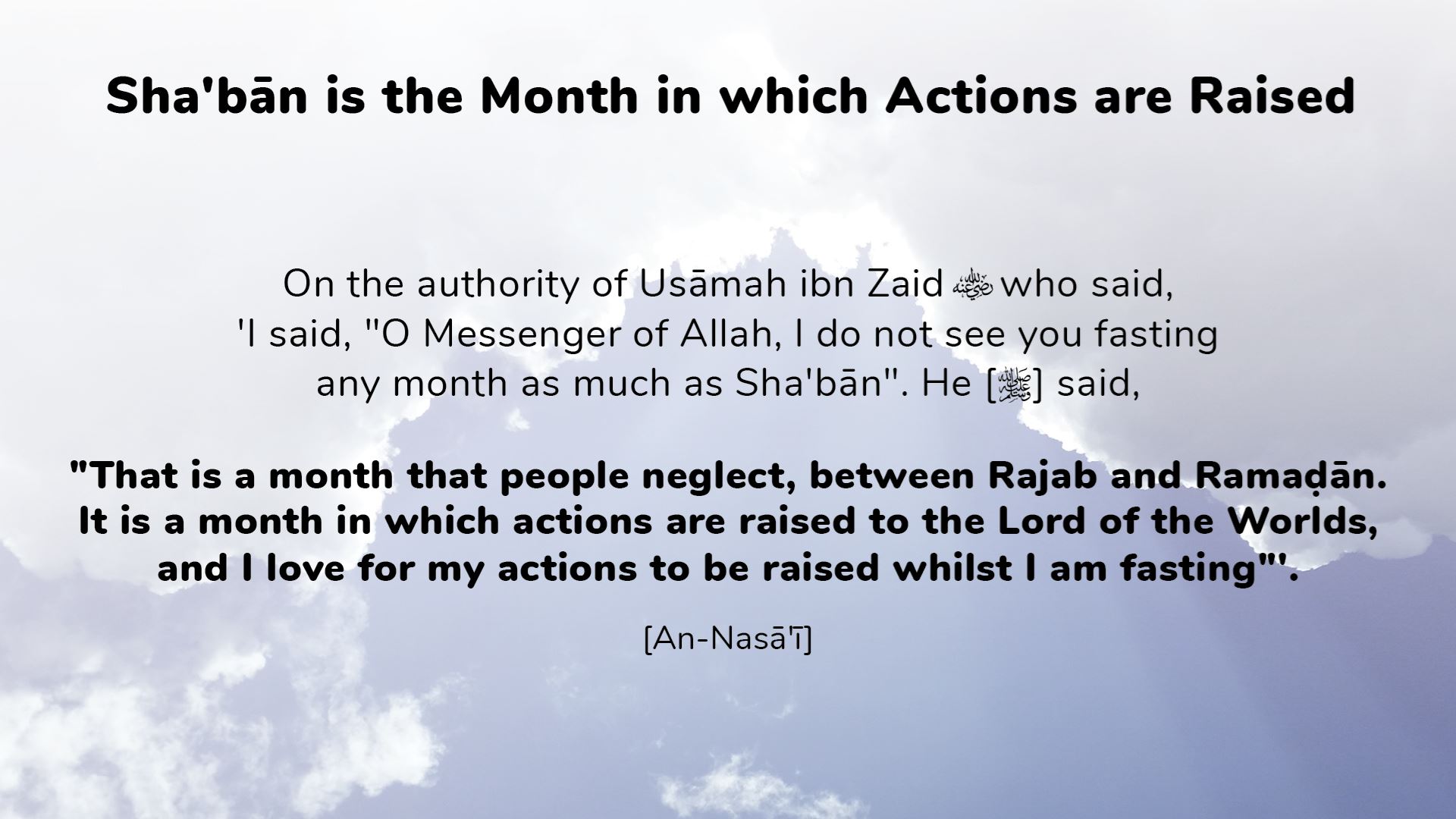
There is only one weak hadith regarding fasting on the 15th day of Sha’ban; however, it is from the Sunnah to fast the ‘bright days’ (the 13th, 14th and 15th) of every month anyway. Furthermore, it is recommended to increase your voluntary fasts during Sha’ban, as this is the month in which actions are raised to Allah:


Prescribed prayers for this night
Again, the hadith regarding prescribed prayers for this night - such as prayers of fourteen raka’at - are weak hadith, so it cannot be considered a Sunnah practice. However, you can pray nawafil during this night to benefit from its blessings. Ibn Taymiyyah says, ‘Some of the pious predecessors used to specially devote this night (15th Sha’ban) for Salah’.
Moreover, the Prophet (saw) always encouraged praying nawafil and making du’a at night, particularly during the last third of the night.
Is this the night of destiny?
Most scholars agree that the night of 15th Sha’ban is not mentioned in the Qur’an.
Some commentators have said that the night of 15th Sha’ban is mentioned in Surah Dukhan - ‘Indeed, We sent it [the Book] down during a blessed night. Indeed, We were to warn [mankind]. On that night is made distinct every precise matter’. (Qur’an, 44:3-4)
However, most scholars agree that this ayah refers to Laylat-ul-Qadr. The opinion that 15th Sha’ban is ‘the night of destiny’ - i.e. the night on which your provision and time of death is named - is not a strong opinion.
Whether it is mentioned in the Qur’an or not, it is still a blessed night. Umar bin ’Abd al-’Aziz, and others, said, ’Do not neglect four nights in the year, because on those nights Allah pours His mercy upon His slaves: the first night of Rajab, the fifteenth night of Sha`ban, the night before Eid al-Fitr and the night before Eid al-Adha’.
Thus, we should make an effort to increase our ’ibadah and ask for Allah’s mercy and forgiveness on this night.
And Allah knows best.
Preparing for Ramadan
Sha’ban is a special month, and we shouldn’t neglect its blessings. It is a time where our actions are raised to Allah, where our love for the Prophet (saw) increases, and where we should be preparing for the blessed month of Ramadan.
One of the ways you can prepare for Ramadan is by giving Iftar to those in need. The Prophet (saw) said, ‘Whoever feeds a person breaking his fast will earn the same reward as him, without anything being lessened from the reward of the fasting person’. (Tirmidhi)
By giving Iftar from now, you can earn the reward of giving charity in Sha’ban - and multiply the rewards of your fasts in Ramadan! Muslim Hands will be providing emergency food parcels (Iftar and Suhur) throughout Ramadan - and we need to start preparing from now. 
This food is especially vital to needy families during the Coronavirus pandemic, as many of them have lost their income and have no savings to fall back on.Your donations will ensure that those most in need will have a nutritious meal at the end of a hard day of fasting.
May Allah (swt) allow us to benefit from the blessings of this night. May He forgive our sins, increase our provision and relieve us of hardship. May Allah bless us in Sha’ban and enable us to reach Ramadan, Ameen! - muslimhands.org.uk

Monday, 4 May 2020

Call yourself to account before you are called to account - Il


Tips that make self-reckoning easier
 
There are some methods that would assist a person to call himself to account and make that process easier; they are as follows:
1.     Knowing that the more effort he exerts in calling his soul to account in this world, the more he will be relieved in the Hereafter. Likewise, the more he neglects calling himself to account in this world, the more severe his reckoning will be in the Hereafter.
2.     Knowing that the rewards of self-reckoning are residing in Firdaws (highest level of Paradise), looking at the Noble Face of Allah The Almighty and enjoying the company of the prophets and the righteous.
3.     Looking at the serious consequences of overlooking self-reckoning such as entering Hellfire, deprivation of looking at the Noble face of Allah The Almighty, and being with the wicked people of disbelief and misguidance.
4.     Keeping company with good people who call themselves to account and who tell him about his shortcomings, and keeping away from others who are not like that.
5.     Contemplating attentively the stories of those who were keen on self-reckoning and learning about our righteous predecessors.
6.     Visiting the graves and contemplating the conditions of the dead who have become helpless and can no longer call their souls to account or rectify their faults.
7.     Attending the circles of knowledge and admonishing lessons as these call people to check their souls.
8.     Performing voluntary night prayers, reciting Quran, and doing many other righteous deeds that bring a person closer to Allah The Almighty.
9.     Keeping away from the places of diversion and distractions for they make one forget about observing self-reckoning.
10.      Adhering to the remembrance and mentioning of Allah The Almighty and invoking Him to make him/her from those who call themselves to account and to guide him/her to everything good.
11.      Not having full trust and confidence in oneself as this makes him forget checking on his situation and also makes him believe that his defects are nothing except perfect noble manners.
 
How can self-reckoning be fulfilled?
 
Self-reckoning can be done as follows:
1.     One should start first by checking his performance of the his obligatory duties, and if he finds any defects in them he has to rectify them.
2.     One should then check the prohibited matters. If he finds that he has transgressed the red lines of such forbidden matters, then he has to repent, seek forgiveness and offer the extra righteous deeds that would wipe out his misdeeds.
3.     One should check every action of the parts of his body such as the actions of his tongue, feet, hands, eyes, and ears. He has to ask himself why, for the sake of whom and how he did them.
4.     One should call his soul to account for its heedlessness and negligence and rectify such things with the Remembrance of Allah The Almighty and doing a lot of righteous deeds.
 
The considerable benefits of self-reckoning
 
1.     Realizing the defects and shortcomings in one’s character. In fact, no one can be able to get rid of the defects of his character without acknowledging them.
2.     Repentance, remorse and rectifying these mistakes before it is too late.
3.     Being mindful of the rights of Allah The Almighty, for self-reckoning is mainly based on holding one's soul to account regarding negligence in observing the rights of Allah The Almighty.
4.     Complete submissiveness and humbleness of the slave before his Lord The Almighty and the Most Glorified.
5.     Realizing the Generosity, Forgiveness and Mercy of Allah The Almighty towards His slaves for He The Almighty gave them respite and delayed their punishment in spite of their odious sins and evil deeds.
6.     Exerting oneself to do a lot of righteous deeds and renounce disobedience so that self-reckoning will then be much easier.
7.     Returning the rights or property one wrongly took to their owners, getting rid of hatred and envy, and acquiring noble traits. Such is the most fruitful benefit of the matter of self-reckoning.
 
Abu Ad-Dardaa’, may Allah be pleased with him, said,
“Man’s life is but days. Whenever a day passes, a part of man’s life passes too. So, O you youth in your twenties, contemplate how many comrades of yours have passed away, and you are still there! You people in your thirties, you are losing your youth, how come you regret nothing? You people in your forties, youth has abandoned you and you are still indulging in amusement! You people in your fifties, you are a half-century old, but you still wrong yourselves! And, you people in your sixties, you are on the threshold of death, yet you still succumb to the temptations of this world. Surely, you have transgressed!” - islamweb.net

Saturday, 2 May 2020

Call yourself to account before you are called to account - I


First of all, have you ever been alone and checked and weighed what you have said or done previously? Have you ever tried to list your bad deeds in the same way as you think of your good deeds? Have you ever thought how you will be held accountable before Allah The Almighty while you are carrying such a heavy load of sins?
How can you yield yourself to a state that is far too dangerous for you to handle?
 
Allah The Almighty Says (what means):
  • {O you who have believed, fear Allah. And let every soul look to what it has put forth for tomorrow - and fear Allah. Indeed, Allah is Acquainted with what you do. And be not like those who forgot Allah, so He made them forget themselves.}[Quran 59:18-19]
  • {And return [in repentance] to your Lord and submit to Him before the punishment comes upon you; then you will not be helped...} [Quran 39:54]
‘Umar ibn Al-Khattaab,  may  Allah  be  pleased  with  him said, “Call yourselves to account before you are called to account, and weigh yourselves before you are weighed, as calling yourselves to account today will make it easier for you when you are called to account tomorrow, and be adorned for the great appearance: that Day shall you be brought to Judgment, and not a secret of you will be hidden.”
 
Quotes about Self-Reckoning
 
1.     Umar ibn Al-Khattaab  may  Allah  be  pleased  with  him wrote to one of his appointed governors saying, “Call yourself to account when you are in bliss before the reckoning of that severe Day, for whoever calls himself to account when he is in bliss will win the pleasure of Allah and achieve happiness, and whoever allows his life and desires to occupy all his attention and cause him to be negligent will be a regretful loser.”
2.     Al-Hasan  may  Allah  be  pleased  with  him said, “The worshiper will be in a safe position as long as he keeps admonishing his own self and continuously calls his soul to account.”
3.     Maymoon ibn Mihraan  may  Allah  have  mercy  upon  him said, “A slave will not be pious until he holds himself to account more severely than a man does with his business partner; that is why it was said that the soul is like the untrustworthy partner whom, if you do not call to account, will flee with your capital.”
4.     Imaam Ahmad  may  Allah  have  mercy  upon  him narrated that Wahb  may  Allah  have  mercy  upon  him said, “It is written in the wisdom of the family of Daawood (David) that an intelligent person should not be negligent of four times; a time to supplicate his Lord, a time to hold himself to account, a time with his truthful friends who inform him of his shortcomings, and a time when he is alone with himself and its lawful desires, as this time will help him through the other times and will comfort his heart.”
5.     Al-Hasan Al-Basri  may  Allah  have  mercy  upon  him said, “The true believer is a guardian of his own self and continuously calls his soul to account for the sake of Allah. The reckoning of the Day of Resurrection will only be easy for those who continuously call their souls to account in the life of this world. The reckoning of the Day of Resurrection will only be difficult for those who live the life of this world without ever examining their conscience and calling themselves to account.”
6.     Ibn Abi Mulaykah  may  Allah  have  mercy  upon  him said, “I have met thirty companions of the Prophet  sallallaahu  `alayhi  wa  sallam ( may  Allah exalt his mention ) and each one of them feared that he may be afflicted by hypocrisy and none of them said that his faith is like that of Jibreel or Meekaa’eel.”
7.     Imaam Ibn Al-Qayyim  may  Allah  have  mercy  upon  him said, “Whoever contemplates the circumstances of the Companions of the Prophet  sallallaahu  `alayhi  wa  sallam ( may  Allah exalt his mention ) would find them doing many good deeds with much fear while we fall short of doing good deeds or rather are negligent about that and at the same time we feel secure (from punishment).” This is what Ibn Al-Qayyim  may  Allah  have  mercy  upon  him said about himself and the time he lived in, so what should we say about ourselves and the time in which we live!
 
Categories of Self-reckoning
 
Self-reckoning is of two kinds and they are as follows:
 
The first kind: self-examination before starting any action. That is, one should check every idea that comes to his mind and not take any action until he considers which is preferred; carrying it out or leaving it. Al-Hasan  may  Allah  have  mercy  upon  him said, “May Allah The Almighty Be merciful upon the one who examines every matter well and then (decides that) if it is for the sake of Allah The Almighty he executes it, and if not, he overlooks it.”
 
The second kind: self-examination after doing any action and it is of three types which are as follows:
1.     One should call his soul to account and reproach it for its negligence in the acts of worshiping Allah The Almighty; for not having performed them properly.
2.     One should call his soul to account for any action that he did while it would have been better for him not to do it.
3.     One should cast a critical look back at whatever permissible act or habitual act that he did and ask himself why he did it. Did he do it for the Sake of Allah The Almighty and the Hereafter? If so, he will be rewarded greatly. Or, did he do it for this world and its trifling gains? If so, he will miss many great rewards. -islamweb.net